
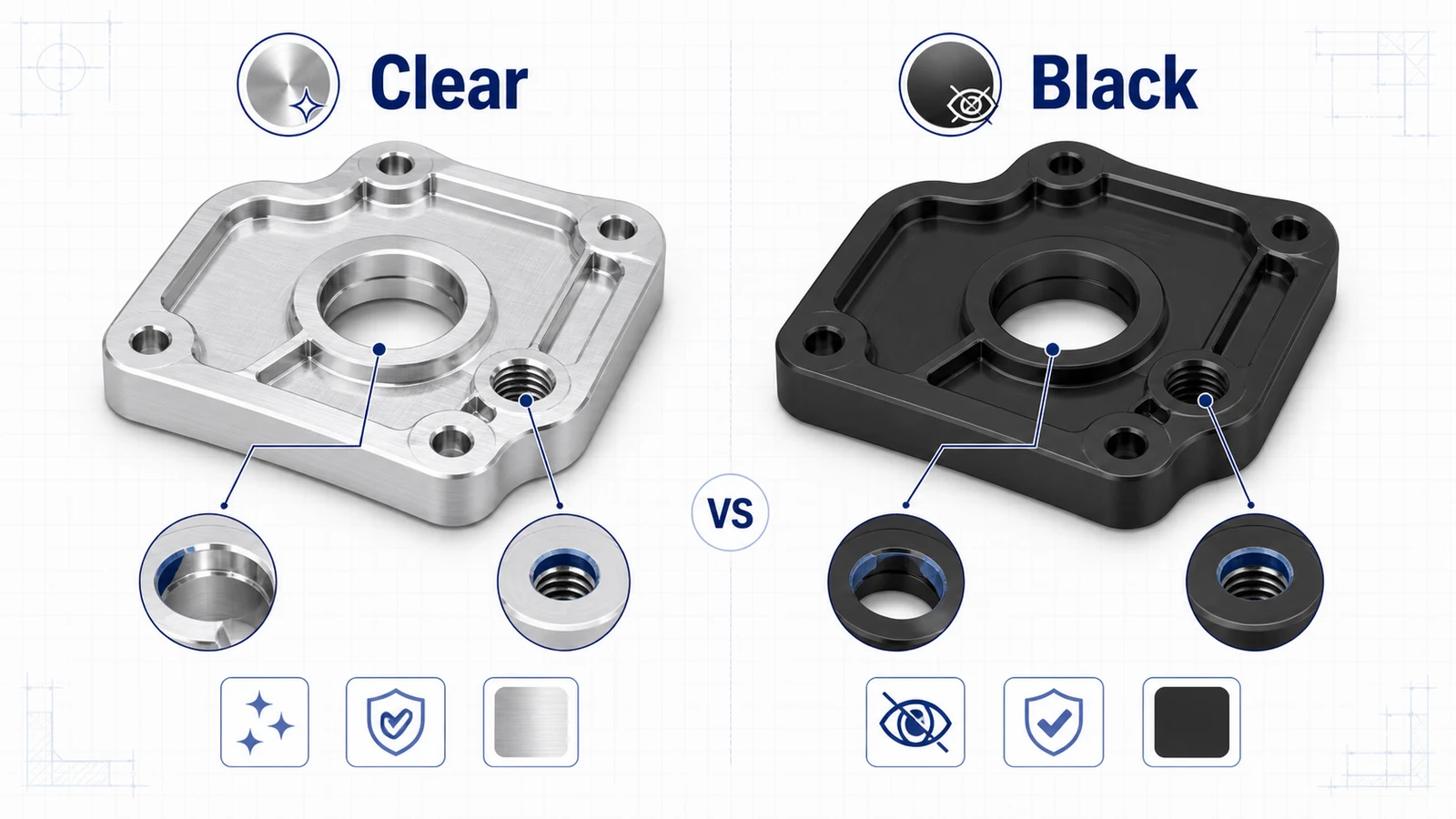
Clear anodize and black anodize are both common Type II finishes for CNC machined aluminum parts. They improve corrosion resistance and handling durability, but they solve different appearance and functional problems. Clear anodize keeps the aluminum look. Black anodize creates a dark surface for glare control, product aesthetics, and visual contrast.
The best choice depends on alloy, surface texture, cosmetic requirements, electrical needs, and how the part will be used.
Quick comparison
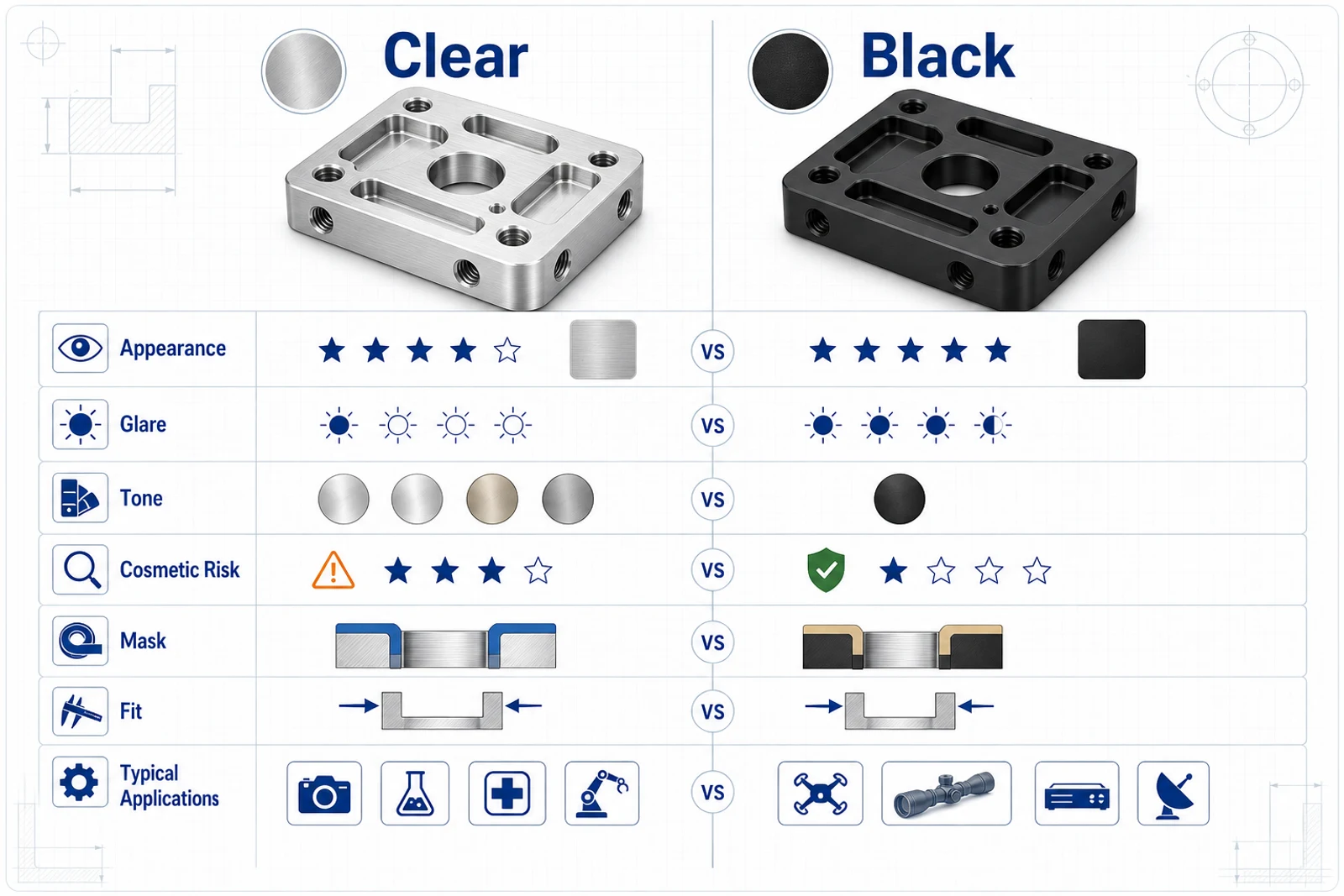
| Requirement | Clear anodize | Black anodize |
|---|---|---|
| Appearance | Natural metallic aluminum tone | Dark black or charcoal surface |
| Best alloy match | 6061, especially for uniform appearance | 6061 and 7075, with color range approved |
| Glare control | Limited | Good for optics, sensors, and visible hardware |
| Cosmetic risk | Alloy tone and machining marks remain visible | Dye hides some alloy tone variation but not surface defects |
| Heat absorption | Lower | Higher, useful or harmful depending on application |
| Typical use | Housings, brackets, panels, general protection | Optical parts, robotics, electronics, customer-facing dark hardware |
Both finishes need proper drawing notes. “Anodize black” is better than nothing, but it is still incomplete.
When clear anodize is the better choice
Clear anodize is often chosen for 6061 aluminum parts where the designer wants corrosion protection without changing the material appearance. It is common for instrument housings, brackets, panels, lab equipment, automation plates, and general machined aluminum components.
Clear anodize works especially well when the machined surface is already attractive or when bead blasting is used to create a uniform satin texture. It also helps purchasing teams avoid color matching problems because there is no black dye to control. However, clear anodize does not mean colorless. Different alloys and even different material lots can produce slightly different tones.
For visible multi-part assemblies, keep parts in the same alloy and finish lot when appearance matters. The clear anodized aluminum page covers typical thickness and design notes.
When black anodize is the better choice
Black anodize is used when the part should visually disappear, reduce glare, match surrounding hardware, or look like a finished product component. It is common for optical housings, camera mounts, electronics enclosures, robotics brackets, machine covers, and consumer-adjacent hardware.
Black dye can hide some alloy tone differences better than clear anodize, but it does not hide scratches, poor deburring, tool marks, or inconsistent blasting. If the surface must be cosmetic, specify bead blast before black anodize and identify visible faces.
For optics and sensor applications, black anodize may be functional rather than cosmetic. Internal cavities, baffles, and mounting faces may need dark, low-glare surfaces. The black anodized aluminum page is the right starting point for those requirements.
Alloy effects
6061 is the safest choice for consistent clear or black anodize. 7075 can be black anodized successfully and is often used when strength matters, but clear anodize may look darker. MIC-6 and some cast materials can anodize for protection, but they are not ideal for bright cosmetic surfaces.
If the drawing combines 6061 and 7075 visible parts, approve color samples or switch to black anodize if visual matching matters. If the part is hidden inside a machine, function should drive the choice more than appearance.
Surface texture before anodize
Anodize follows the surface underneath it. A milled face with tool marks will still show tool marks. A bead blasted face will look more uniform. A scratched part will still show damage after anodize, sometimes more clearly.
For customer-facing parts, specify:
- Cosmetic faces.
- Surface preparation, such as bead blast before anodize.
- Areas where rack marks are acceptable.
- Maximum acceptable scratches or stains.
- Packaging requirements to protect the finish.
This reduces subjective disputes after production.
Masking, threads, and fits
Both clear and black anodize add film thickness. Bores, slots, threads, and press-fit areas may need masking or post-finish sizing. If dimensions apply after finish, say so. If a grounding surface must remain conductive, show the masked area on the drawing.
For threaded holes, decide whether anodize is acceptable. Small threads may tighten. Frequently used aluminum threads may also need inserts, especially in housings or brackets that will be assembled repeatedly.
Cost and lead time
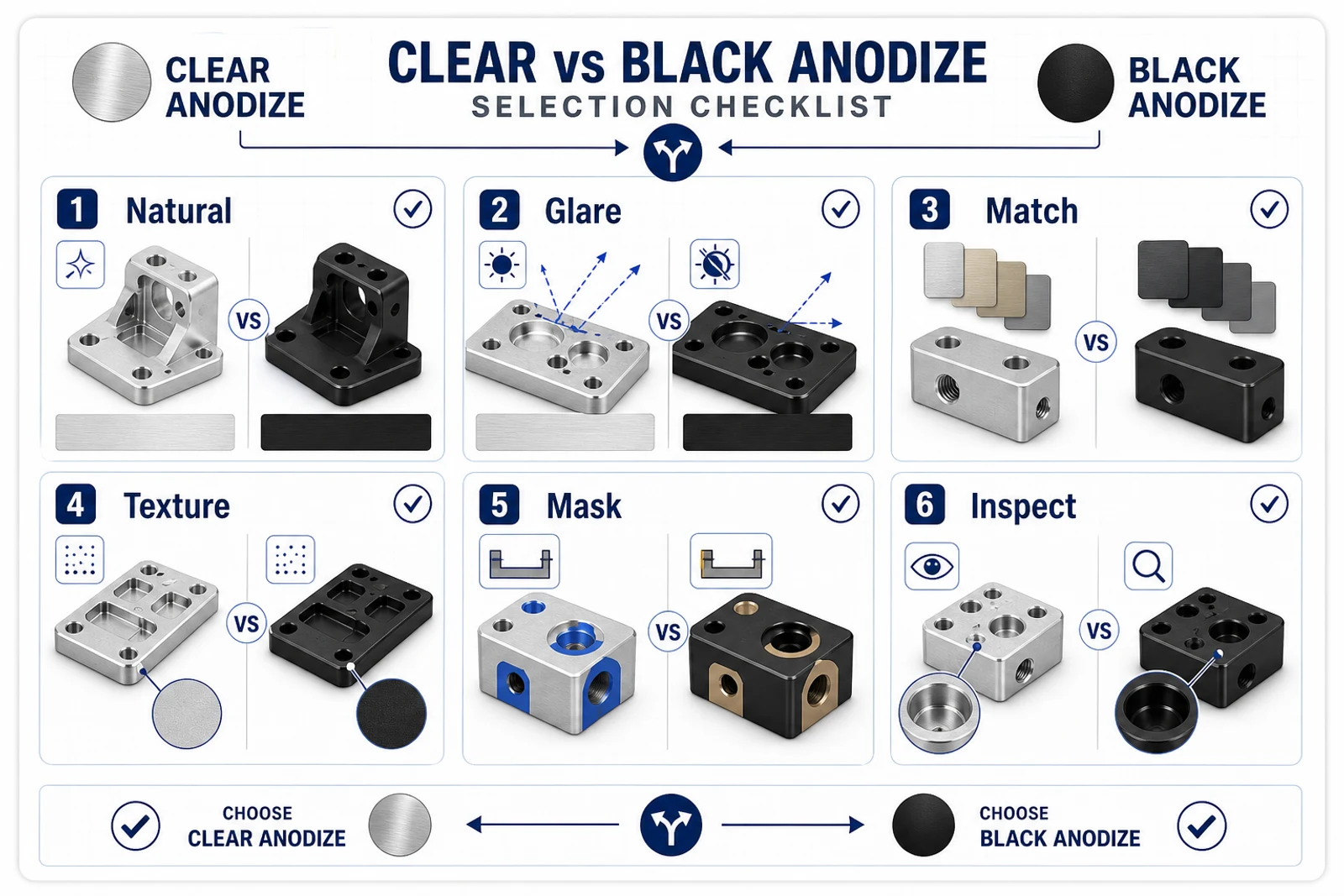
Clear and black Type II anodize are usually cost-effective finishes. Black anodize may add dye control and cosmetic inspection compared with clear. Bead blasting, masking, and special packaging add more cost than the color choice alone.
For RFQs, include type, color, thickness, pre-treatment, masking, and cosmetic requirements. If you are unsure, send application notes and ask the supplier to recommend clear, black, or hardcoat based on function.