
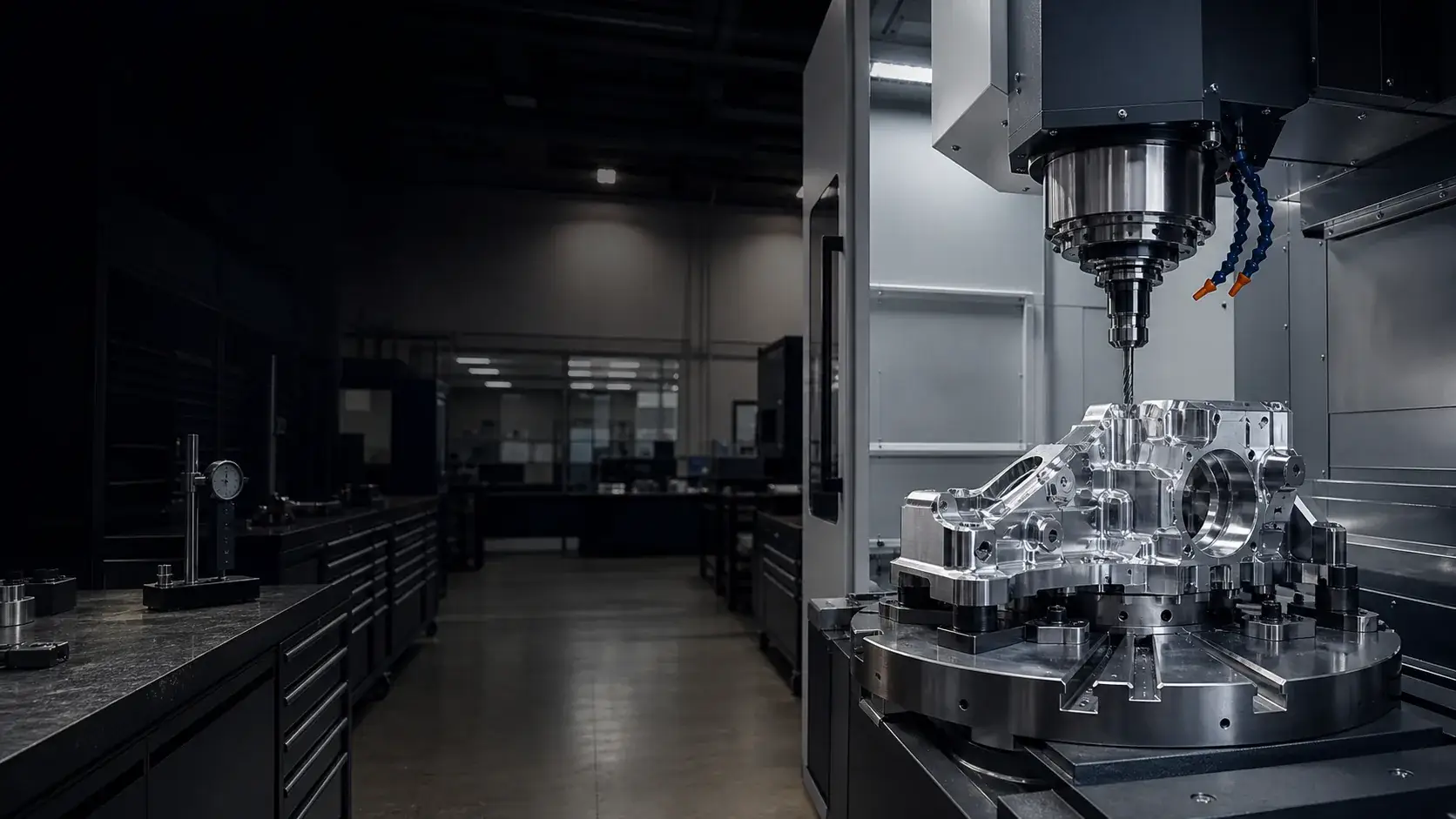
Machined-from-billet enclosures for test, measurement, and scientific instruments with connector faces and internal standoff bosses.
Electronics enclosures & thermal hardware
Aluminum CNC Machining for Electronics Housings
Electronics enclosures do four jobs at once — protect the board, sink the heat, shield the emissions, and look like the product. Machined aluminum is the only enclosure route that does all four without tooling investment.
We CNC machine instrument housings, EMI enclosures, heat sinks, and front panels from 6061 billet, with grounding, masking, and cosmetic decisions made at CAM rather than discovered at assembly.
- ISO 9001:2015
- Prototype to production
- Engineering review within one business day
- Material certificates available
- FAI reports available
Typical components
Electronics hardware we machine
From one-off instrument prototypes to recurring product enclosures — the part families below cover most electronics RFQs we see.
Cavity housings with continuous conductive lands, gasket grooves, and chem-filmed interiors for emissions control.
Finned sinks, spreaders, and liquid cold plates where machined flatness at the thermal interface sets junction temperature.
Anodized panels with machined cutouts, engraved legends, and countersunk hardware — the face of the product.
Rails, standoff plates, and board-stack hardware locating PCBs to connector-face tolerances.
Compact sealed bodies with O-ring grooves, lens bores, and black anodized interiors for optical modules.
Recommended aluminum grades
Alloy choices for enclosure work
Electronics enclosures are a 6061 monoculture for good reasons — thermal, cosmetic, and cost all point the same way. The exceptions are specific.
| Alloy | Why this industry specifies it | Typical parts |
|---|---|---|
| 6061-T6 | Thermal conductivity around 167 W/m·K, the most uniform anodize of any structural alloy, and predictable thin-wall machining — the enclosure default. | Housings, heat sinks, panels — nearly everything |
| 5052-H32 | Formed-and-machined covers and outdoor enclosure panels; better corrosion margin for field-installed hardware. | Covers, outdoor panels, sheet-hybrid enclosures |
| MIC-6 cast plate | Large flat chassis plates and optical bench-style bases inside instruments, where flatness holds board stacks coplanar. | Chassis base plates, internal reference plates |
| 7075-T6 | Rare in enclosures — justified when the housing is also a structural member, accepting its darker anodize tone. | Structural housings on drones and portable equipment |
| 2024-T351 | Not recommended for enclosures: no thermal or cosmetic advantage, and its corrosion behavior fights field service. | Legacy prints only |
Machining challenges
The machining problems enclosures concentrate
Enclosure quality is decided in thin walls, flat lands, and coating boundaries — the places where machining and electronics requirements meet.
Hogging a housing from billet leaves 1–1.5 mm walls around deep cavities. Stepped roughing and light finishing keep walls straight; uniform wall design keeps them that way after the part relaxes — we flag mismatches at review.
A TIM joint is only as good as its flattest surface. Cold plate and sink interfaces get explicit flatness (0.05 mm/100 mm typical) and Ra callouts, machined and measured — thermal margin shouldn't depend on paste thickness.
Anodize is a dielectric: a fully anodized enclosure is a fully insulated one. Gasket lands, grounding bosses, and fastener seats get masked bare or chem-filmed — mapped in CAD before coating, not scraped clean after.
Panel cutouts must land on connectors positioned by PCB tolerances plus standoff tolerances. We machine connector faces to the datum scheme of the board mounting, and recommend clearance strategy at DFM when stacks get tight.
The visible surfaces of a product enclosure are protected from first clamp to final pack: fixturing from non-cosmetic faces, bead blast for uniformity, and racking marks placed where the customer never sees them.
Machined fins cost by aspect ratio: 3:1 fins are routine, 8:1 fins are slow. When fin count drives cost, we'll model alternatives — thicker fins, more area, or a skived/extruded hybrid — against your thermal budget.
Surface finishing
Finishing enclosures: cosmetics outside, conductivity inside
Most enclosures ship with two finishes on one part — decorative anodize where people look, conductive chem-film where currents flow.
The product-enclosure standard: bead blast then black anodize for a uniform matte that hides fingerprints and wear.
Instrument-grade natural aluminum look; also the default for internal frames and heat sink bodies.
Conductive protection for EMI lands, grounding points, and full interiors — selectively applied with anodize via masking.
The cosmetic equalizer before anodize; grit specified and held constant across a product family.
Legends, logos, connector labels, and regulatory marks — engraved before anodize or laser-marked after, chosen by contrast requirement.
Directional satin for consumer-adjacent front panels; grain direction specified on the drawing.
Full finish specifications live in the aluminum surface finishes hub — including clear anodized, black anodized, hardcoat anodized, chem film, and laser marking guides.
Inspection & quality
Inspection for enclosure programs
Enclosure inspection follows function: fits, flats, and finishes each get their own verification, documented to the level your program needs.
- First article inspection
Full FAI on new enclosures — including assembly checks with lids, inserts, and hardware where supplied. - Flatness verification
Thermal interfaces and gasket lands measured, with reports referencing your drawing's flatness zones. - Cosmetic inspection
Boundary samples and agreed viewing standards per product family, applied per batch on visible surfaces. - Masking verification
Bare-metal grounding lands and masked features checked for conductivity and film absence after coating. - Thread and insert checks
Gauged threads, verified insert installation, and post-anodize thread fit confirmation. - Material and finish certificates
Alloy traceability plus anodize/chem-film process certificates when your compliance chain needs them.
Project gallery
Electronics enclosure machining examples
Representative enclosure work: pocketed housings, thermal hardware, and finished cosmetic surfaces.
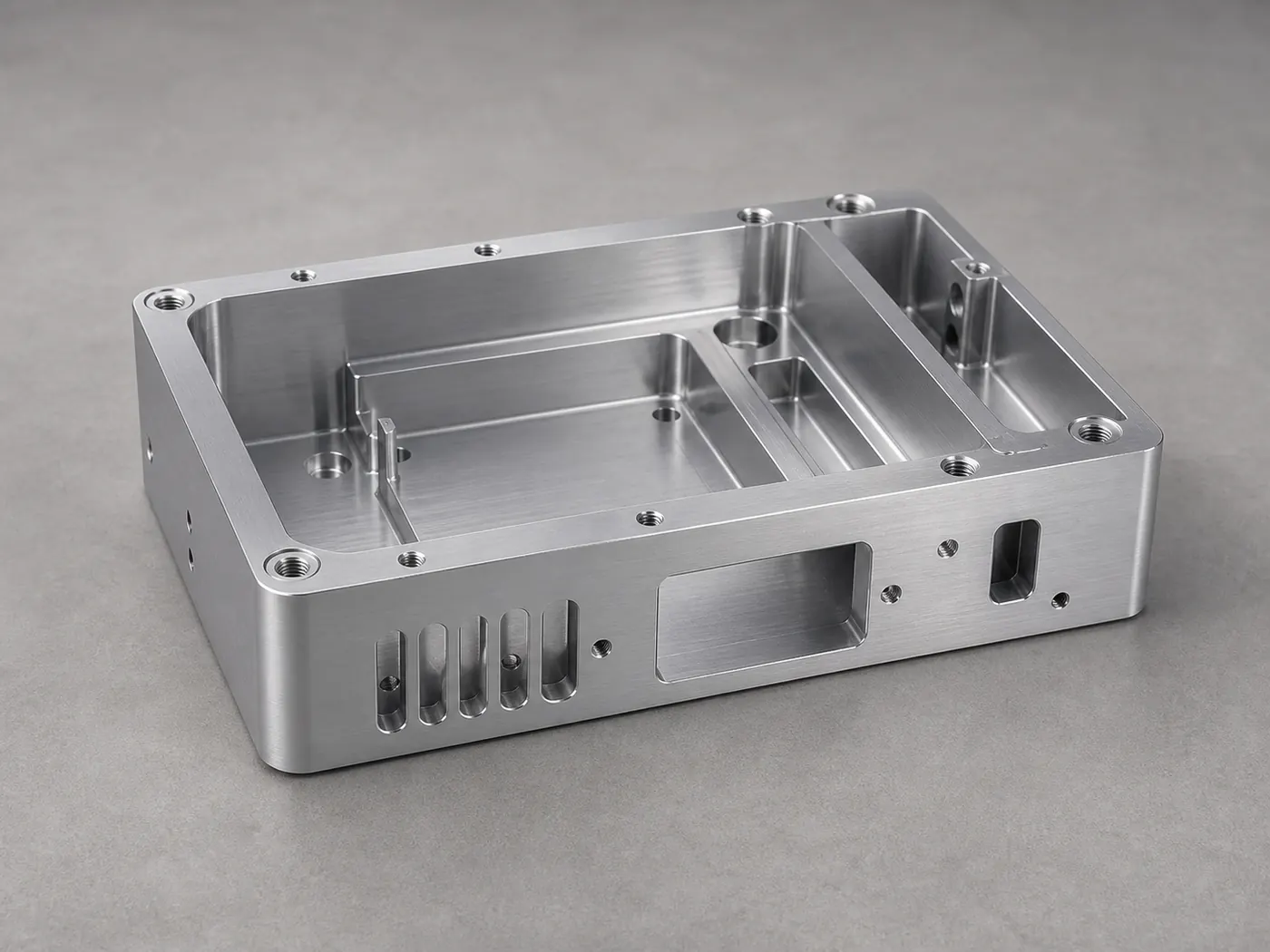
Machined instrument housings
Billet 6061 enclosures with standoff bosses, connector faces, and seal grooves.
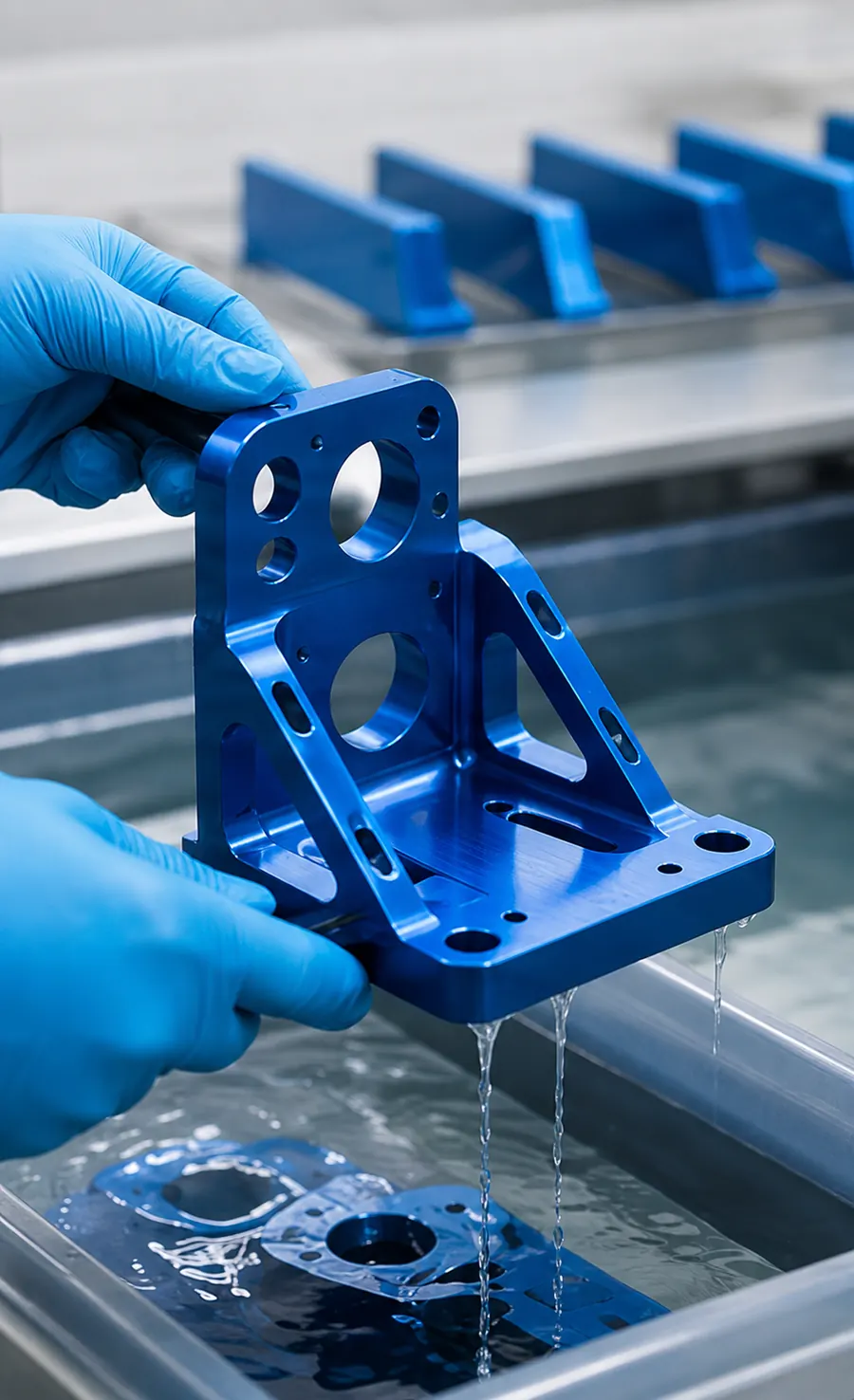
Anodized enclosure finishing
Bead-blasted and anodized housings with masked EMI lands and grounding bosses.
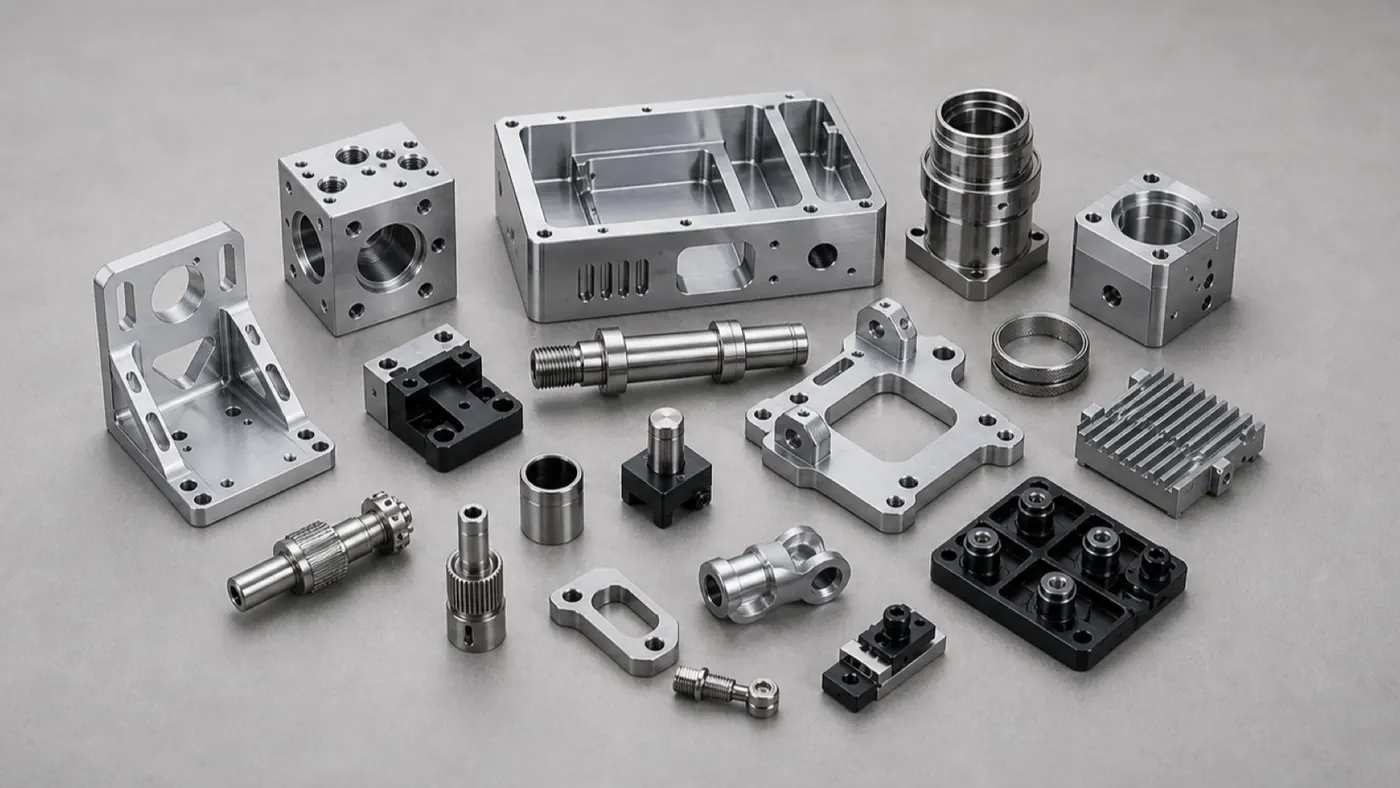
Panels, frames, and thermal parts
Front panels, card frames, and heat-spreading hardware machined as product sets.
Related guides
Guides electronics teams use next
The deepest-overlap guides for enclosure programs.
Aluminum CNC machined housings & enclosures
The product-level enclosure guide: wall rules, seal grooves, and tolerance tables.
Anodized aluminum CNC machining
Film thickness, masking, racking marks, and color consistency for cosmetic enclosures.
Aluminum CNC machining for medical device hardware
Enclosures with cleanability and documentation requirements layered on top.
Case studies
Case studies from this industry
Representative aluminum CNC projects for this sector — with specifications, engineering challenges, and inspection notes.
Electronics Aluminum Electronics Housing — 6061-T6 Instrument Enclosure
A pocketed 6061-T6 instrument enclosure with connector cutouts, standoff bosses, and conductive grounding pads, machined and finished for a low-volume electronics build.
Aluminum Housings Aluminum Control Module Enclosure — Sealed 6061 Housing
A sealed 6061-T6 control module enclosure with a machined O-ring gland, threaded service bosses, and a bead-blasted black anodize finish for vibration- and coolant-exposed environments.
Browse the full engineering portfolio in the aluminum CNC machining case studies hub.
Quote your aluminum enclosures
Upload housing CAD with cosmetic faces, grounding lands, and thermal interfaces marked. An engineer reviews wall geometry, masking plan, and finish spec, then returns a quote within one business day — prototype through product launch.
- Prototype to production
- Engineering review within one business day
- Material certificates available
- ISO 9001 quality management