
The classic 5052 territory: salt spray and immersion service where its magnesium chemistry resists pitting without perfect coatings.
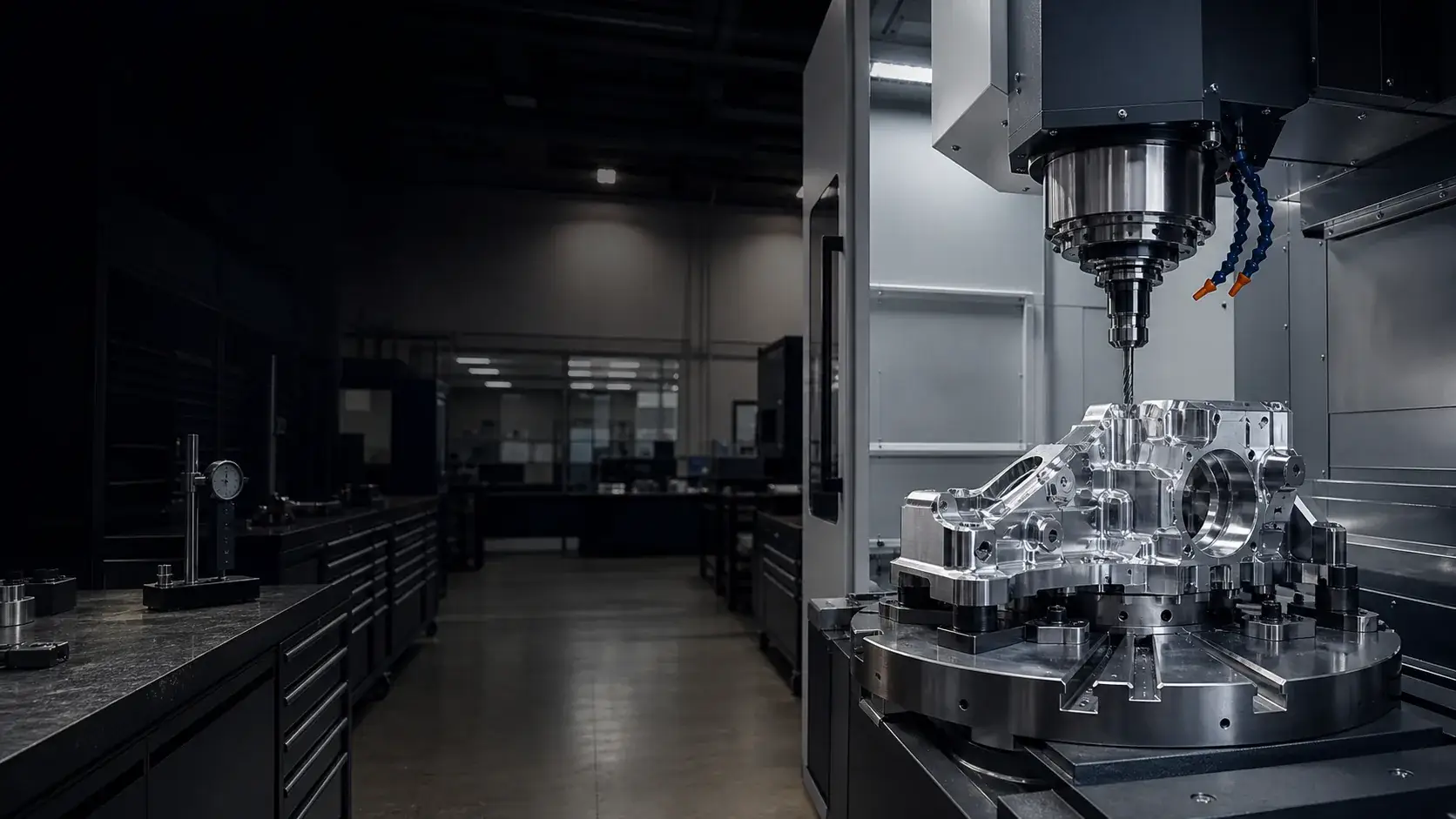
5052-H32 corrosion-resistant machining
5052 Aluminum CNC Machining
5052 is the corrosion specialist: the best salt-water resistance of the common aluminum grades, excellent formability, and modest strength.
We machine 5052-H32 for covers, enclosures, and wet-environment hardware — and for hybrid parts that start as bent sheet and finish with CNC-machined precision features.
- ISO 9001:2015
- Prototype to production
- FAI reports available
- Material certificates available
- Engineering review within one business day
What it's best for
Where 5052 earns its place
Pick 5052 when the environment is wet or the part starts as sheet. It survives conditions that pit 6061 and destroy 2024 — at the price of roughly half of 6061's yield strength.
Covers, chutes, and panels on lines cleaned with hot water and chemicals daily — 5052 shrugs off what stains other alloys.
Bent 5052 sheet bodies with machined faces, located holes, and tapped features added after forming — cheaper than milling the whole part from billet.
Non-structural enclosure covers where formability, corrosion resistance, and cost beat strength requirements.
Tanks and wet-side panels — 5052 is a standard fuel-tank alloy, weldable and corrosion-tolerant.
Anything structural or tightly toleranced across large faces: for strength choose 6061 aluminum machining; for precision flat plates choose MIC-6.
Common CNC machined parts
Parts we machine from 5052
Our 5052 work is dominated by enclosure and panel hardware — machined features on formed or plate stock.
Lids and access panels with machined gasket faces, connector cutouts, and tapped patterns.
Formed-and-machined electronics housings for wet or outdoor installations.
Lightly loaded brackets, covers, and shields for boats, docks, and coastal equipment.
Food and pharma line guards with machined edges, hinge features, and fastener patterns.
Instrument sub-panels with machined flatness on mounting zones and located hardware holes.
Low-pressure sealing plates where corrosion resistance matters more than rigidity.
Buying for a specific industry? See how this material fits robotics, automation equipment, medical device hardware, aerospace tooling, electronics housings, and industrial equipment programs.
Machining considerations
Machining 5052: soft, gummy, and manageable
5052 is the least machinable alloy on our list — not difficult, but it behaves differently, and drawings that ignore that pay for it in finish quality.
5052 smears rather than shears when tools dull. We run polished, high-rake cutters and generous coolant; for your design it means fine engraved details and knife-edge features come out worse in 5052 than any other grade here.
Expect Ra 1.6 µm as the practical standard; chasing Ra 0.8 on 5052 costs disproportionately. If a sealing face needs finer, consider a design that puts that face on a 6061 detail.
Every drilled hole and milled edge raises a rolled burr. We deburr thoroughly — but on thin sheet-derived parts, specify edge condition explicitly if edges are handled or sealed against.
Sheet-thickness 5052 flexes under clamping and cutting. Machined features on formed parts get fixtured on nests — that fixture is part of the quote on hybrid parts, and worth it from the second batch on.
Tapped threads in soft 5052 strip earlier than in 6061. For anything serviced or torqued firmly, helical inserts move the wear to hardware.
Strain-hardened H32 cuts noticeably better than dead-soft O temper. Unless you're forming severe bends, specify 5052-H32.
Surface finishing
Finishing 5052: good options, one caveat
5052 finishes well — its corrosion resistance even permits bare service — but its anodized cosmetics differ from 6061 in ways worth knowing before you match parts side by side.
Legitimately viable for 5052 in many wet environments — the alloy self-passivates well. Specify cleanliness and edge condition instead of a coating.
Good protection boost for salt service; the film reads slightly warmer/greyer than on 6061 — avoid mixing the two alloys on one visible surface.
Even and durable on 5052; the standard cosmetic pick for outdoor electronics covers.
Both work, with a caution: 5052's softness telegraphs handling marks, so brushed cosmetic faces should be finished late and packed carefully.
A natural pairing on covers and guards — 5052 under powder coat is a proven outdoor combination, with machined features masked.
For grounding continuity on enclosure panels and as paint prep; near-zero thickness preserves machined fits.
Each finish has its own engineering guide: as-machined, bead blasted, clear anodized, black anodized, hardcoat anodized, chem film, and laser marking — or compare them all in the surface finishes hub.
Tolerance & inspection
Tolerance guidance for 5052 parts
Tolerance expectations on 5052 should track its stiffness, not the machine's capability — thin, soft parts move under their own clamping.
| Feature | Typical capability | Engineering notes |
|---|---|---|
| General machined dimensions | ±0.05 mm | On rigid sections; thin sheet features realistically ±0.1 mm |
| Critical machined features | ±0.02 mm | On fixtured, well-supported zones — call them out so we fixture for them |
| Formed + machined hybrid parts | ±0.1 mm machined-to-bend relationships | Bend springback dominates; machine-after-form for tight relationships |
| Threaded holes | 6H tapped, inserts recommended | Soft threads: specify inserts on serviced joints |
| Flatness on panels | 0.1 mm per 100 mm | Sheet-derived parts; machined-from-plate faces can go tighter |
| Surface roughness | Ra 1.6 µm practical standard | Finer finishes on 5052 cost disproportionately — design around it |
Before you upload CAD
5052 drawing checklist before you upload
Most 5052 RFQ friction comes from treating it like 6061. These points keep the quote and the parts matching your intent.
- Confirm the strength case
5052-H32 yields around 160 MPa — half of 6061-T6. If any feature is structural, check it, or ask us to. - Specify temper H32
It machines better than O temper and forms better than H34 — the right default for hybrid parts. - Decide bare vs. coated deliberately
5052 can ship bare into wet service; if you coat it, note whether it's for cosmetics or extra protection — it changes the process. - Dimension machined features from formed datums
On sheet-plus-CNC parts, reference machined features to real formed surfaces we can fixture on, not to theoretical bend intersections. - Set realistic edge and finish notes
Specify edge break and Ra only where function needs it — 5052's soft burrs make blanket fine-finish notes expensive. - Send STEP, flat-pattern DXF if formed, and PDF
For hybrid parts include the sheet thickness and bend spec; engineering review returns within one business day.
Related product applications
Where 5052 fits in our product work
The part families where corrosion resistance and sheet-hybrid construction come up most.
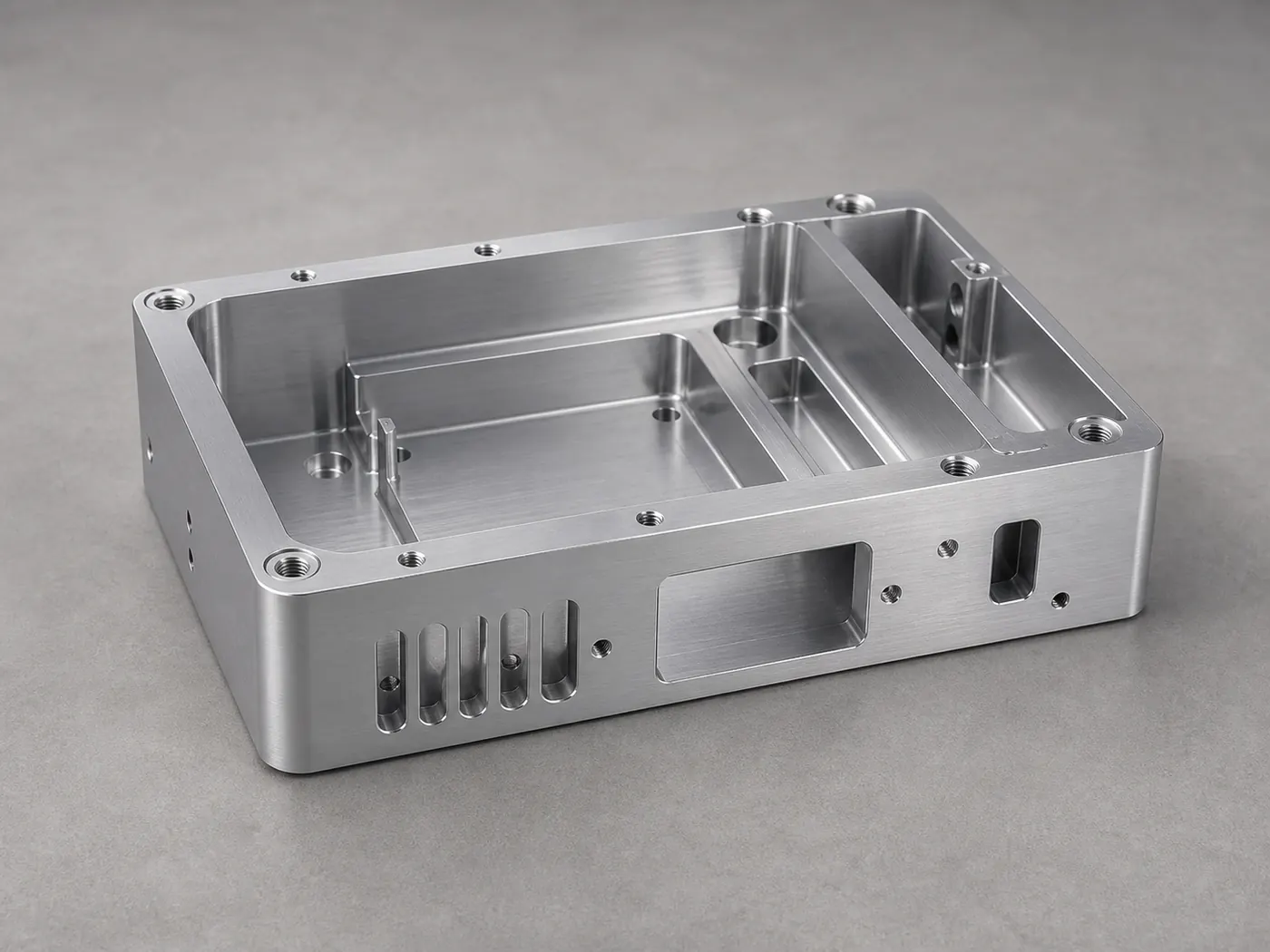
Aluminum CNC machined housings & enclosures
Covers, lids, and wet-environment enclosures where 5052 complements 6061 bodies.
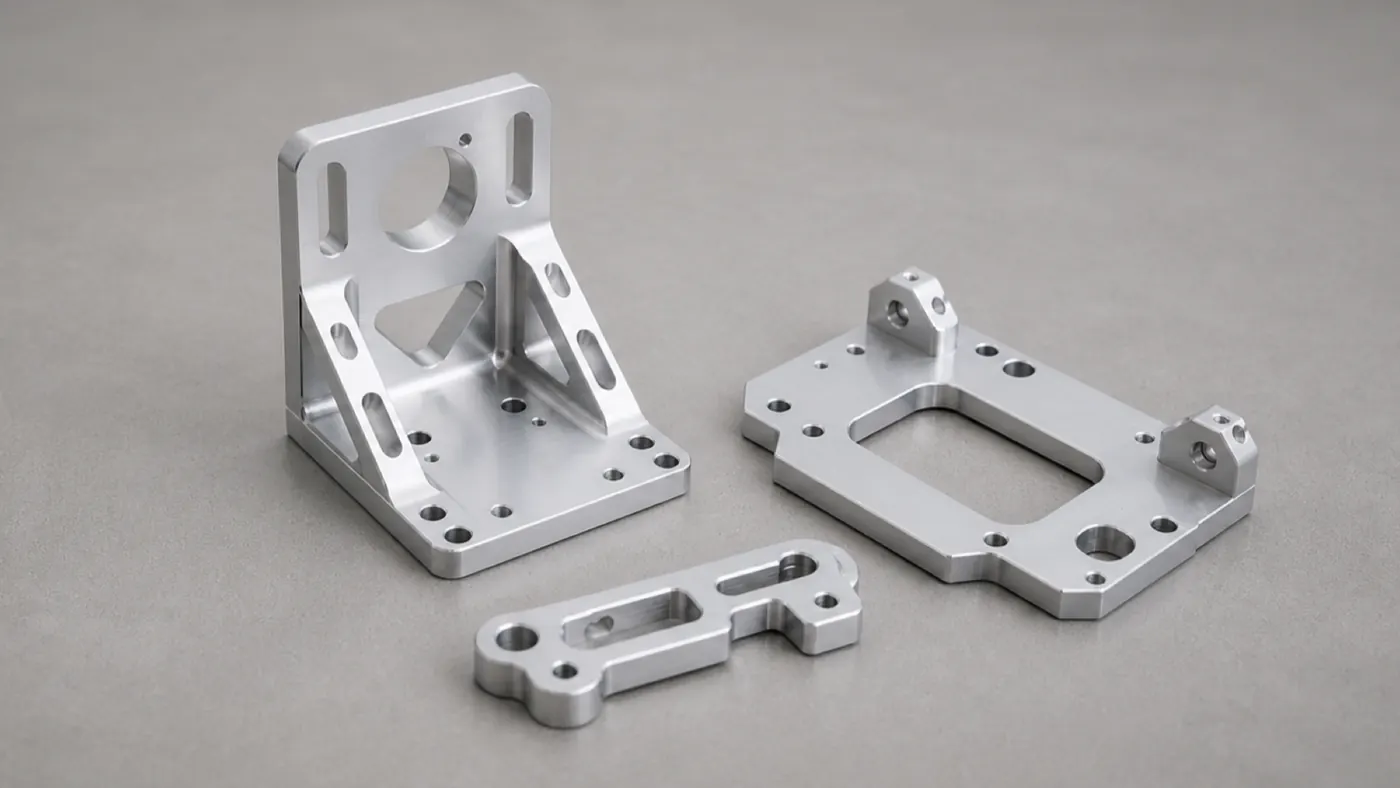
Custom aluminum CNC brackets & mounts
Lightly loaded washdown and outdoor brackets machined from 5052 plate.
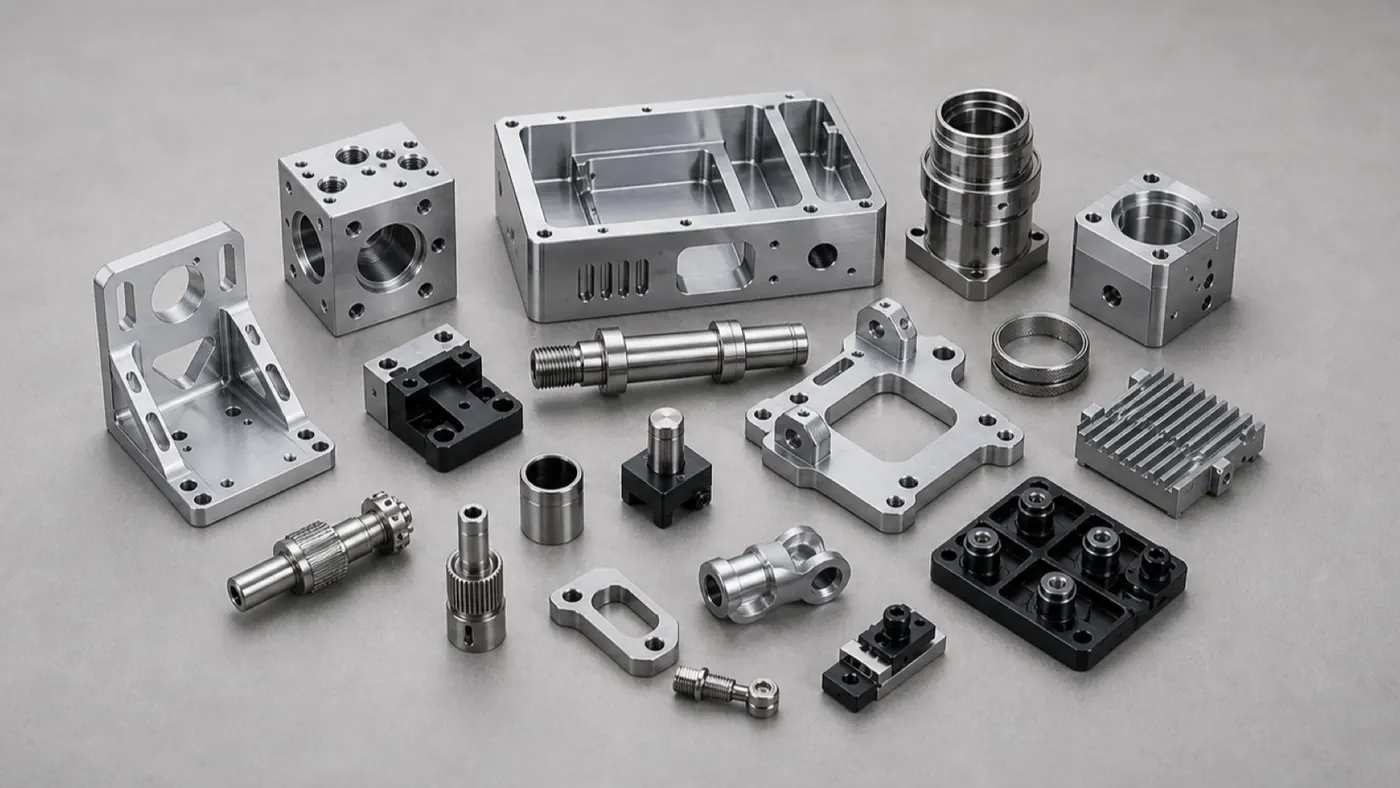
Custom aluminum CNC machined parts
Drawing-built 5052 components including formed-and-machined hybrid parts.
Case studies
Case studies machined in this alloy
Aluminum CNC projects that use this grade — with specifications, engineering challenges, and inspection notes.
Electronics Aluminum Electronics Housing — 6061-T6 Instrument Enclosure
A pocketed 6061-T6 instrument enclosure with connector cutouts, standoff bosses, and conductive grounding pads, machined and finished for a low-volume electronics build.
Medical Devices Medical Diagnostic Enclosure — Cleanable Anodized Housing
A cleanable aluminum diagnostic enclosure with smooth radii, traceable material certificates, and a bead-blasted clear anodize finish, machined for benchtop lab and diagnostic equipment.
Industrial Equipment Industrial Pump Housing — Machined 6061 Body with Sealed Bores
A 6061-T6 pump housing with concentric bearing bores and sealed internal passages, hardcoat and chem-film finished to survive vibration, wear, and coolant in industrial service.
Browse the full engineering portfolio in the aluminum CNC machining case studies hub.
Quote your 5052 aluminum parts
Send STEP models, PDF drawings, temper and finish notes, and quantity — include sheet thickness and bend details on hybrid parts. An engineer reviews fixturing, finish feasibility, and corrosion strategy within one business day.
- STEP or IGES models
- PDF drawings with critical dimensions
- Alloy, temper, and finish notes
- Target quantity and timeline