
Sealed Type II film survives humidity, handling, and cleaning agents that stain bare aluminum within weeks.
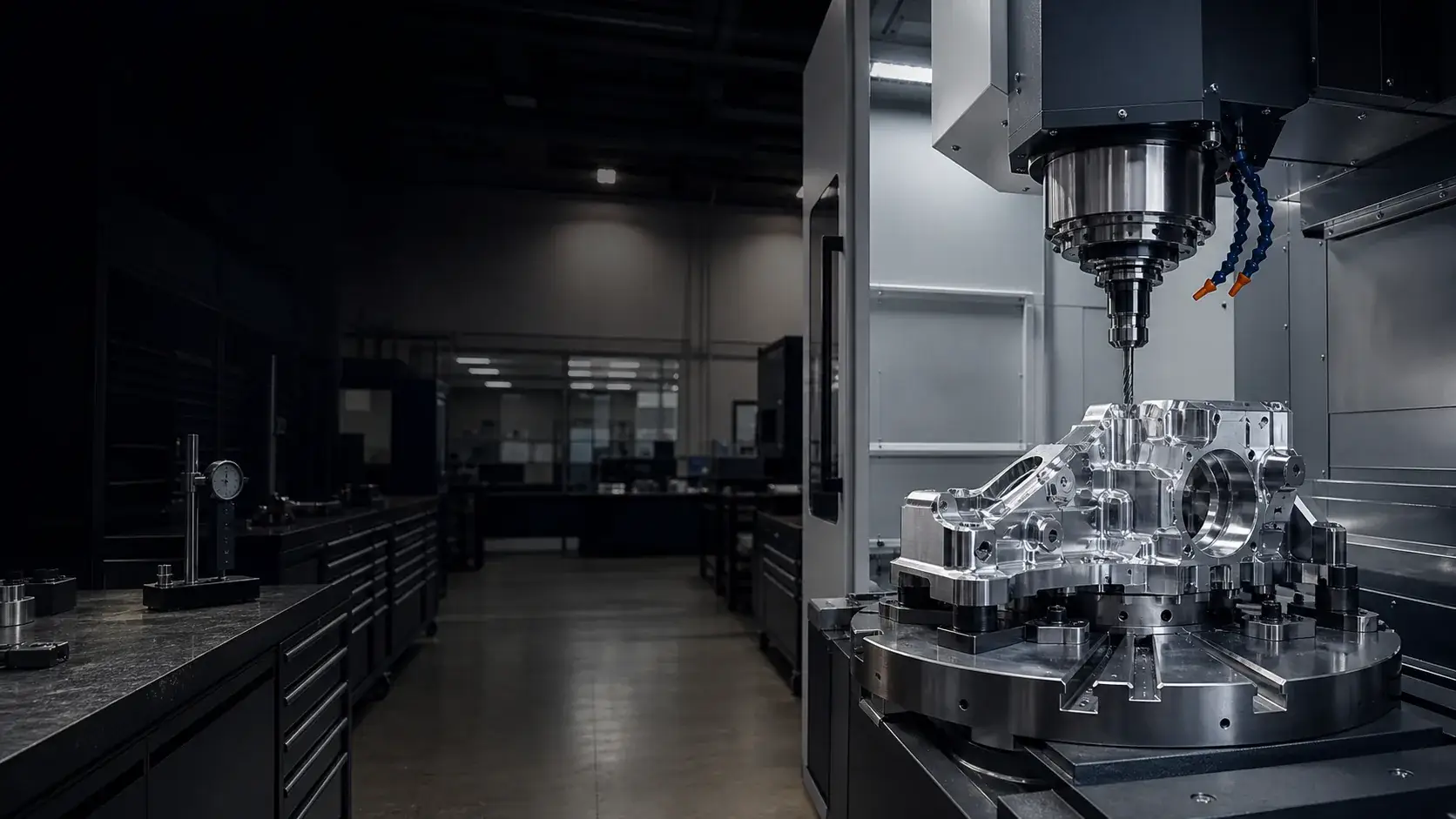
Type II clear anodize
Clear Anodized Aluminum
Clear anodize is the default protective finish for machined aluminum: a Type II sulfuric-acid film, 8–15 µm thick, that locks in the metallic look while making the surface hard, corrosion-resistant, and wipeable.
If a part needs to survive handling and humidity without changing how it looks or measures, this is the finish that does it for the least money.
What this finish is
Grown from the part, not painted on
Anodizing converts the aluminum surface itself into aluminum oxide by passing current through the part in a sulfuric acid bath. The film grows both into and out of the metal — roughly half in, half out — which is why it can't peel like paint and why it slightly changes dimensions.
'Clear' means no dye is added before the pores are sealed: the film is transparent, and the part keeps its metallic silver tone with a subtle satin shift. Sealing in hot water or nickel acetate closes the porous structure, locking in the corrosion resistance.
- Process & spec
Type II sulfuric anodize per MIL-A-8625; specify class and thickness on the drawing. - Film thickness
8–15 µm typical — dimensional growth ~half the film per surface, usually inside ±0.02 mm budgets. - Hardness
Substantially harder than bare aluminum; resists scratches and wipe-wear, not gouging. - Electrical behavior
Dielectric — grounding points must be masked or chem-filmed. - Appearance
Transparent satin-silver; final look tracks the surface prep (machined vs. bead blasted) and the alloy.
Benefits
Why clear anodize is the default
It solves the three failure modes of bare aluminum — corrosion, fingerprints, and handling wear — at the lowest finishing cost.
The only protective finish that preserves the metallic aluminum aesthetic engineers usually want to keep.
Hard oxide shrugs off the daily contact that polishes and mars bright bare surfaces.
At 8–15 µm, most toleranced features need no compensation — confirm only on precision fits.
Laser marking on clear anodize produces crisp dark contrast for part numbers and legends.
The dielectric film isolates mounting faces — an asset or a trap, depending on your grounding plan.
Typical applications
Where clear anodized parts are specified
Essentially everywhere machined aluminum meets people, humidity, or paying customers — clear anodize is the volume finish of precision machining.
The standard protective finish for machined enclosures in test, measurement, and industrial equipment.
Brackets, plates, and guards handled with coolant-wet gloves through years of service.
Sealed film withstands disinfectant wipe-downs — the baseline finish for clinical hardware.
Arm hardware and cell components protected without hiding their machined character.
General protection on tools and GSE where hardcoat's thickness isn't needed.
Bead blasted plus clear anodize — the recipe behind the 'premium aluminum' look.
Design considerations
Designing for clear anodize
Clear anodize is forgiving, but these callouts prevent the handful of surprises it can spring.
Write 'Type II clear, 10–15 µm' rather than 'anodize'. Thickness drives protection, fit change, and price — make it a number.
One drawing note — 'dimensions apply after anodize' — resolves every fit question. It's usually the right answer.
The film is an insulator. EMI lands, ground pads, and bonding faces get masked bare or chem-filmed after — mark them in CAD.
Type II over threads slightly tightens fit; usually acceptable at 6H/6g but state your preference so gauging matches.
Every part hangs on a rack that leaves a small bare witness mark. Approve a location — inside a bore, under a label — before the first batch.
Clear film shows the metal's own tone: 6061 bright, 7075 darker. Parts that sit together should share an alloy and an anodizing lot.
Compatible aluminum grades
Alloy compatibility with clear anodize
All the common grades take Type II — what changes is the color you get.
| Alloy | Suitability | Engineering notes |
|---|---|---|
| 6061-T6 | Excellent | The reference: bright, uniform, repeatable silver — design cosmetic sets around it |
| 5052-H32 | Very good | Slightly warmer tone than 6061; great added protection for wet service |
| 7075-T6 | Good | Yellow-grey cast from zinc content — fine alone, mismatched next to 6061 |
| 2024-T351 | Fair | Thinner, greyer film — treat as protection; use black anodize for cosmetics |
| MIC-6 | Fair | Mottled matte result on cast structure — acceptable on tooling, not on show faces |
Comparing coatings instead? Return to the aluminum surface finishes hub or read the full anodized aluminum CNC machining guide.
Related products
Parts we clear anodize most
The product families where clear anodize is the default line on the drawing.
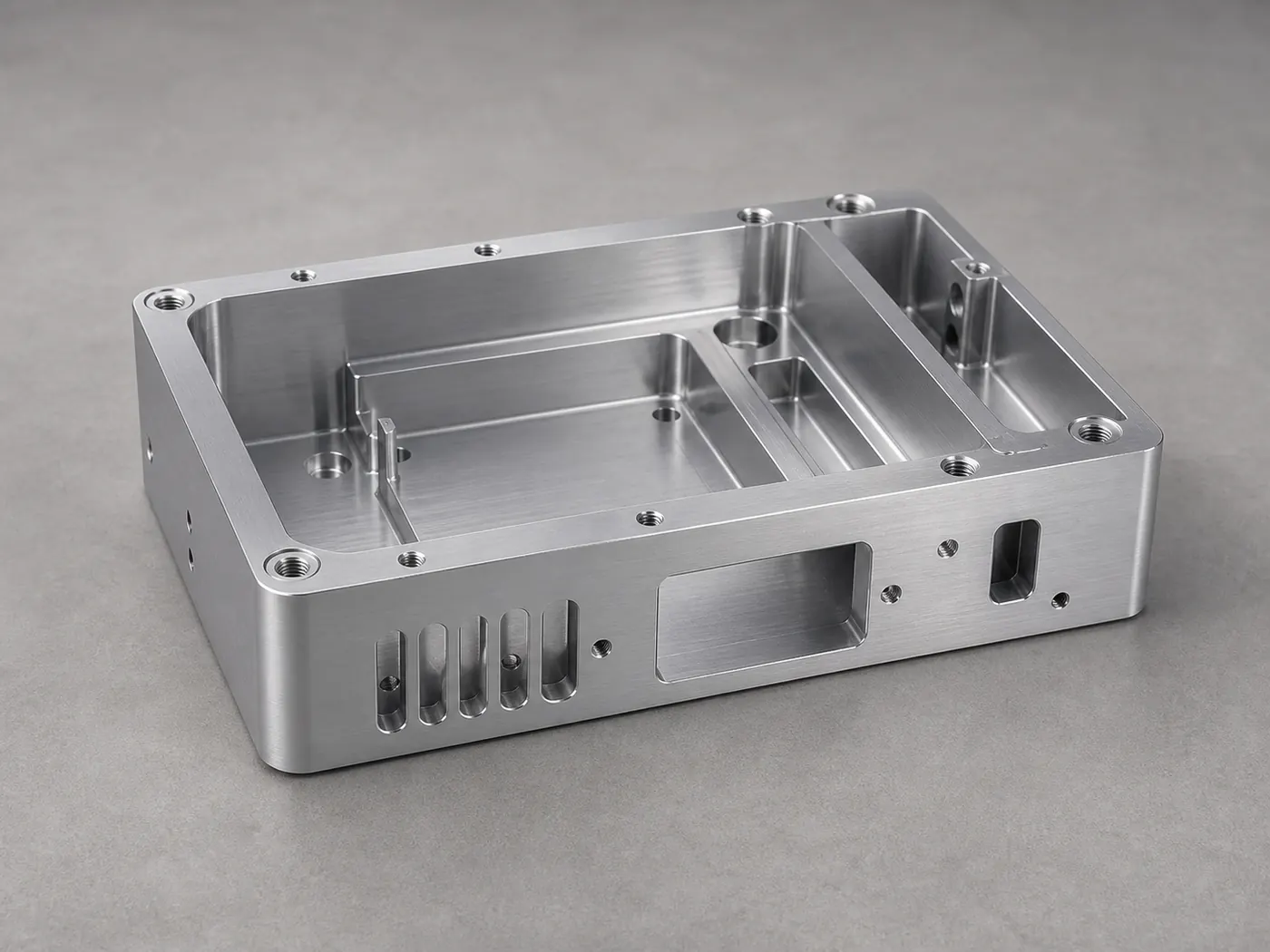
Aluminum CNC machined housings & enclosures
The highest-volume clear anodized part family — enclosures with masked EMI lands.
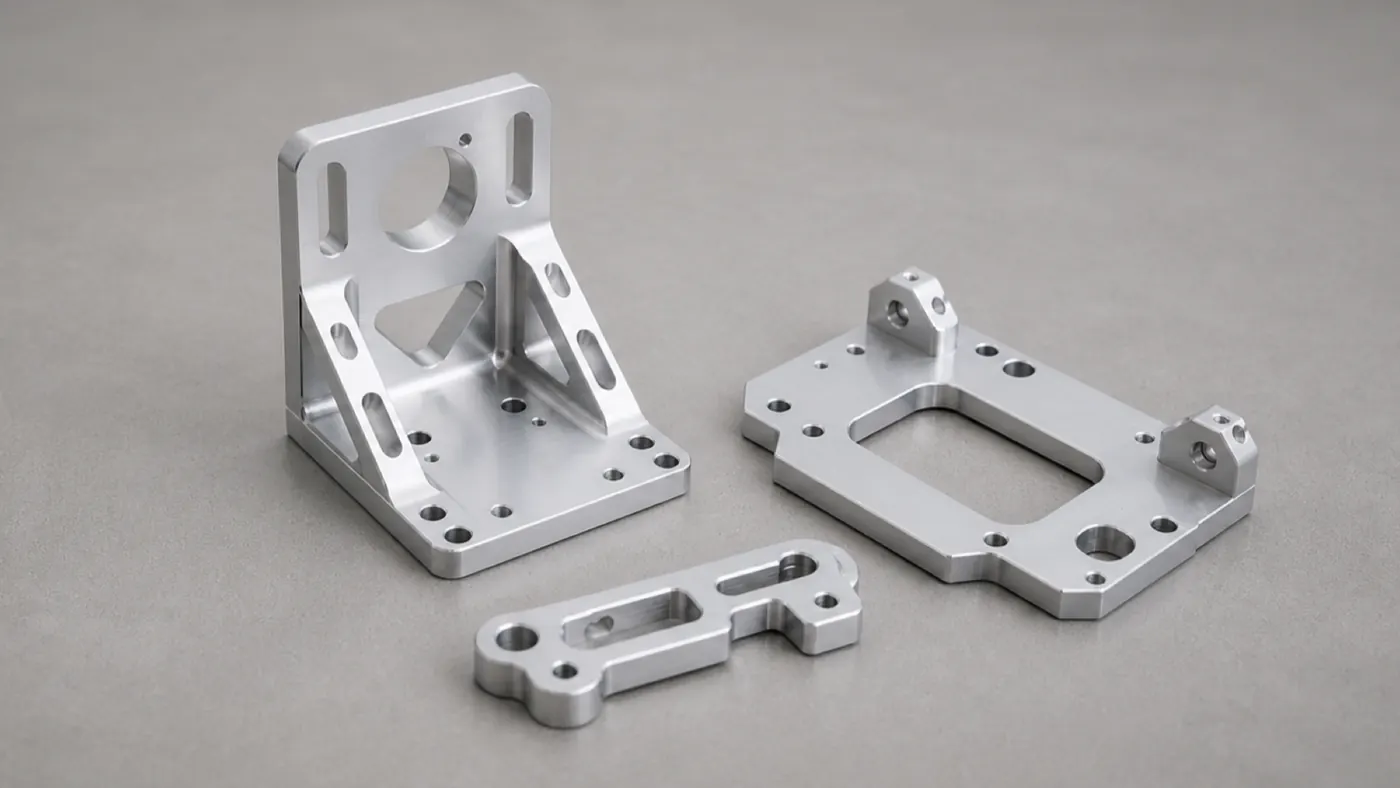
Custom aluminum CNC brackets & mounts
Machine brackets protected for years of coolant and glove contact.
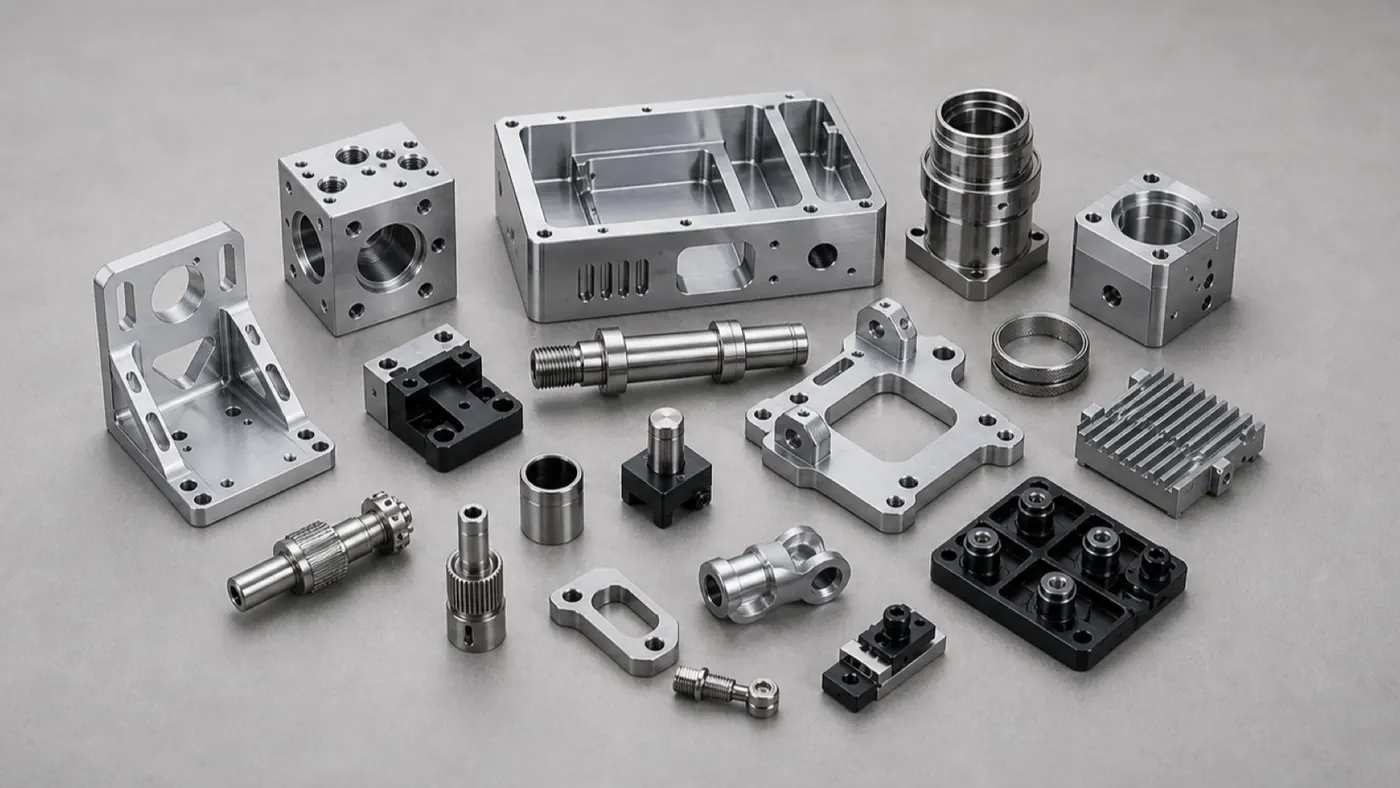
6061 aluminum CNC machining
The alloy clear anodize was practically made for — the full material guide.
Case studies
Case studies with this finish
Aluminum CNC projects that use this surface finish — with specifications, engineering challenges, and inspection notes.
Robotics 7075 Robotic Arm Bracket — Lightweight Structural Link
A 7075-T6 structural arm bracket with lightweighting pockets, precise bearing bores, and hardcoat anodize, machined for stiffness-to-weight in a robotic joint.
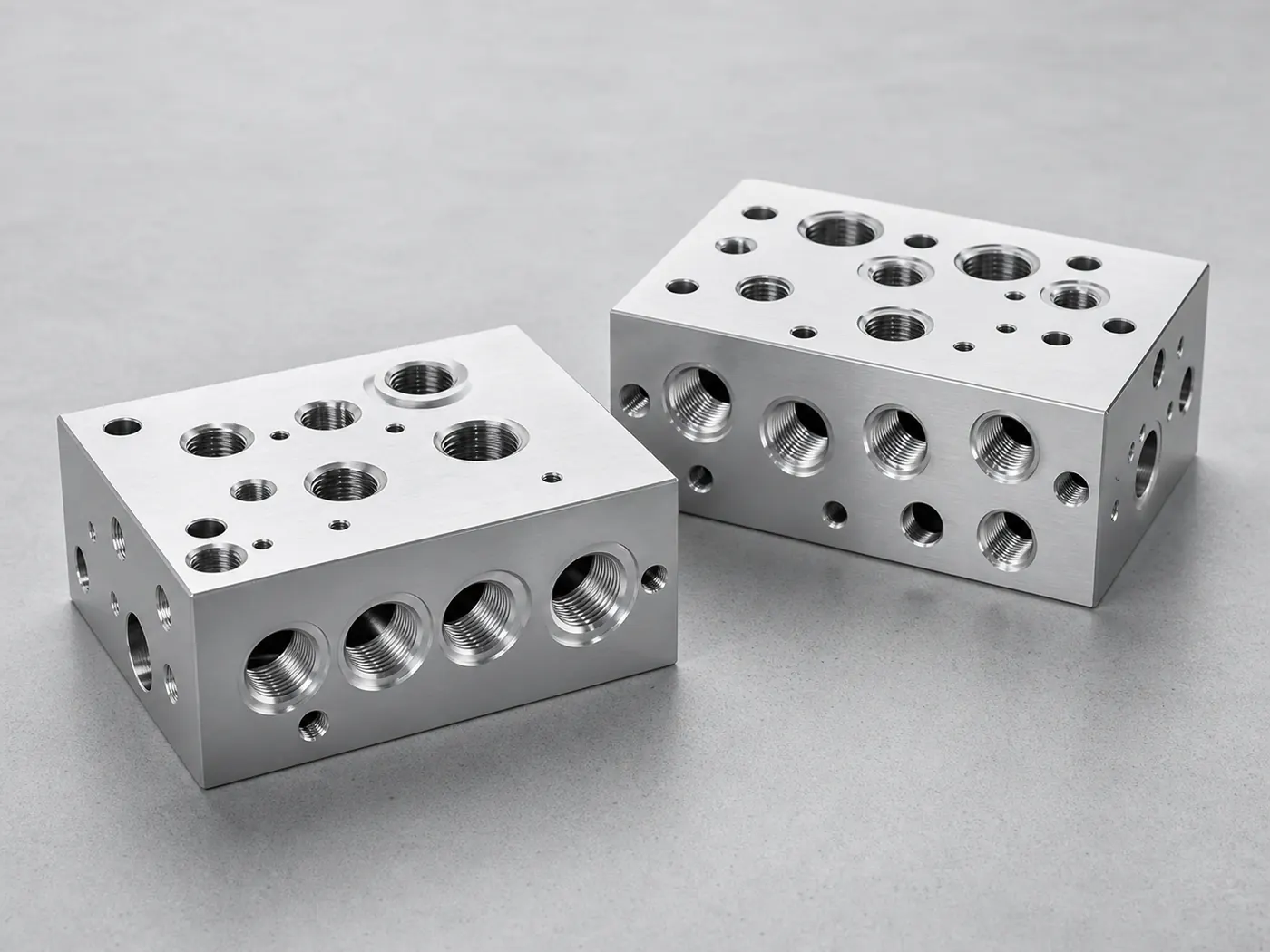
Manifold Blocks CNC Aluminum Manifold Block — Pneumatic Control Manifold
A 6061-T6 pneumatic manifold with cross-drilled internal passages, standard ports, and flat valve-mounting faces, leak-tested and chem-film finished for machine air control.
Medical Devices Medical Diagnostic Enclosure — Cleanable Anodized Housing
A cleanable aluminum diagnostic enclosure with smooth radii, traceable material certificates, and a bead-blasted clear anodize finish, machined for benchtop lab and diagnostic equipment.
Browse the full engineering portfolio in the aluminum CNC machining case studies hub.
Quote your clear anodized parts
Upload CAD with film thickness, masked features, and the pre/post-coat dimension note. An engineer confirms fit compensation and racking before machining starts — quote within one business day.
- Machining and finishing under one PO
- Engineering review within one business day
- Masking planned at CAM
- ISO 9001 quality management