
The only common finish that protects aluminum while keeping surface resistance low — grounding and EMI bonding work everywhere.
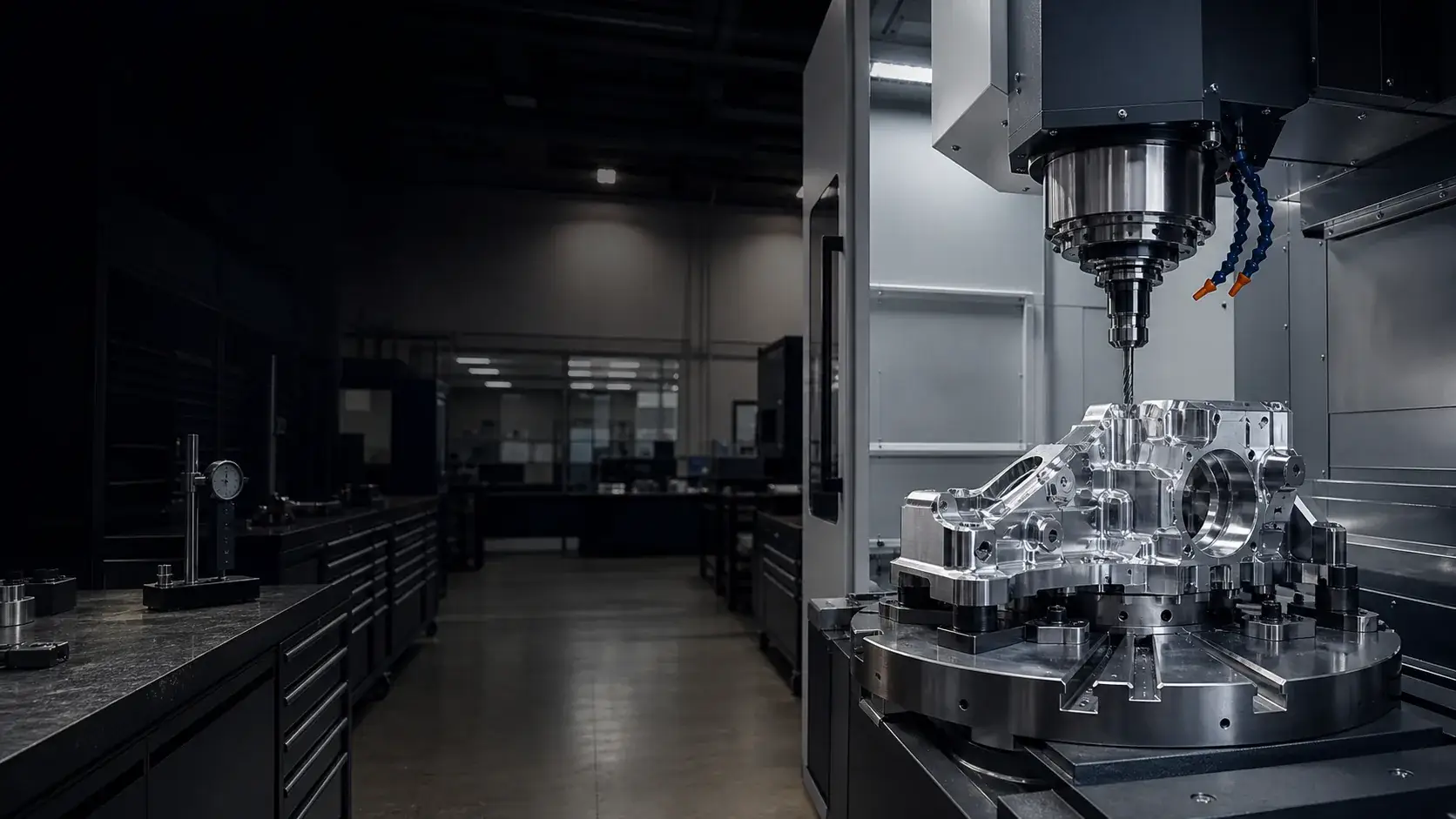
Chromate conversion coating
Chem Film (Conversion Coating) for Aluminum
Chem film — chromate conversion coating, Alodine, Iridite — is the finish you specify when a part must be protected and conductive: a chemical conversion layer measured in nanometers that adds corrosion resistance with zero meaningful dimensional change.
It's the aerospace default, the grounding-path solution, and the standard base under primer and paint.
What this finish is
A chemical conversion, not a deposited layer
Chem film forms by immersing (or brushing) the part in a chromate solution that reacts with the aluminum surface itself, converting it into a protective chromium-bearing gel that hardens in place. Unlike anodize there's no electrical process and no meaningful thickness — the part measures the same before and after.
The governing spec is MIL-DTL-5541. Class 1A maximizes corrosion protection and paint adhesion; Class 3 is optimized for low electrical resistance on grounding and bonding surfaces. Modern RoHS-compliant trivalent chemistry (Type II) covers both classes for programs that exclude hex-chrome.
- Spec language
MIL-DTL-5541, Class 1A (protection/paint base) or Class 3 (conductive); Type I hex-chrome or Type II trivalent/RoHS. - Dimensional impact
Effectively zero — the safe finish for gauged threads, H7 bores, and cavity specs. - Conductivity
Low contact resistance, especially Class 3 — the point of the finish. - Appearance
Gold-iridescent (Type I) to clear/faint blue (Type II trivalent); functional, not cosmetic. - Durability
Soft compared to anodize — protects against corrosion, not abrasion or handling wear.
Benefits
Why chem film is on so many drawings
It occupies the corner no other finish can: corrosion protection, conductivity, and dimensional neutrality at the same time.
Gauged ports, fitted bores, and valve cavities keep their numbers — no compensation machining, no post-coat gauging drama.
Class 1A is the standard base under epoxy primer systems — the aerospace protection stack starts here.
A dip process with short cycle times — the cheapest protective finish after doing nothing.
Solution reaches bores, passages, and internal features that line-of-sight coatings miss.
Trivalent Type II chemistry keeps chem film available in consumer and EU-bound products.
Typical applications
Where chem film is the right answer
Anywhere 'anodize it' collides with 'it must conduct' or 'don't change the dimensions'.
The default protective finish on aluminum tooling — familiar callout, auditable spec, primer-ready.
Enclosure lands, gasket faces, and bonding pads — often as masked zones on otherwise anodized housings.
Corrosion protection inside passages and cavities without touching gauged ports and fits.
Full-conductivity housings where every mating face is part of the shielding topology.
Machined components headed for wet paint or powder — conversion coat first, coat second.
The copper alloy that corrodes bare gets chem-film as its minimum viable protection.
Design considerations
Designing and specifying chem film
Chem film is low-drama, but the spec has branches — pick them on the drawing, not at the finishing house.
Class 1A for maximum protection and paint base; Class 3 where contact resistance matters. If a surface is a grounding pad, say Class 3 and point at it.
Hex-chrome (Type I) still dominates aerospace flowdowns; trivalent (Type II) is the RoHS answer. Your compliance regime decides — write it down.
Chem film wipes off under abrasion. Sliding surfaces need hardcoat; chem film is corrosion insurance, not armor.
Fingerprints before coating become visible stains after. We handle with gloves from final machining through the tank — worth knowing if you split machining and finishing between vendors.
The common production pattern: anodize the body, mask-and-chem-film the grounding lands. Map both zones in CAD so the masking drawing writes itself.
Chem film cures to full paint-adhesion performance in ~24 h and shouldn't sit for months before priming — tell us your paint schedule and we sequence accordingly.
Compatible aluminum grades
Alloy compatibility with conversion coating
Chem film works on every machinable aluminum grade — it exists because of the ones that corrode fastest.
| Alloy | Suitability | Engineering notes |
|---|---|---|
| 6061-T6 | Excellent | Uniform coating, gold or clear — the everyday combination |
| 2024-T351 | Essential | The alloy chem film was practically invented for — minimum protection on every 2024 part |
| 7075-T6 | Excellent | Standard indoor protection; upgrade to anodize + primer for harsh service |
| 5052-H32 | Very good | Often unnecessary for corrosion alone — specify it when 5052 needs paint prep or grounding |
| MIC-6 | Good | Practical protection for tooling plate without burying reference surfaces under film |
Comparing coatings instead? Return to the aluminum surface finishes hub or read the full anodized aluminum CNC machining guide.
Related products
Parts we chem film most
The families where conductivity and dimensional neutrality drive the finishing spec.
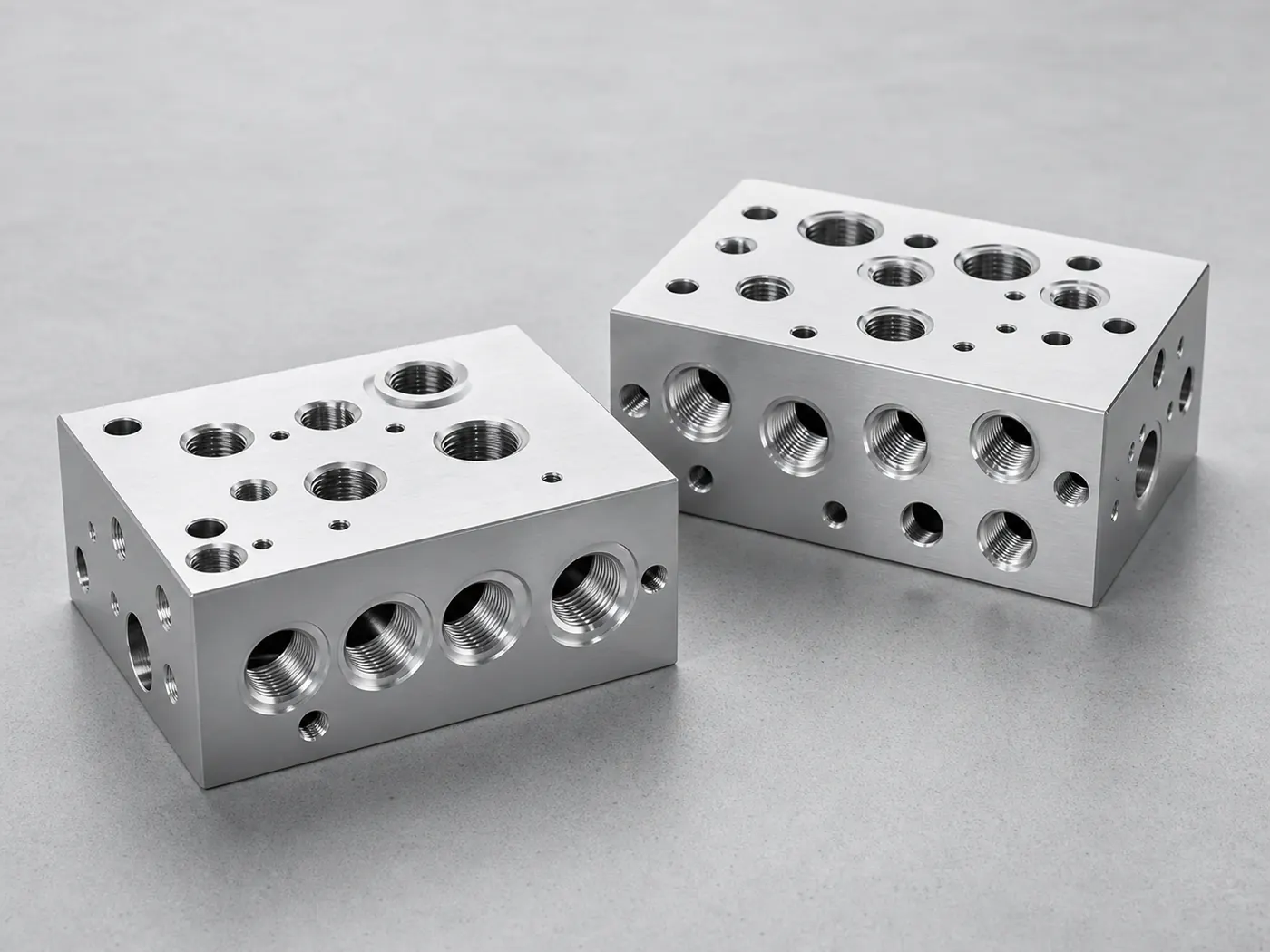
CNC machined aluminum manifold blocks
Protected passages and cavities with gauged ports left dimensionally untouched.
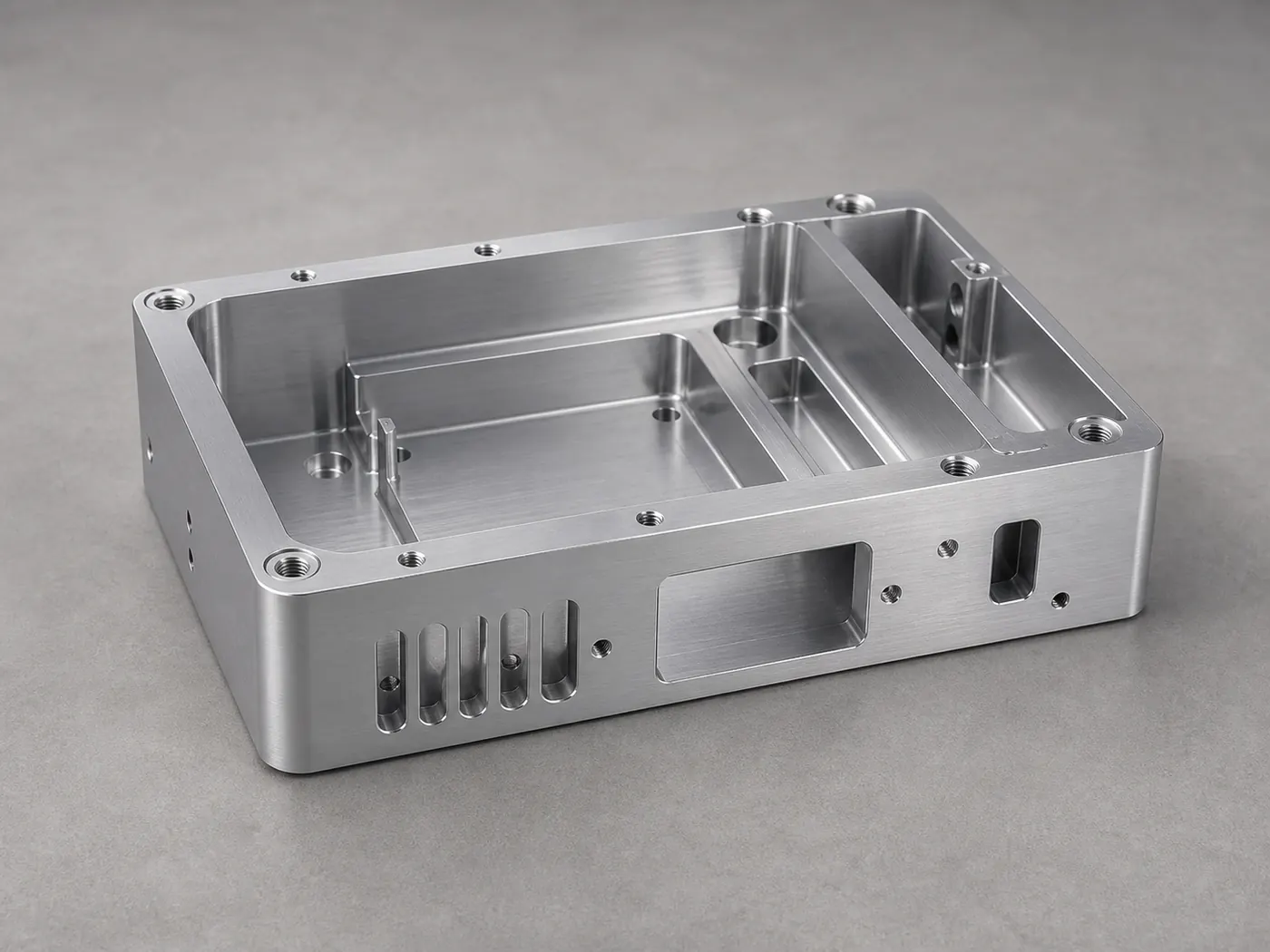
Aluminum CNC machining for electronics housings
EMI enclosures where chem film keeps the whole shielding topology conductive.
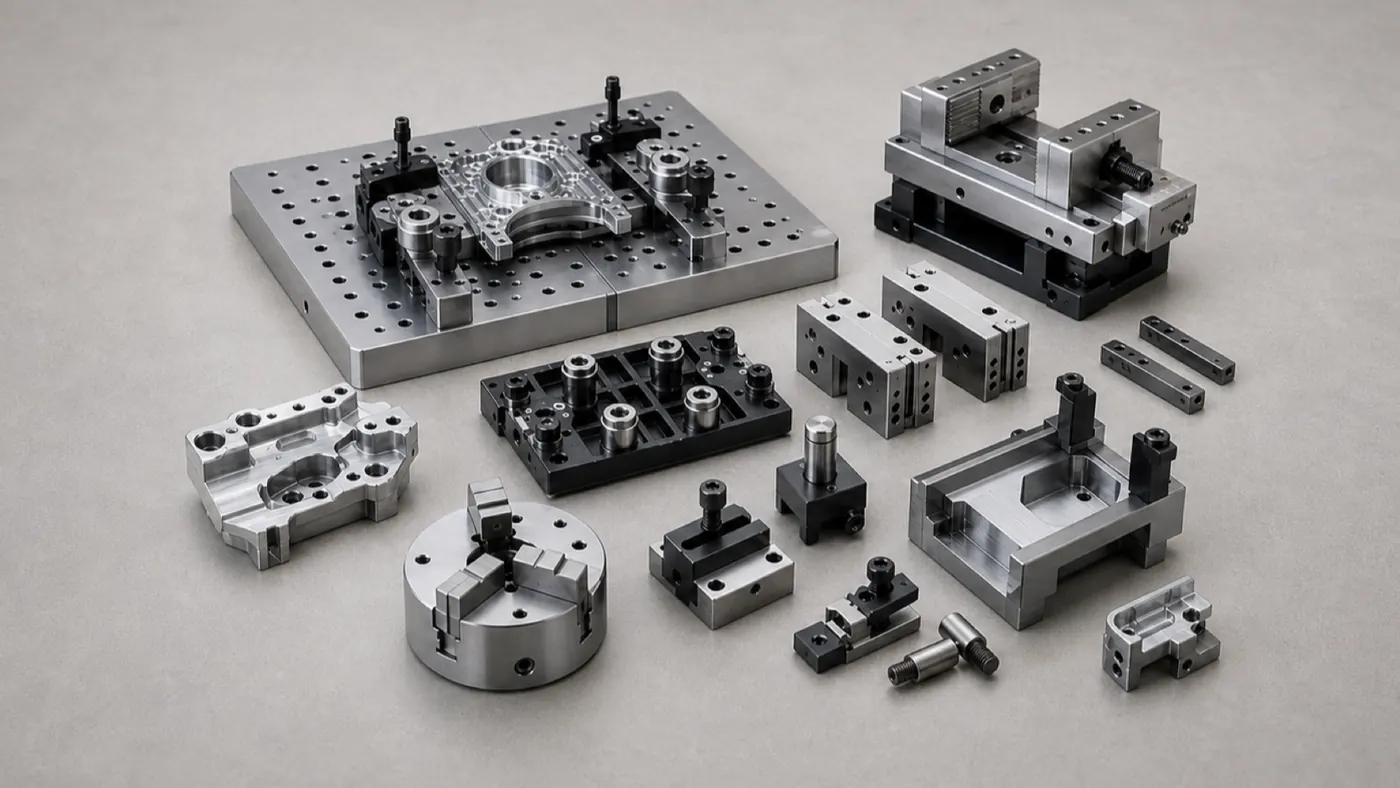
Aluminum CNC machining for aerospace tooling
The industry where MIL-DTL-5541 is the default line on every drawing.
Case studies
Case studies with this finish
Aluminum CNC projects that use this surface finish — with specifications, engineering challenges, and inspection notes.
Electronics Aluminum Electronics Housing — 6061-T6 Instrument Enclosure
A pocketed 6061-T6 instrument enclosure with connector cutouts, standoff bosses, and conductive grounding pads, machined and finished for a low-volume electronics build.
Manifold Blocks CNC Aluminum Manifold Block — Pneumatic Control Manifold
A 6061-T6 pneumatic manifold with cross-drilled internal passages, standard ports, and flat valve-mounting faces, leak-tested and chem-film finished for machine air control.
Aerospace Tooling Aerospace Drill Jig Fixture — Precision Hole-Pattern Tooling
An aluminum drill jig with hardened bushings and tight positional tolerances, hardcoat anodized and documented for repeatable aerospace hole patterns on the assembly line.
Browse the full engineering portfolio in the aluminum CNC machining case studies hub.
Quote your chem film coated parts
Send CAD with the 5541 class and type, grounding surfaces marked, and any paint system downstream. An engineer confirms the masking and sequencing plan with the quote — within one business day.
- Machining and finishing under one PO
- Engineering review within one business day
- Masking planned at CAM
- ISO 9001 quality management