
Matte black interiors kill stray light in camera bodies, lens mounts, and laser hardware — the optics-industry standard.
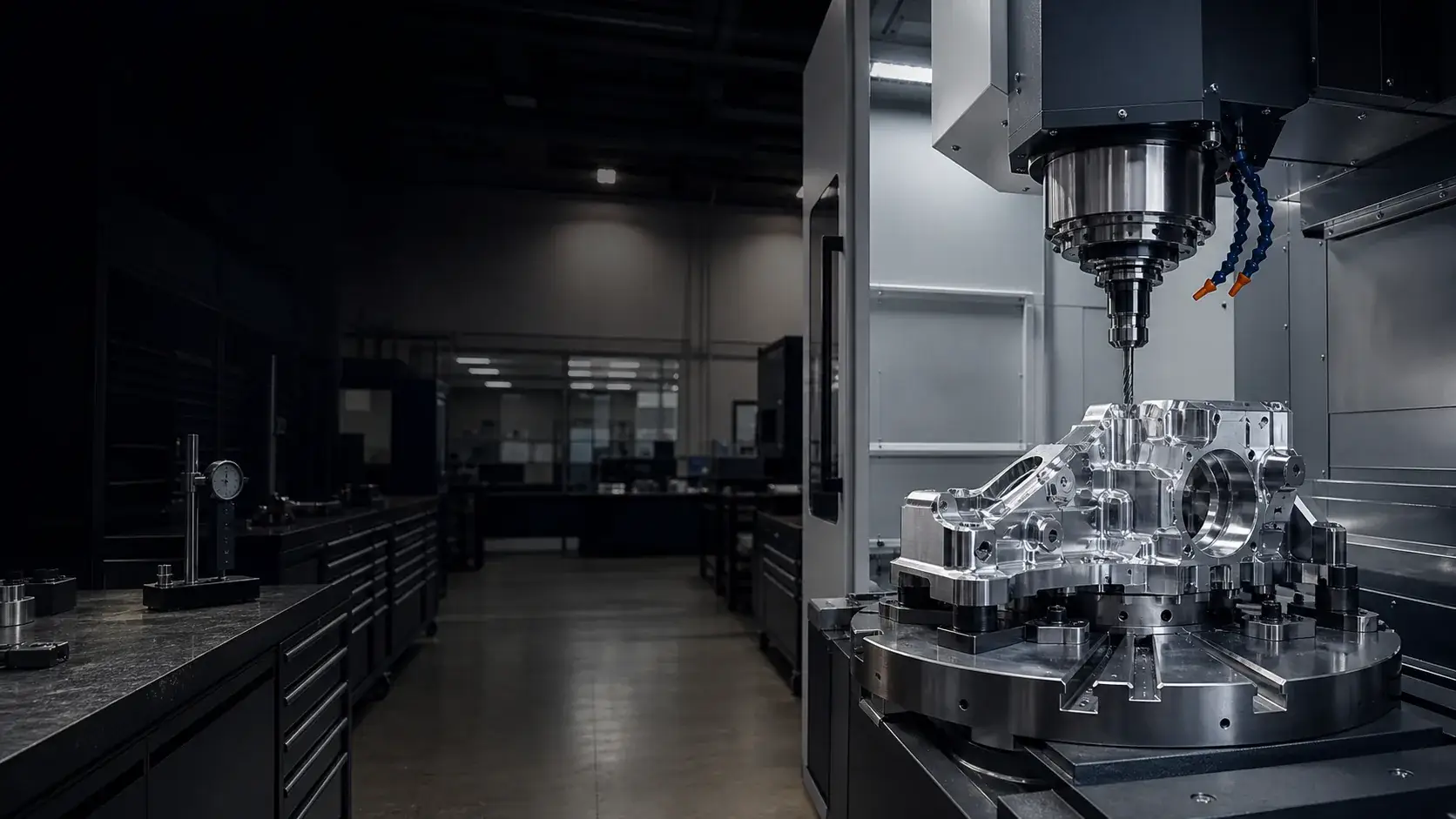
Type II black anodize
Black Anodized Aluminum
Black anodize is the same Type II oxide film as clear — with black dye locked into the pores before sealing. It's the most-specified cosmetic finish in precision hardware, and the most stable color anodizing can produce.
We machine and anodize as one process, which is what makes 'all the parts match' an outcome you can order rather than hope for.
What this finish is
Dye in the pores, sealed for life
After the anodic film grows, its porous structure absorbs dye; hot sealing then closes the pores over the pigment. Because the color sits inside a ceramic-hard oxide rather than on top of the metal, black anodize doesn't chip, flake, or rub through the way coatings do.
Black is the production-stable anodize color: dense pigment loading makes it far more UV-resistant and batch-consistent than reds, blues, or golds. When a customer asks for a colored anodize that must still match in two years, black is the color we can promise.
- Process & spec
Type II sulfuric anodize per MIL-A-8625, Class 2 (dyed); 10–15 µm typical for rich black. - Color depth
Surface prep decides the look — bead blast first for matte black, machined finish for satin gloss black. - UV stability
Black is the most fade-resistant anodize dye; bright colors fade outdoors, black holds. - Dimensional impact
Same as clear Type II: ~half the film per surface, usually negligible below ±0.02 mm. - Thermal note
Black anodize raises emissivity dramatically — a free radiative-cooling upgrade on housings and heat sinks.
Benefits
What black anodize delivers
Cosmetics are the headline, but half our black anodize orders are functional: reflections, emissivity, and contrast.
Bead blast plus black anodize is the finish language of high-end electronics and instruments.
Among dyed finishes, black holds tone across batches better than any other color — critical for product families.
Radiates heat far better than bare or clear-anodized aluminum — measurable gains on passively cooled enclosures.
Matte black disguises daily handling that shows immediately on bright finishes.
Laser marking through black anodize produces bright silver graphics — the cleanest legend system available.
Typical applications
Where black anodized parts dominate
Optics, consumer hardware, and anything photographed next to a brand logo.
Lens mounts, sensor housings, and cavity interiors where stray reflections are defects.
Machined housings and bezels in the blast-and-black recipe consumers read as premium.
Black panels with laser-marked silver legends — high contrast, permanent, glare-free.
Customer-facing cell hardware and vision-system surroundings where glare confuses cameras.
Sealed black surfaces that survive disinfection while keeping device-brand cosmetics.
Non-reflective tooling and equipment surfaces with familiar MIL-spec callouts.
Design considerations
Designing for black anodize
Everything true of clear anodize applies — plus the color-management rules that keep black looking black.
Machined + black = satin gloss; bead blast + black = uniform matte. Specify the prep, because it changes the product more than the dye does.
Dye lots shift subtly. Parts that appear side by side should be machined and anodized as one lot — group the part numbers on the PO.
Black hides alloy tone differences better than clear, but 2024 and castings still read differently at low angles — don't mix on one face.
'No visible defects at 45 cm under office lighting' is inspectable; 'perfect black' is not. We agree boundary samples at FAI.
Rack witness marks, masked threads, and grounding lands all behave exactly as with clear anodize — approve locations up front.
Black holds outdoors; if someone upstream changed the spec to a bright dye color, flag sun exposure before committing.
Compatible aluminum grades
Alloy compatibility with black anodize
Black is the most forgiving anodize color across alloys — the dye covers what clear film reveals.
| Alloy | Suitability | Engineering notes |
|---|---|---|
| 6061-T6 | Excellent | Deep, even black — the standard cosmetic combination |
| 7075-T6 | Very good | The safest cosmetic choice for 7075 — black hides its tonal cast |
| 2024-T351 | Good | Better cosmetic option than clear on 2024; still expect slight low-angle variation |
| 5052-H32 | Very good | Even black and durable — standard for outdoor electronics covers |
| MIC-6 | Fair | Usable for color-coding tooling; mottle shows on large flat show faces |
Comparing coatings instead? Return to the aluminum surface finishes hub or read the full anodized aluminum CNC machining guide.
Related products
Parts we black anodize most
The families where black anodize is specified by default.
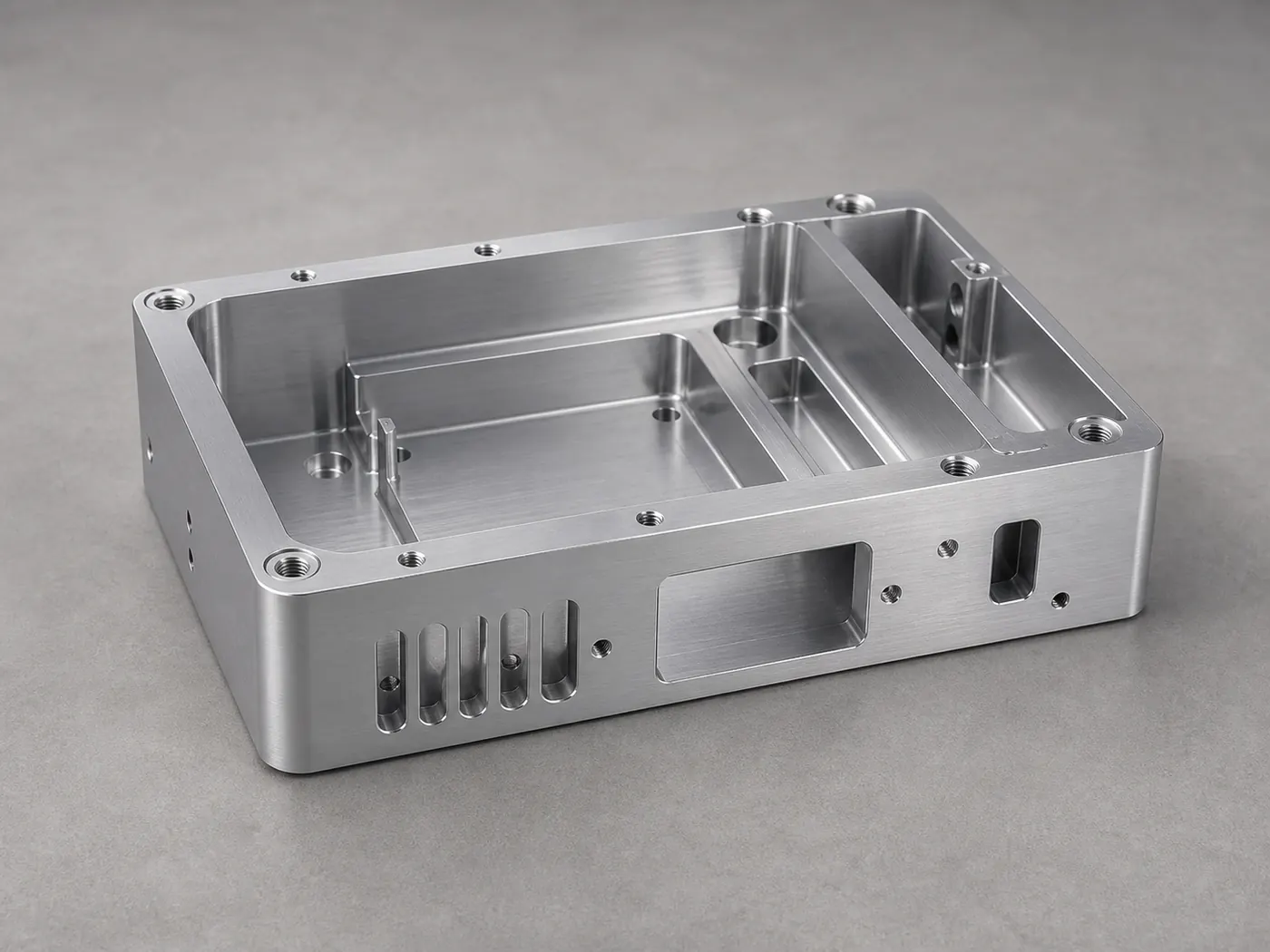
Aluminum CNC machining for electronics housings
Product enclosures in the blast-and-black recipe, with EMI masking managed.
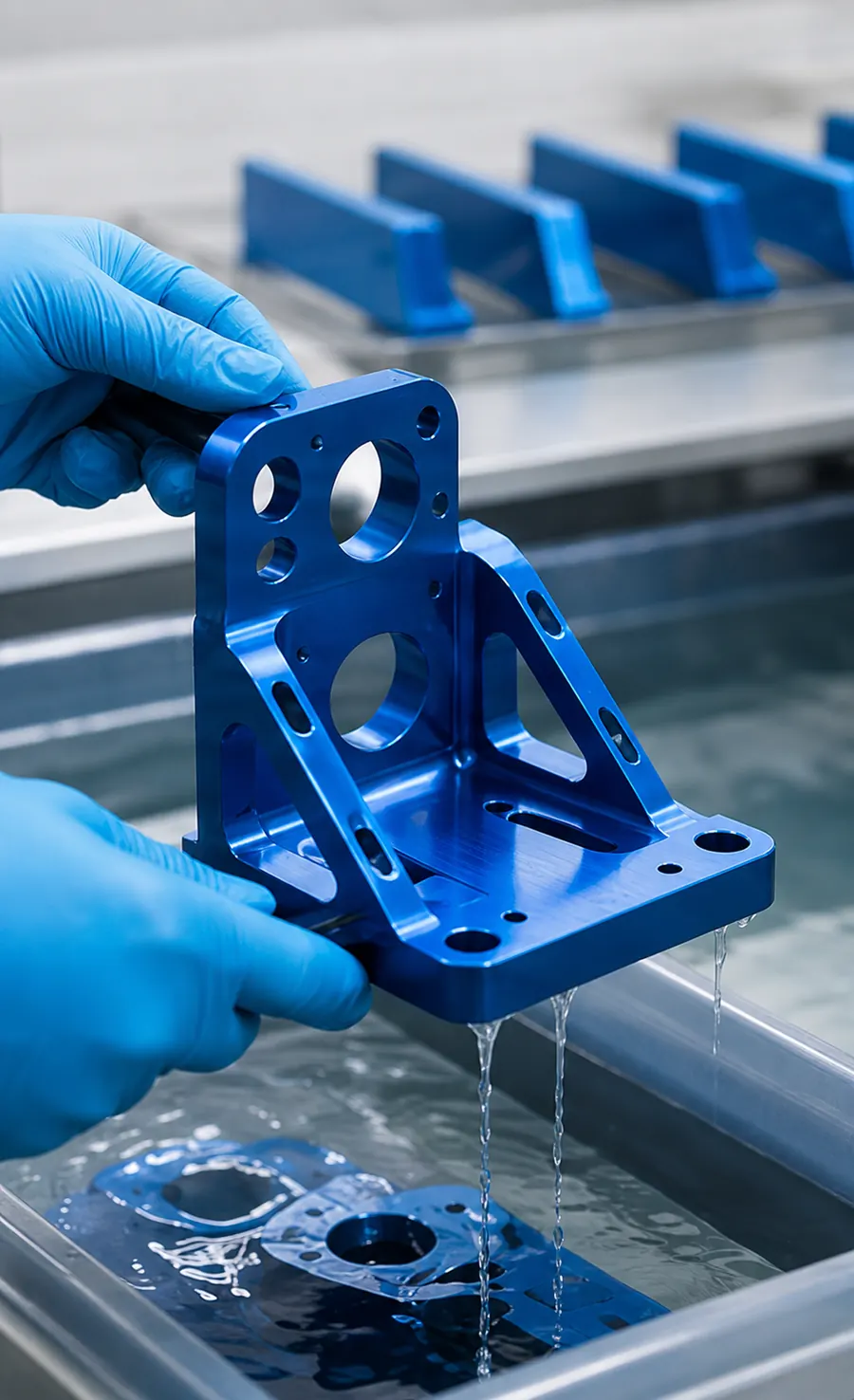
Aluminum CNC machined housings & enclosures
The enclosure engineering guide — walls, grooves, and finish planning together.
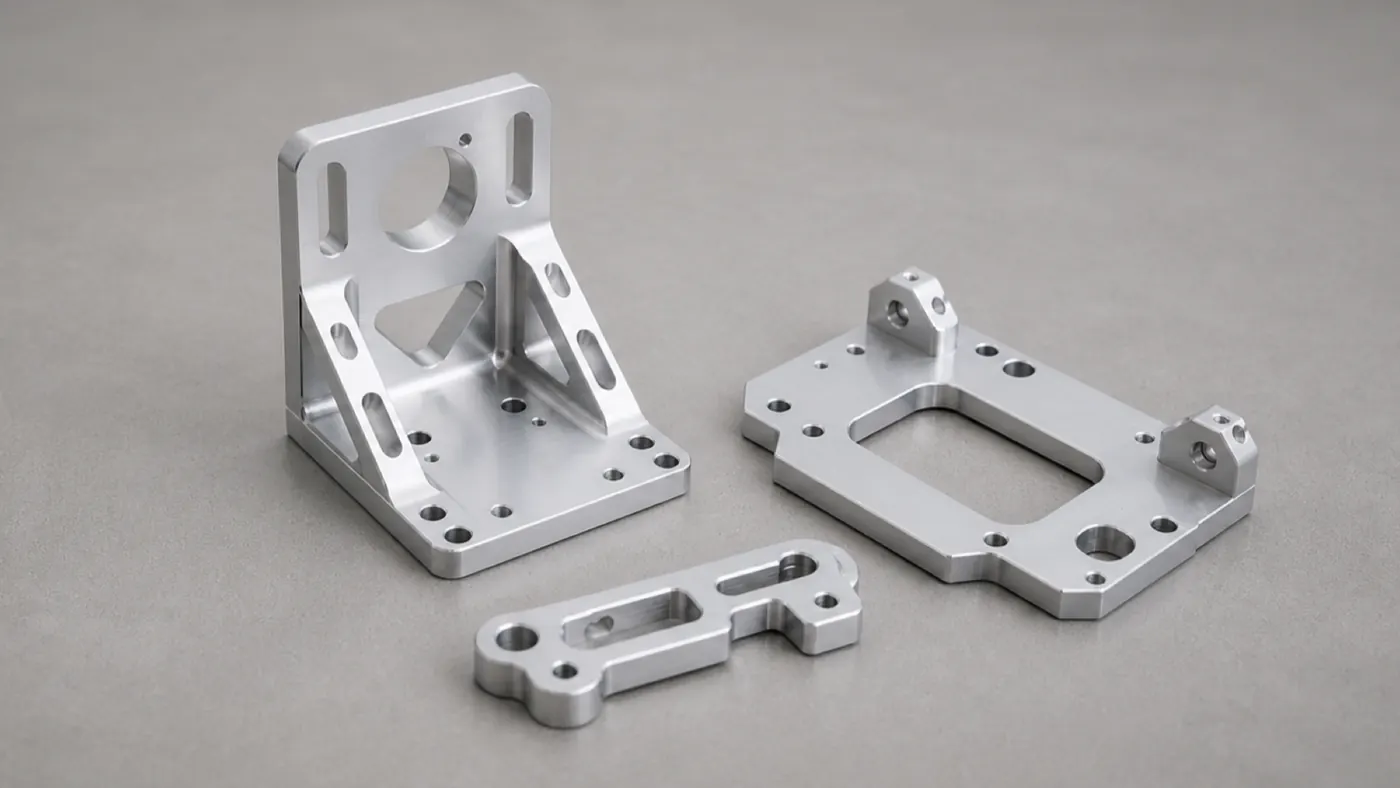
Aluminum CNC machining for robotics
Vision-friendly, customer-facing robot hardware in matte black.
Case studies
Case studies with this finish
Aluminum CNC projects that use this surface finish — with specifications, engineering challenges, and inspection notes.
Electronics Aluminum Electronics Housing — 6061-T6 Instrument Enclosure
A pocketed 6061-T6 instrument enclosure with connector cutouts, standoff bosses, and conductive grounding pads, machined and finished for a low-volume electronics build.
Aluminum Housings Aluminum Control Module Enclosure — Sealed 6061 Housing
A sealed 6061-T6 control module enclosure with a machined O-ring gland, threaded service bosses, and a bead-blasted black anodize finish for vibration- and coolant-exposed environments.
Browse the full engineering portfolio in the aluminum CNC machining case studies hub.
Quote your black anodized parts
Send CAD with texture choice (machined or blasted), cosmetic grade, and the part numbers that must color-match. An engineer plans lots, masking, and racking with the quote — within one business day.
- Machining and finishing under one PO
- Engineering review within one business day
- Masking planned at CAM
- ISO 9001 quality management