
The finish is what customers see and touch. Bead blast texture plus anodize color is most of what 'premium aluminum' means in a finished product.
Surface finishes hub
Aluminum CNC Machining Surface Finishes
The finish decides how a machined part looks, how long it survives its environment, whether it conducts, and sometimes whether it fits. This hub compares every finish we run, then links to an engineering guide for each.
Why finishing matters
Six things the surface finish decides about your part
Finish selection is an engineering decision with dimensional consequences — which is why we plan it with the machining, not after it.
Bare aluminum survives dry indoor service; everything else needs a plan. Anodize and chem-film turn a part that stains in months into one that looks the same in years.
Hardcoat anodizing puts a ceramic-hard skin on aluminum, making sliding surfaces and bushings viable where bare aluminum would gall immediately.
Coatings land on your tolerances: Type II barely, hardcoat decisively, chem-film not at all. Fits are designed around the finish, not despite it.
Anodize insulates; chem-film conducts. Grounding, EMI bonding, and thermal paths decide where each is allowed — usually via masking on one part.
Color consistency, racking marks, and defect standards are process decisions. Specifying them at RFQ is the difference between matched batches and arguments.
Finish guides
Every finish we run, each with its own engineering guide
Each guide covers what the process is, its benefits and applications, the design rules that matter, and which aluminum grades pair with it.
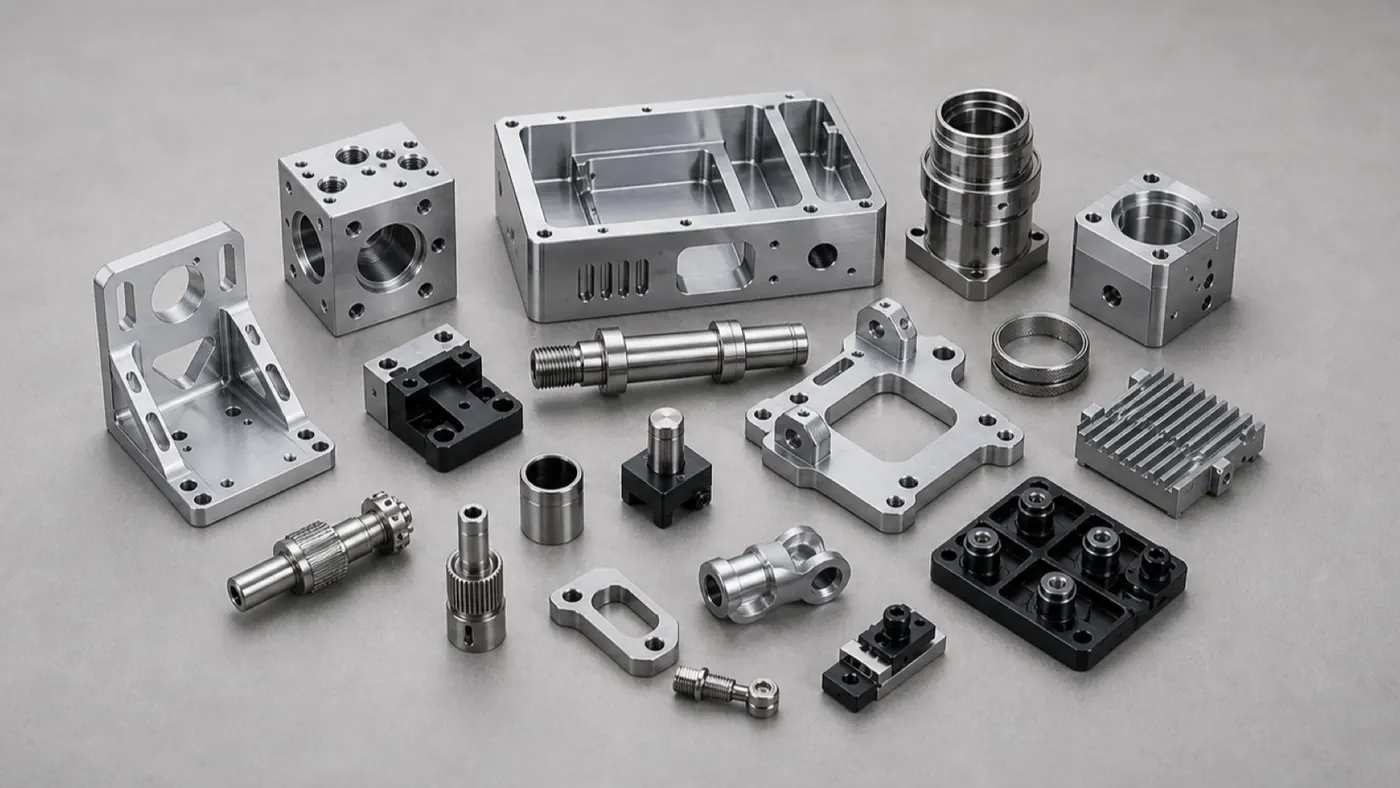
As-machined aluminum finish
Read the full guide Bare metal, controlled: Ra-specified surfaces, zero dimensional change, full conductivity, lowest cost.
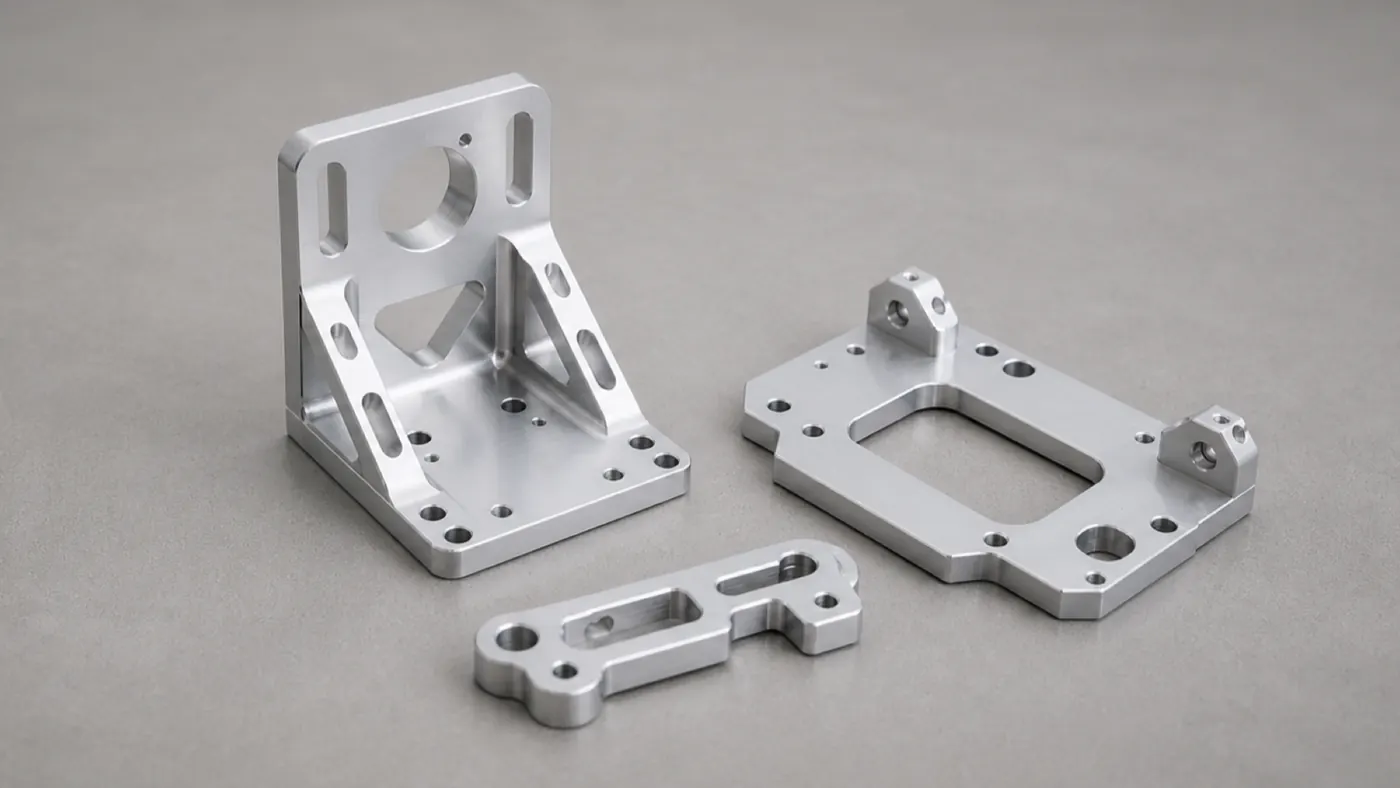
Bead blasted aluminum finish
Read the full guide Uniform satin matte that erases tool marks and sets the texture under anodized cosmetics.
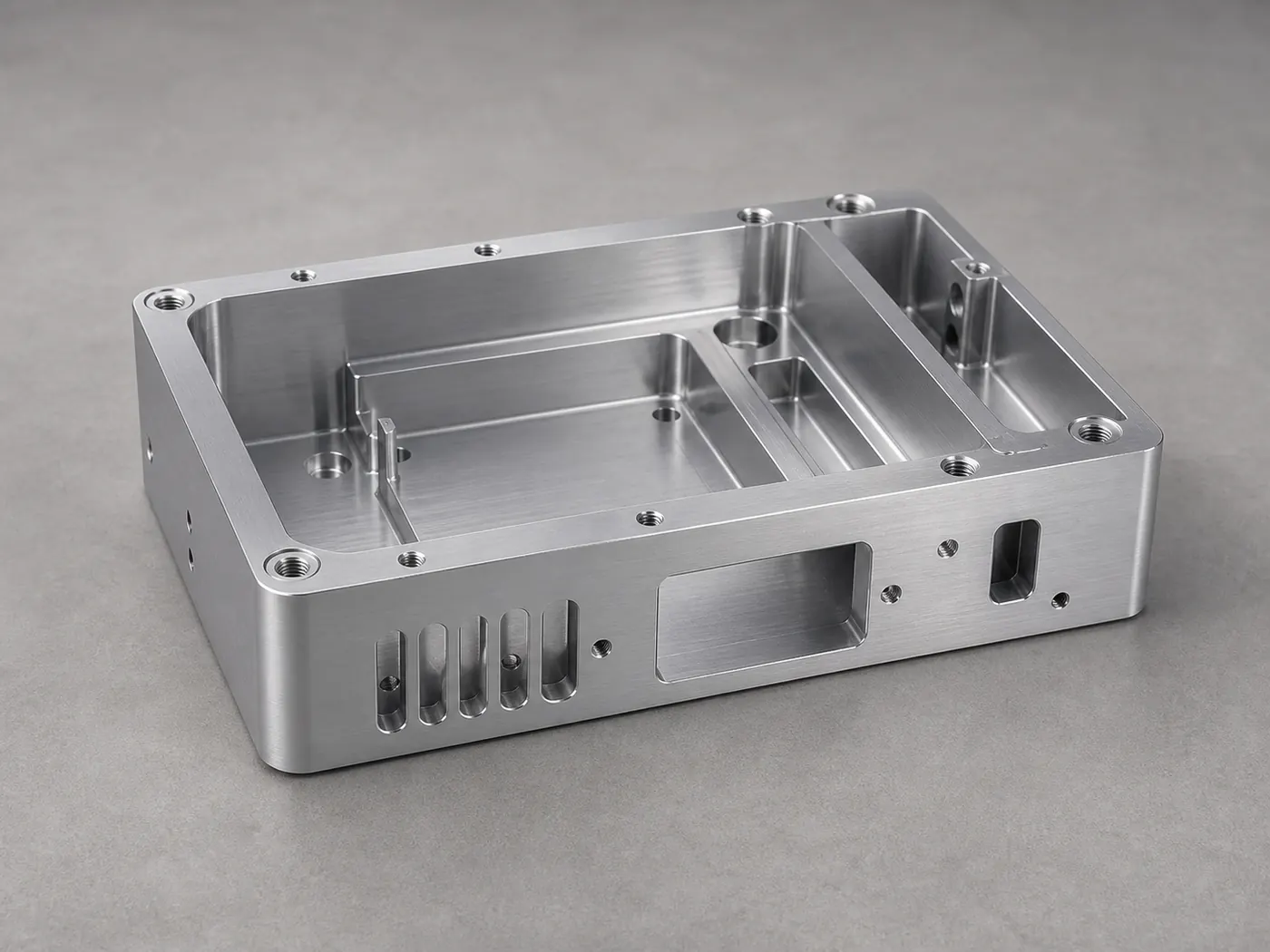
Clear anodized aluminum
Read the full guide Type II protection that keeps the machined aluminum look — the default finish of precision hardware.
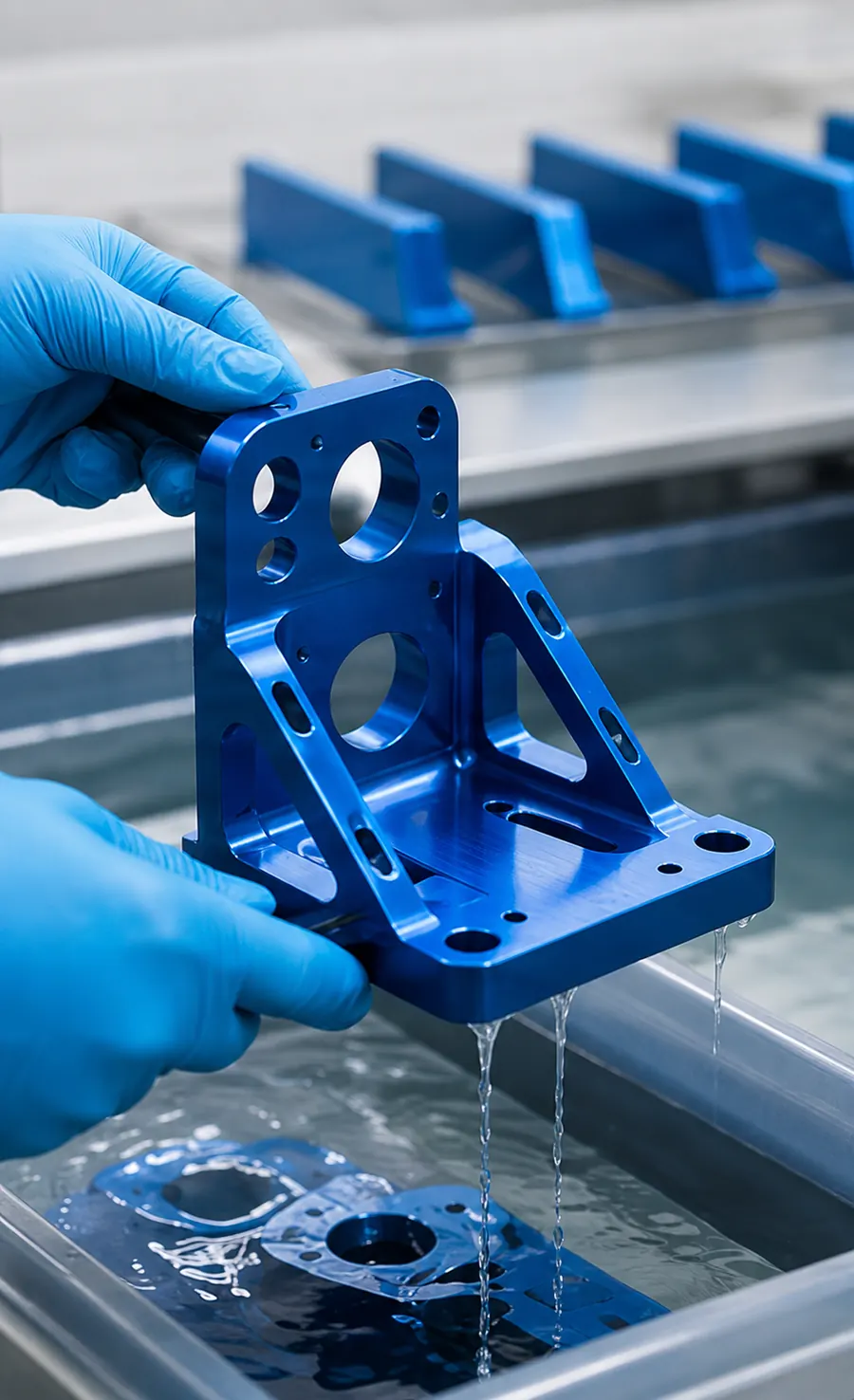
Black anodized aluminum
Read the full guide Dyed Type II for optics, front panels, and product cosmetics — the most stable anodize color.
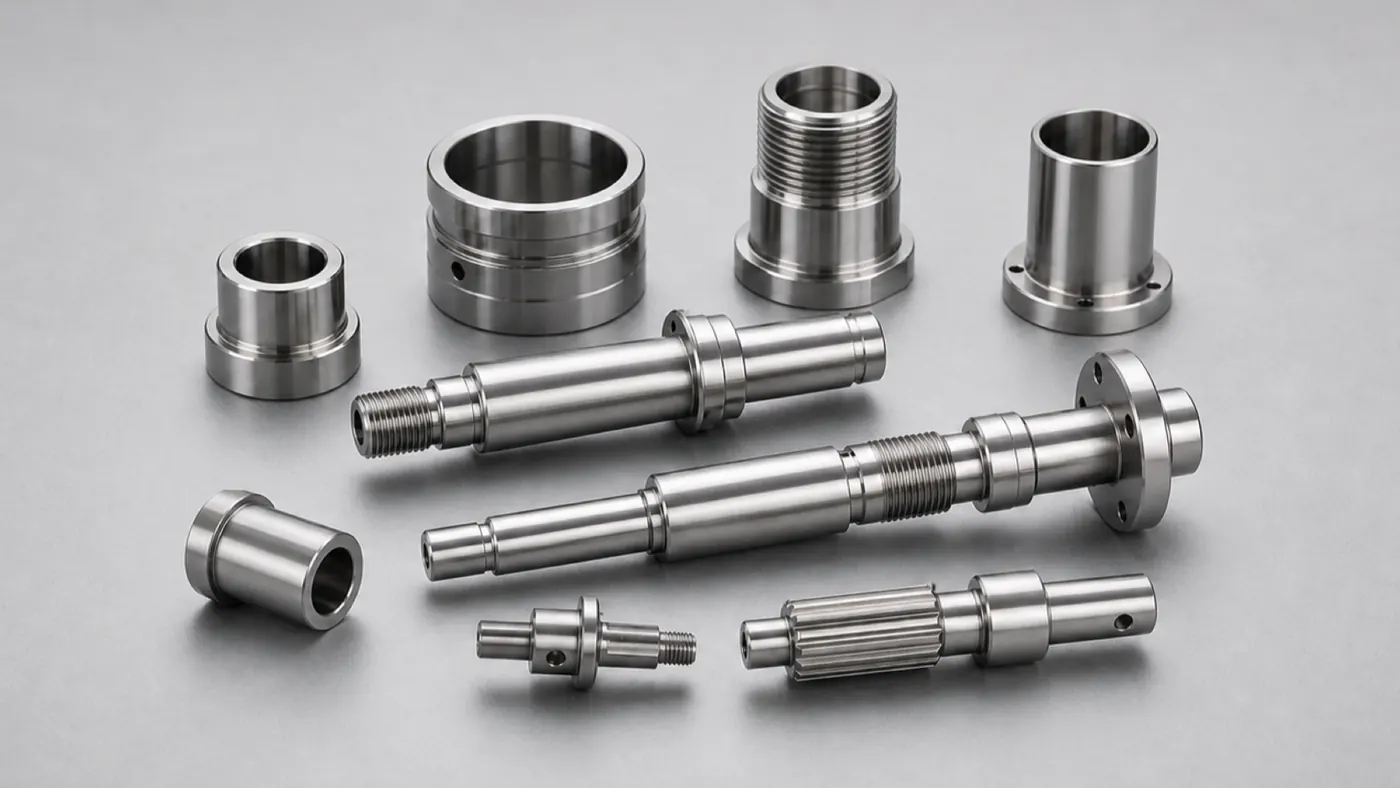
Hardcoat anodized aluminum
Read the full guide Type III at 25–75 µm and HV 350–500 — the wear layer that lets aluminum replace steel.
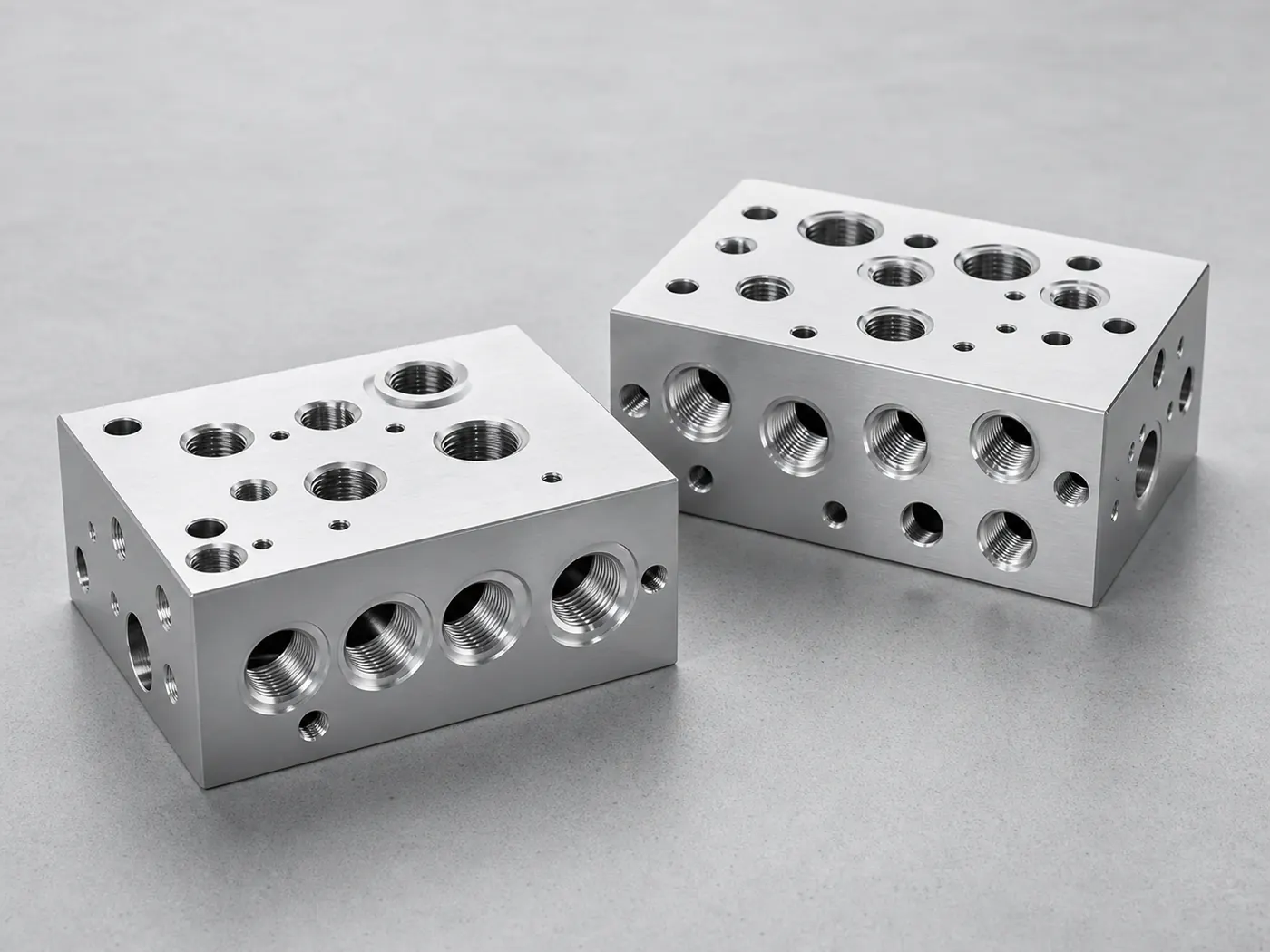
Chem film (conversion coating)
Read the full guide MIL-DTL-5541 protection that stays conductive with zero dimensional change — the grounding-path answer.
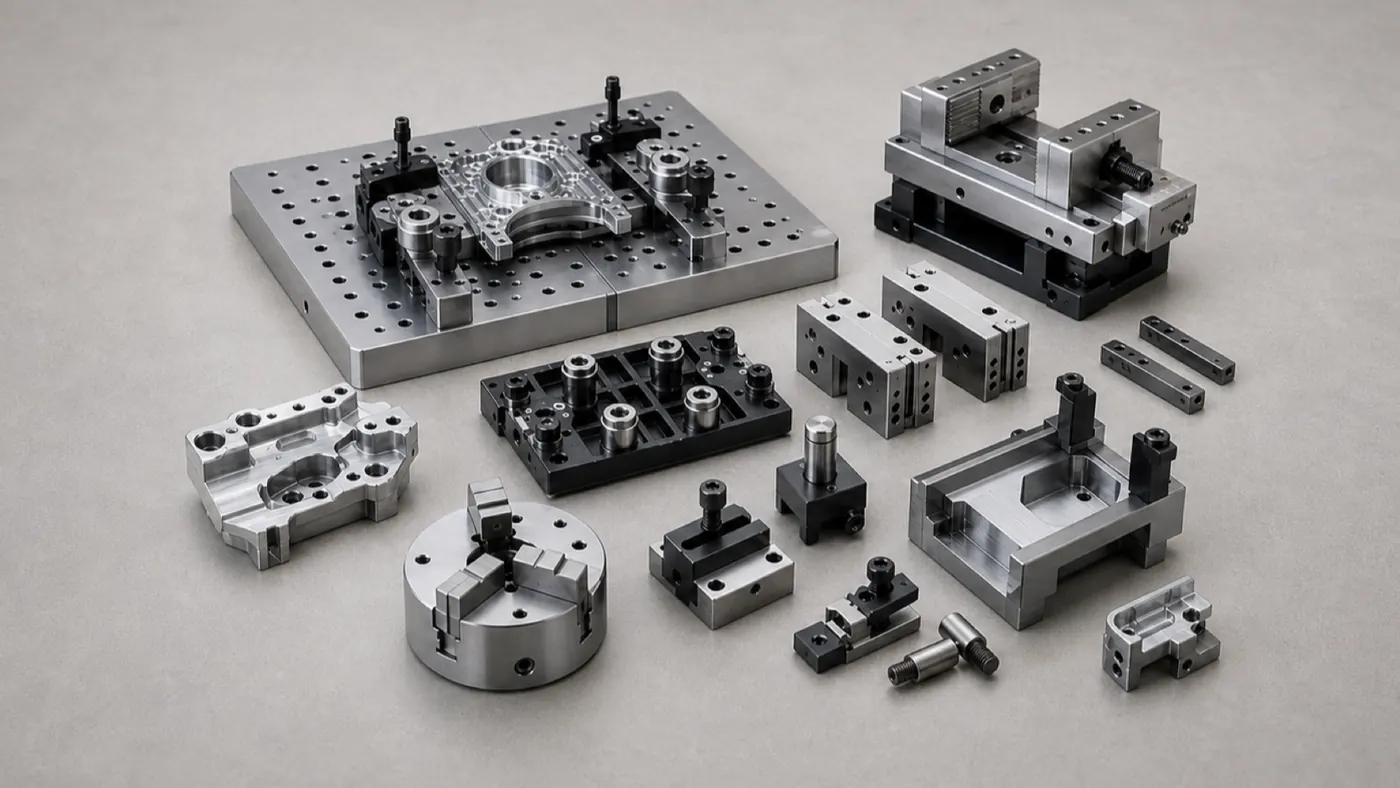
Laser marking & engraving
Read the full guide Permanent part numbers, legends, serials, and logos — identification that is part of the part.
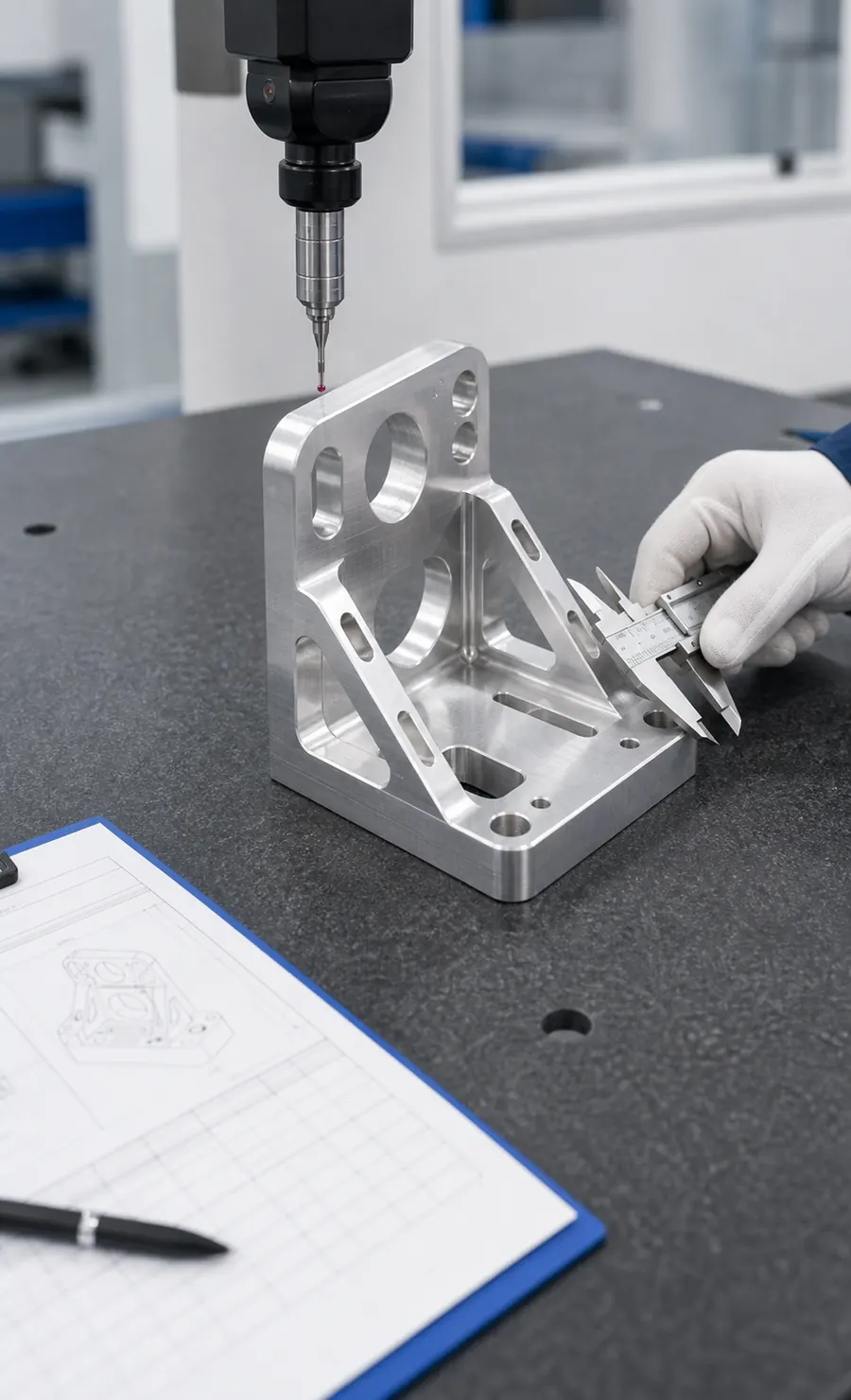
Anodizing deep-dive: machining + anodize as one process
Read the full guide The full anodizing guide: film thickness, masking, racking marks, color batching, and dimension planning.
Quick selection
Aluminum surface finish comparison
The working comparison our engineers use in RFQ reviews — protection, conductivity, dimensional growth, and when each finish is the right call.
| Finish | Corrosion protection | Conductive | Dimensional growth | Appearance | Pick it when |
|---|---|---|---|---|---|
| As-machined | Dry indoor only | Yes | None | Machined metallic | Dimension-critical, grounded, or short-life parts |
| Bead blasted | None by itself | Yes | Negligible | Uniform matte | Texture step before anodize; glare control |
| Clear anodize (II) | Good | No | ~5–8 µm/surface | Satin silver | The default protective finish |
| Black anodize (II) | Good | No | ~5–8 µm/surface | Matte or satin black | Optics, panels, product cosmetics |
| Hardcoat (III) | Excellent | No | ~12–38 µm/surface | Grey-bronze or black | Wear surfaces, bushings, sliding contact |
| Chem film | Moderate | Yes | None | Gold or clear tint | Grounding, EMI, gauged fits, paint base |
| Laser marking | — | — | None (surface) | High-contrast graphics | Identification on any of the above |
Finish behavior depends on the alloy underneath — compare grades in the aluminum materials hub, or go straight to 6061, the alloy every finish likes best.
Where to go next
From finish spec to finished parts
We machine and finish under one purchase order: masking planned at CAM, dimensions compensated for film growth, and cosmetic standards agreed at first article. Send the drawing — the finishing plan comes back with the quote.
- The parts these finishes go on
Browse aluminum CNC machined products — housings, brackets, shafts, manifolds, fixtures, and custom parts. - The alloys underneath
Compare aluminum materials for CNC machining — finish quality starts with grade selection. - Industry-specific finishing norms
See the industries we serve — each guide covers its field's standard finish stack. - The anodizing deep-dive
Read anodized aluminum CNC machining for film thickness, masking, and color batching in full detail.
From the portfolio
See these finishes on finished projects
Featured aluminum CNC machining case studies with specifications, engineering challenges, inspection, and finishing.
Electronics Aluminum Electronics Housing — 6061-T6 Instrument Enclosure
A pocketed 6061-T6 instrument enclosure with connector cutouts, standoff bosses, and conductive grounding pads, machined and finished for a low-volume electronics build.
Aluminum Housings Aluminum Control Module Enclosure — Sealed 6061 Housing
A sealed 6061-T6 control module enclosure with a machined O-ring gland, threaded service bosses, and a bead-blasted black anodize finish for vibration- and coolant-exposed environments.
Robotics 7075 Robotic Arm Bracket — Lightweight Structural Link
A 7075-T6 structural arm bracket with lightweighting pockets, precise bearing bores, and hardcoat anodize, machined for stiffness-to-weight in a robotic joint.
Browse the full engineering portfolio in the aluminum CNC machining case studies hub.