
Pocketing passes, blend boundaries, and re-fixturing marks disappear into one uniform field.
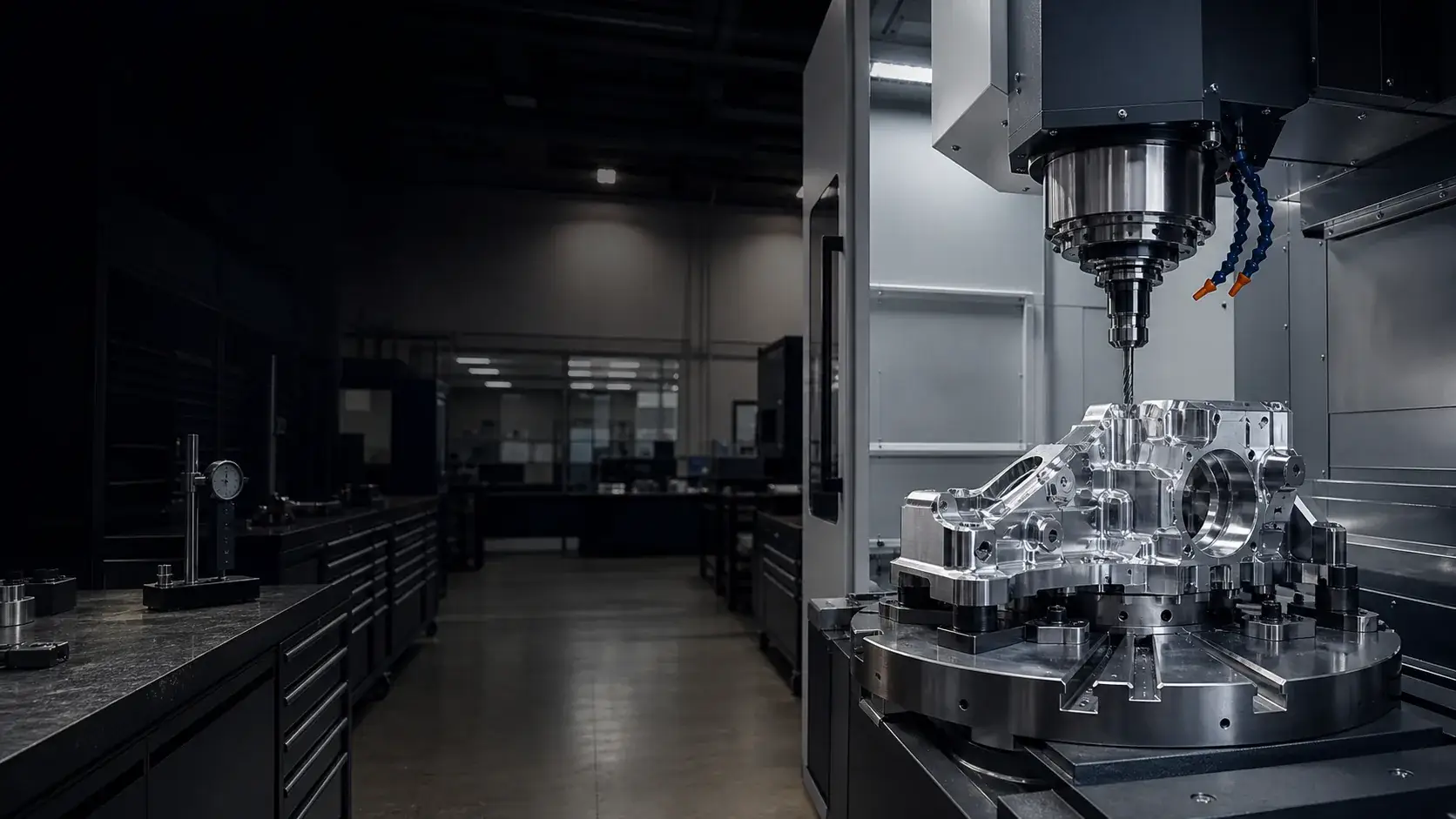
Bead blasted matte finish
Bead Blasted Aluminum Finish
Bead blasting is the great equalizer of machined surfaces: a controlled stream of glass media that replaces tool marks, blend lines, and handling scratches with one uniform satin-matte texture.
On its own it's a cosmetic finish; before anodizing it's the difference between a part that looks machined and a part that looks manufactured.
What this finish is
Controlled texture, not just cleaning
Bead blasting propels spherical glass media against the aluminum surface, peening it into a non-directional matte. Unlike sandblasting's angular grit, glass bead rounds the surface profile rather than tearing it — the result is smooth to the touch, low-glare, and visually uniform across faces machined by different tools at different times.
The variables that define the result are media size, air pressure, and coverage. We specify all three per part family so that this month's batch matches last month's — 'bead blast' without parameters is a different finish from every supplier.
- Texture
Non-directional satin matte; typical media #80–#220 glass bead, finer media = silkier surface. - Dimensional impact
Negligible on general tolerances; masked on fits tighter than ±0.02 mm and on sealing lands. - Surface roughness
Slightly raises Ra versus fine machining — don't blast Ra 0.8 functional faces. - Usually a preparation step
Most blasted parts continue to clear or black anodize; blasting sets the texture, anodize sets the protection. - Appearance lifetime
Bare blasted aluminum fingerprints easily — anodize over it for surfaces that get touched.
Benefits
What bead blasting buys you
One inexpensive step solves most cosmetic complaints machined parts generate.
With media and pressure specified, blasted parts from different machines and months match on the same shelf.
Anodize amplifies whatever texture it grows on — blasting first is why production anodized parts look uniform.
Matte texture disguises the small scratches and rub marks that show immediately on bright machined faces.
Diffuse reflection instead of mirror glints — relevant around vision systems, optics, and operator stations.
Hand-loaded tooling and handled covers get a tactile, non-slippery surface.
Typical applications
Where bead blasted parts show up
Anywhere the part is seen or touched — usually as the texture step under an anodized finish.
The blast-then-anodize recipe behind most premium aluminum electronics housings.
Front panels and bezels with uniform matte that hides fingerprints in daily use.
Customer-visible cell hardware where mixed machining marks would look unfinished.
Satin texture under sealed anodize — the standard cleanable cosmetic in clinical settings.
Blasted and black-anodized surfaces controlling stray reflections around cameras and lasers.
Operator-facing fixtures where grip and wear-hiding both help.
Design considerations
Designing for bead blasting
Blasting is forgiving, but a few callouts keep it from touching the surfaces that can't afford it.
Call out media size (e.g., #120 glass bead) on the drawing. Coarser reads industrial, finer reads consumer — and unspecified reads different every order.
Blasting peens edges and raises Ra. H7 bores, O-ring grooves, and Ra-controlled faces get masked — list them explicitly.
Media lodges in threads and alters fit. Threads are masked or plugged by default; confirm the callout so gauging stays valid.
Blasting slightly rounds crisp chamfer lines. If a knife-edge aesthetic matters, tell us — we adjust pressure and standoff.
Sequence is blast → etch → anodize. Blasting an anodized part destroys the film — plan the finish stack, not individual steps.
Full-body blasting costs more than show-face blasting. Marking which faces are cosmetic keeps the price matched to the requirement.
Compatible aluminum grades
Alloy behavior under glass bead
Every machinable alloy blasts well — the differences show in the follow-on anodize tone.
| Alloy | Suitability | Engineering notes |
|---|---|---|
| 6061-T6 | Excellent | The reference combination — uniform matte, then bright uniform anodize |
| 7075-T6 | Excellent | Blasts uniformly; expect the alloy's darker tone after anodizing |
| 5052-H32 | Good | Softer surface picks up handling marks after blasting — finish late, pack carefully |
| 2024-T351 | Good | Blast texture helps hide 2024's uneven anodize film tone |
| MIC-6 | Fair | Works, but cast porosity can read as speckle — rarely worth it on tooling |
Comparing coatings instead? Return to the aluminum surface finishes hub or read the full anodized aluminum CNC machining guide.
Related products
Parts we bead blast most
The product families where blasted texture — usually under anodize — is the standard spec.
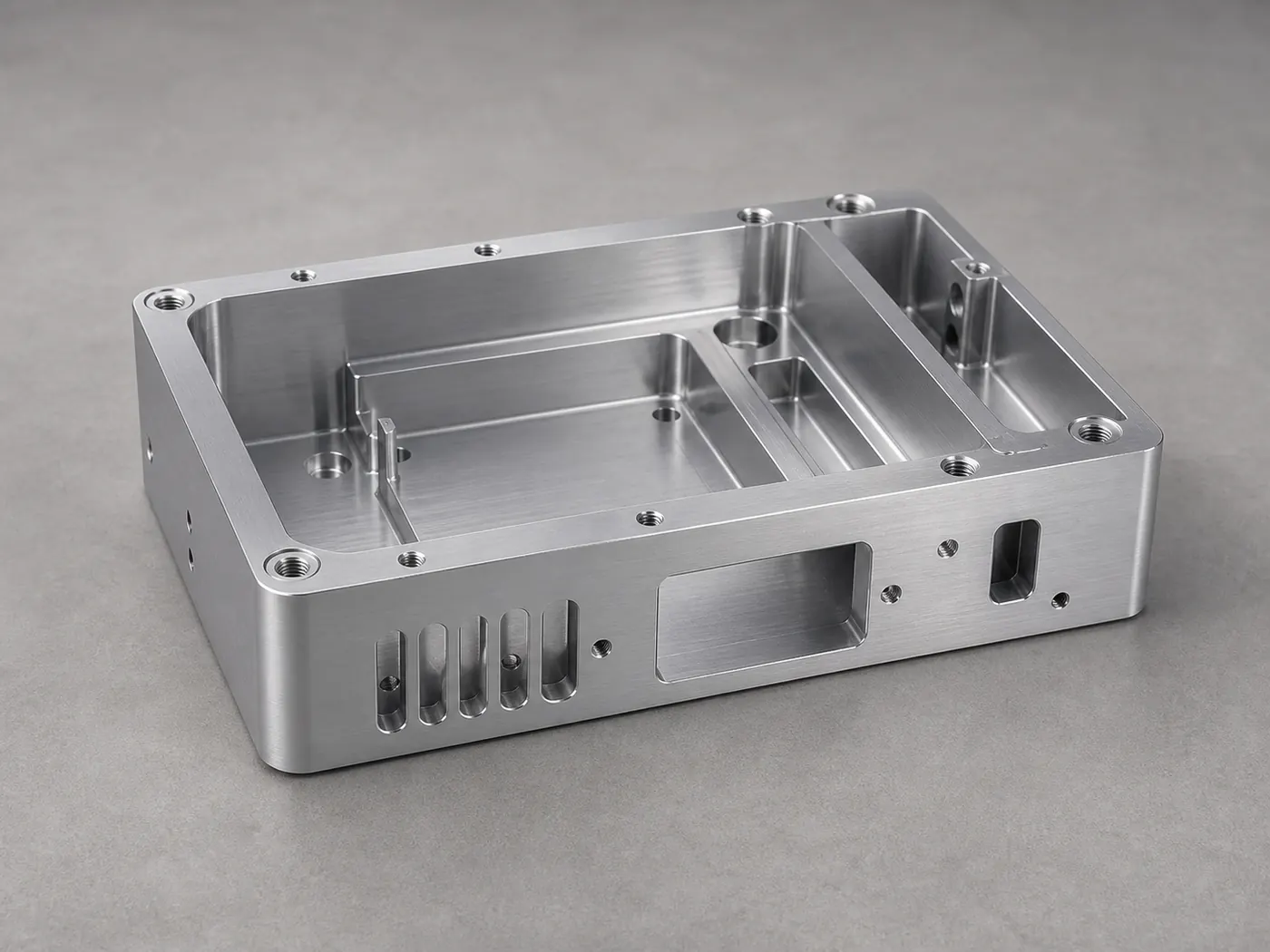
Aluminum CNC machined housings & enclosures
Blast-then-anodize is the default cosmetic recipe for machined enclosures.
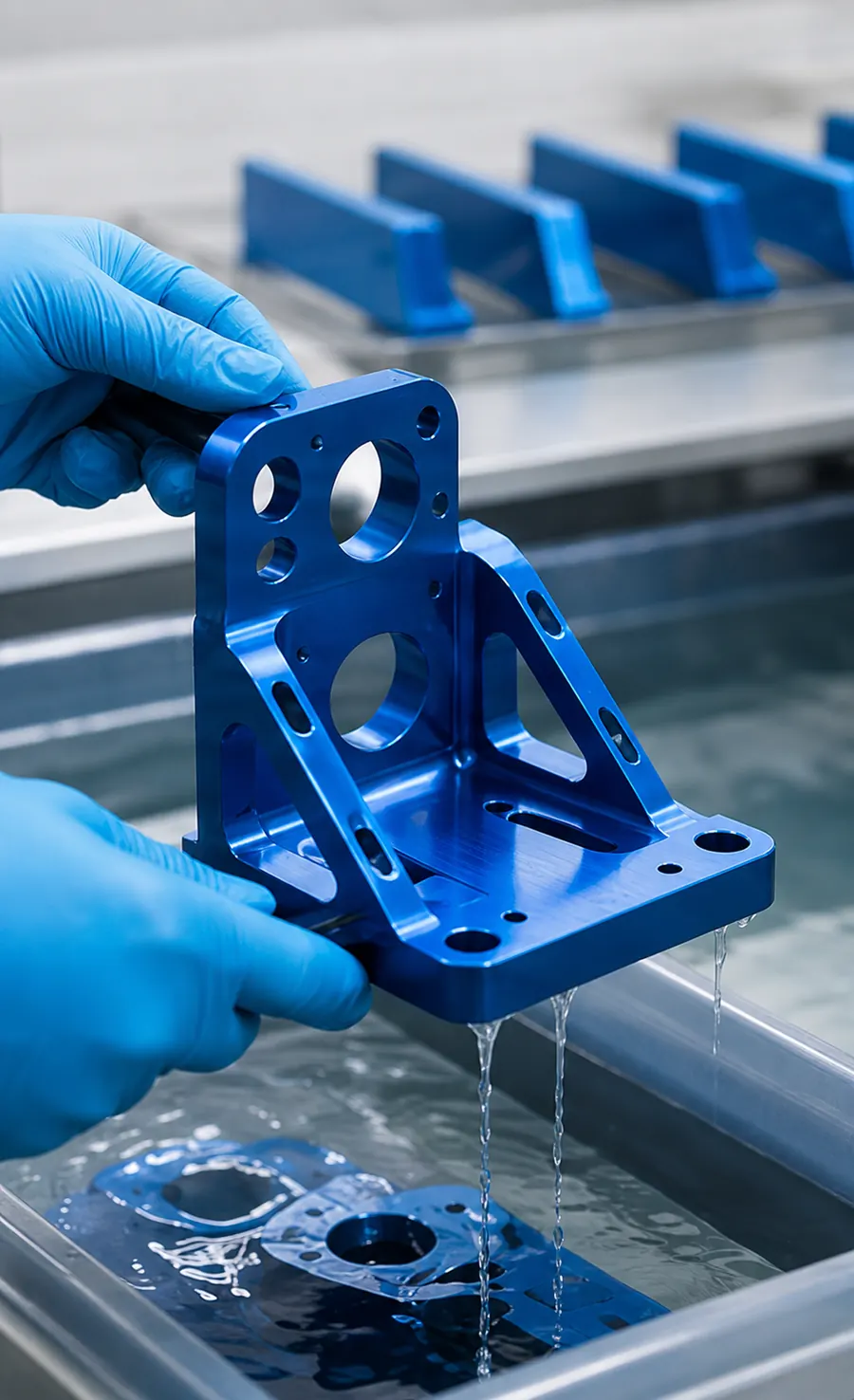
Aluminum CNC machining for electronics housings
The industry guide where blasted-and-anodized cosmetics matter most.
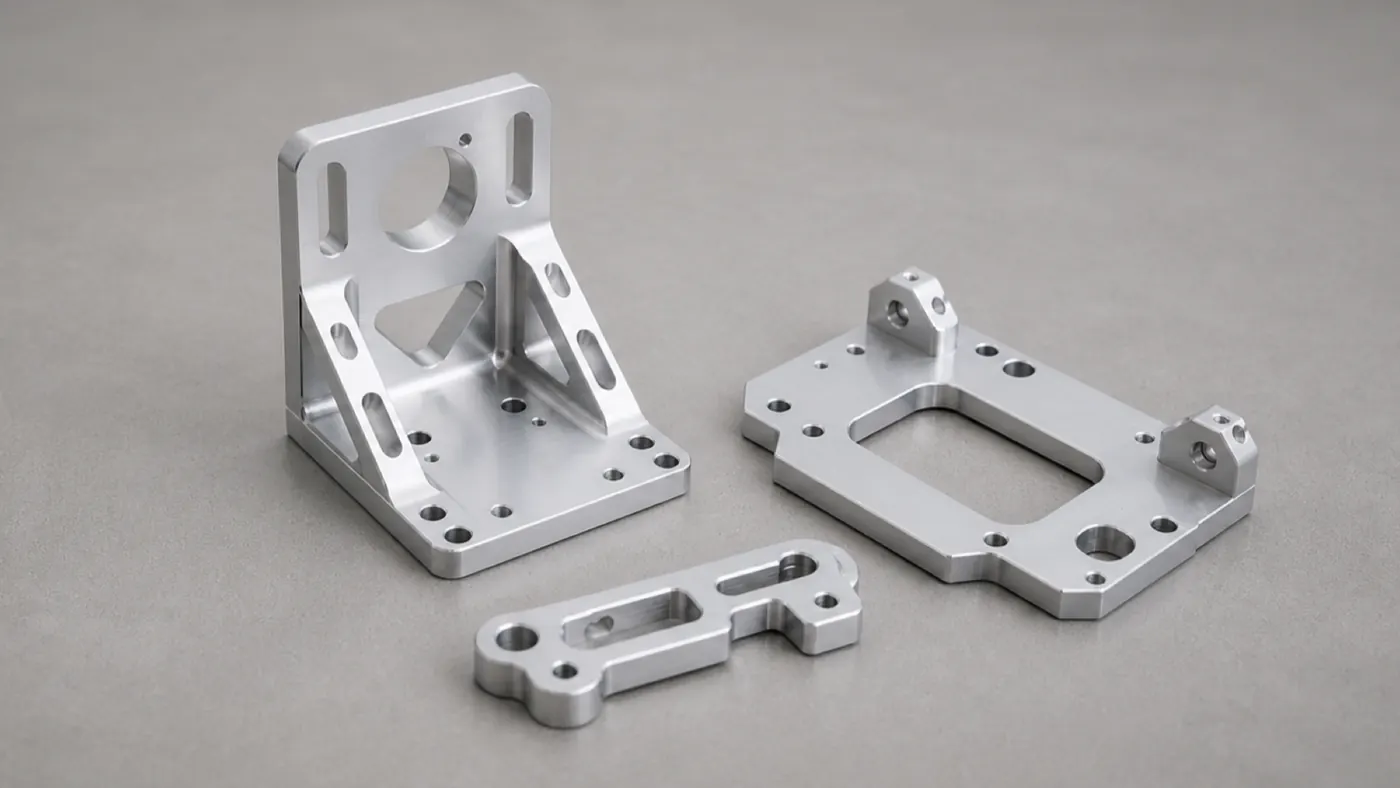
Custom aluminum CNC brackets & mounts
Visible machine brackets finished to match the equipment they mount on.
Case studies
Case studies with this finish
Aluminum CNC projects that use this surface finish — with specifications, engineering challenges, and inspection notes.
Aluminum Housings Aluminum Control Module Enclosure — Sealed 6061 Housing
A sealed 6061-T6 control module enclosure with a machined O-ring gland, threaded service bosses, and a bead-blasted black anodize finish for vibration- and coolant-exposed environments.
Medical Devices Medical Diagnostic Enclosure — Cleanable Anodized Housing
A cleanable aluminum diagnostic enclosure with smooth radii, traceable material certificates, and a bead-blasted clear anodize finish, machined for benchtop lab and diagnostic equipment.
Brackets & Mounts Aluminum Motor Mount Bracket — 6061 Precision Mounting Plate
A 6061-T6 motor mount bracket with a toleranced bolt circle, pilot bore, and dowel location, machined and clear anodized for repeatable drive alignment on automation equipment.
Browse the full engineering portfolio in the aluminum CNC machining case studies hub.
Quote your bead blasted parts
Upload CAD with cosmetic faces, grit preference, and masked features marked — or send a reference photo of the texture you want and we'll translate it into parameters. Review within one business day.
- Machining and finishing under one PO
- Engineering review within one business day
- Masking planned at CAM
- ISO 9001 quality management