
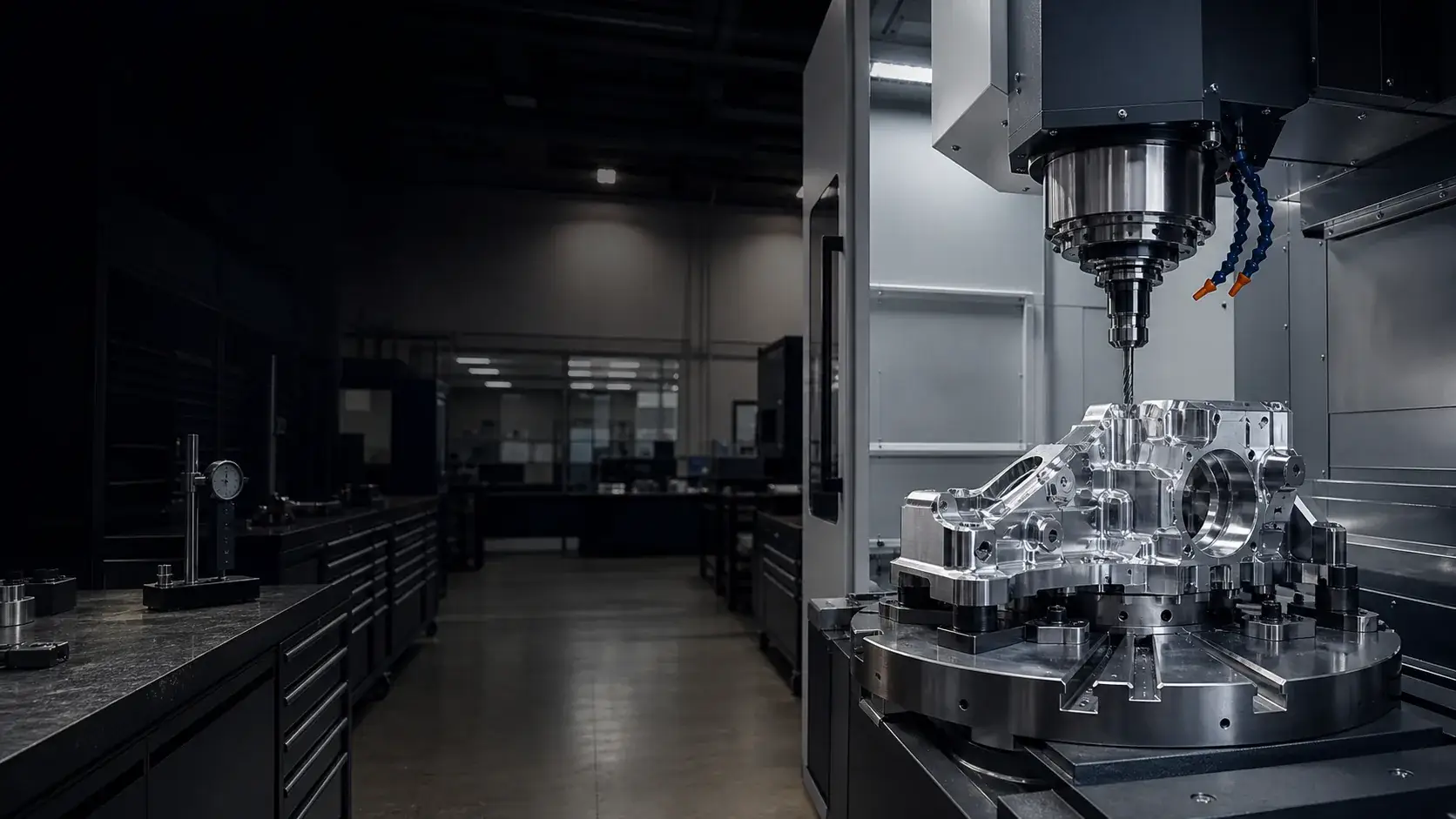
MIC-6 and 6061 plates with H7 dowel grids, tapped patterns, and engraved position IDs for station tooling.
Automation & machine building
Aluminum CNC Machining for Automation Equipment
Automation cells are built from plates, brackets, and blocks that must bolt together square the first time — commissioning schedules don't leave room for hand-fitting.
We machine aluminum automation components for machine builders and integrators: fixture plates with honest datums, manifolds that don't leak, and brackets whose hole patterns match the frame CAD they came from.
- ISO 9001:2015
- Prototype to production
- Engineering review within one business day
- Material certificates available
- FAI reports available
Typical components
Automation components we machine every week
A typical cell order mixes large flat plates with dozens of small located details — we quote and batch them as one program.
Machine bases, actuator risers, and adapter plates faced flat and parallel so stacked assemblies stay square.
Guide rails, side plates, transfer nests, and wear strips machined to keep product flow aligned station to station.
Valve-island bases and distribution blocks with gauged ports and flat sealing faces — plumbing that commissions clean.
Sensor stands, camera mounts, and actuator brackets with dowel location for repeatable teardown and rebuild.
Corner blocks, gussets, and interface plates that join extrusion frames to machined precision where it matters.
Recommended aluminum grades
Alloy choices for automation hardware
Automation machining is dominated by two materials — 6061 for parts, MIC-6 for plates — with the others earning specific slots.
| Alloy | Why this industry specifies it | Typical parts |
|---|---|---|
| 6061-T6 | The automation workhorse: brackets, blocks, and details at the best cost-to-performance in the catalog, with clean anodizing for visible cell hardware. | Brackets, manifolds, guide components, machine details |
| MIC-6 cast plate | Stress-relieved plate that stays flat after pocketing — the correct base for any plate that other tooling references. | Fixture plates, station bases, vacuum tables |
| 7075-T6 | For press stations, high-clamp tooling, and moving hardware where 6061 sections would flex or wear. | Press nests, cam plates, high-load actuator brackets |
| 5052-H32 | Washdown lines and outdoor installations — guards, covers, and chutes that meet cleaning chemicals daily. | Guards, covers, washdown-line hardware |
| 2024-T351 | Occasional but real: high-cycle mechanisms where fatigue life, not static strength, retires parts. | Cyclically loaded linkage and indexing components |
Machining challenges
The machining problems automation programs bring
Automation parts fail at commissioning, not at inspection — the machining discipline below is about making assemblies go together on schedule.
A fixture plate that bows 0.2 mm turns every station on it into a shimming exercise. We machine plate work from MIC-6 or sequence rolled plate with balanced passes, and report flatness measured, not assumed.
Hole patterns spanning 800 mm accumulate thermal and machine error. Long plates are probed during the run and patterns tied to one datum corner — matching how your frame CAD dimensions them.
Ten stations need ten identical nests. Fixtured production with in-process checks keeps nest N behaving like nest 1, so product changeover doesn't require per-station tuning.
Pneumatic blocks fail on burrs at drilled intersections and rough sealing lands. Intersection deburring and port-face finish are planned operations here, with pressure testing coordinated when specified.
Automation gets rebuilt: dowels carry location, bolts carry clamp. We push this pattern at DFM review because cells that locate on bolt clearance never reassemble the same way twice.
One cell order spans a 1.2 m base plate and fifty M4-tapped clips. We batch and sequence mixed orders so everything arrives together — partial kits stall builds.
Surface finishing
Finishes for automation cells
Cell hardware finishing is about wear points, identification, and coolant exposure — chosen per part role, not per aesthetic.
The default for handled hardware — protects against coolant, cleaning agents, and glove-wet handling without changing fits meaningfully.
On nest walls, guide surfaces, and anything product slides against — stops aluminum galling and extends rebuild intervals.
Around vision stations to control reflections, and on customer-visible cell hardware.
Anodize color to separate product variants, stations, or left/right hand parts — error-proofing that survives labels falling off.
Frame-matching color on guards and covers; located bores masked before coating.
Position numbers, part IDs, and orientation arrows machined in — they outlive every label in a coolant environment.
Full finish specifications live in the aluminum surface finishes hub — including clear anodized, black anodized, hardcoat anodized, chem film, and laser marking guides.
Inspection & quality
Quality that shows up at commissioning
The inspection plan mirrors how automation parts fail: flatness, pattern position, and fit interchangeability get measured; cosmetic surfaces get graded only where specified.
- Plate flatness reports
Measured flatness on fixture and base plates, referenced to the zone your drawing tolerances. - CMM pattern verification
Hole-pattern position across long plates verified against the datum corner, with reports for frame-interface parts. - First article inspection
FAI on new nests and station tooling before multiples run, so corrections happen once. - Fit and gauge checks
H7 dowel bores plugged-gauge verified; port threads checked with standard gauges. - Interchangeability sampling
On multi-nest orders, cross-checking sampled nests against a master to confirm station-to-station repeatability. - Material certificates
Alloy traceability on request — standard for machine builders with end-customer documentation requirements.
Project gallery
Automation machining examples
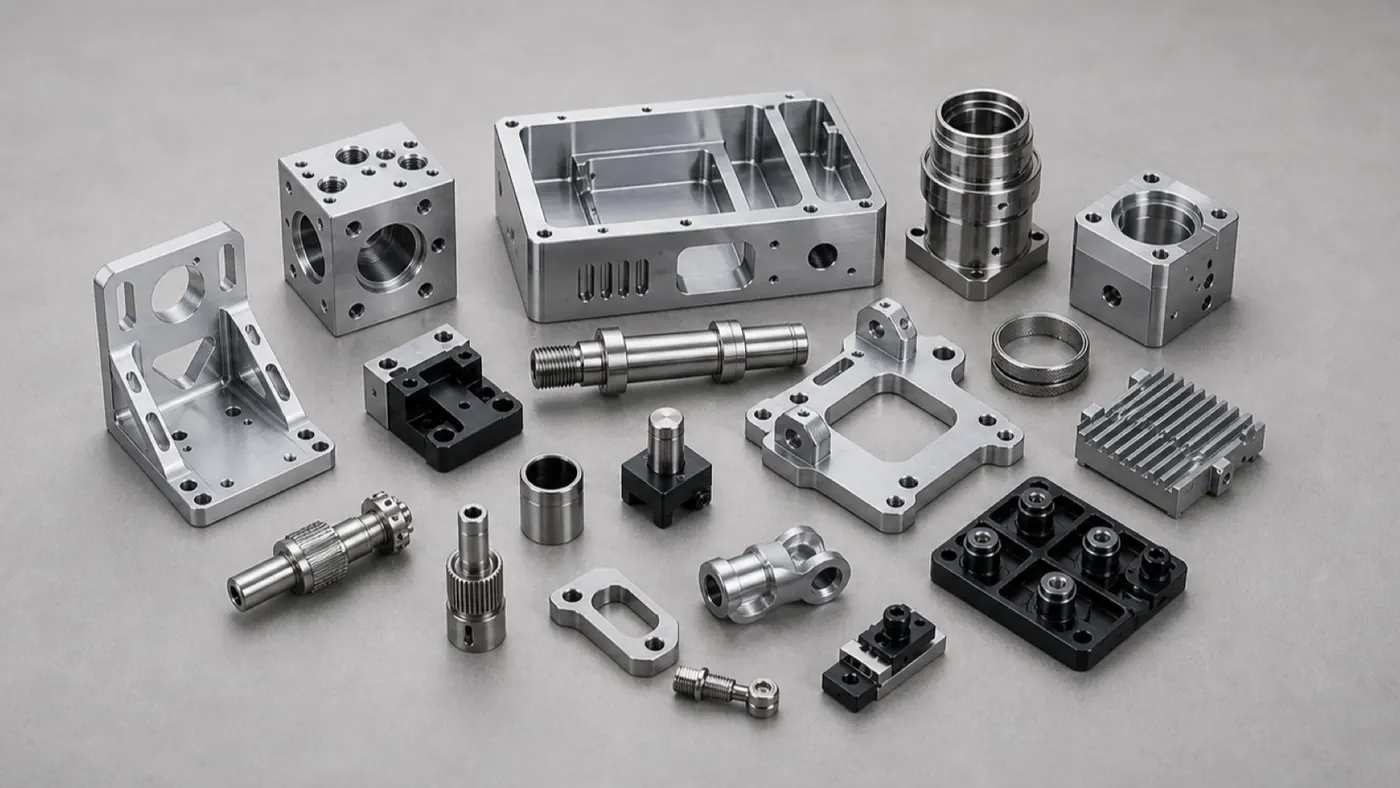
Representative automation work: plates, nests, and manifold hardware from cell-building programs.
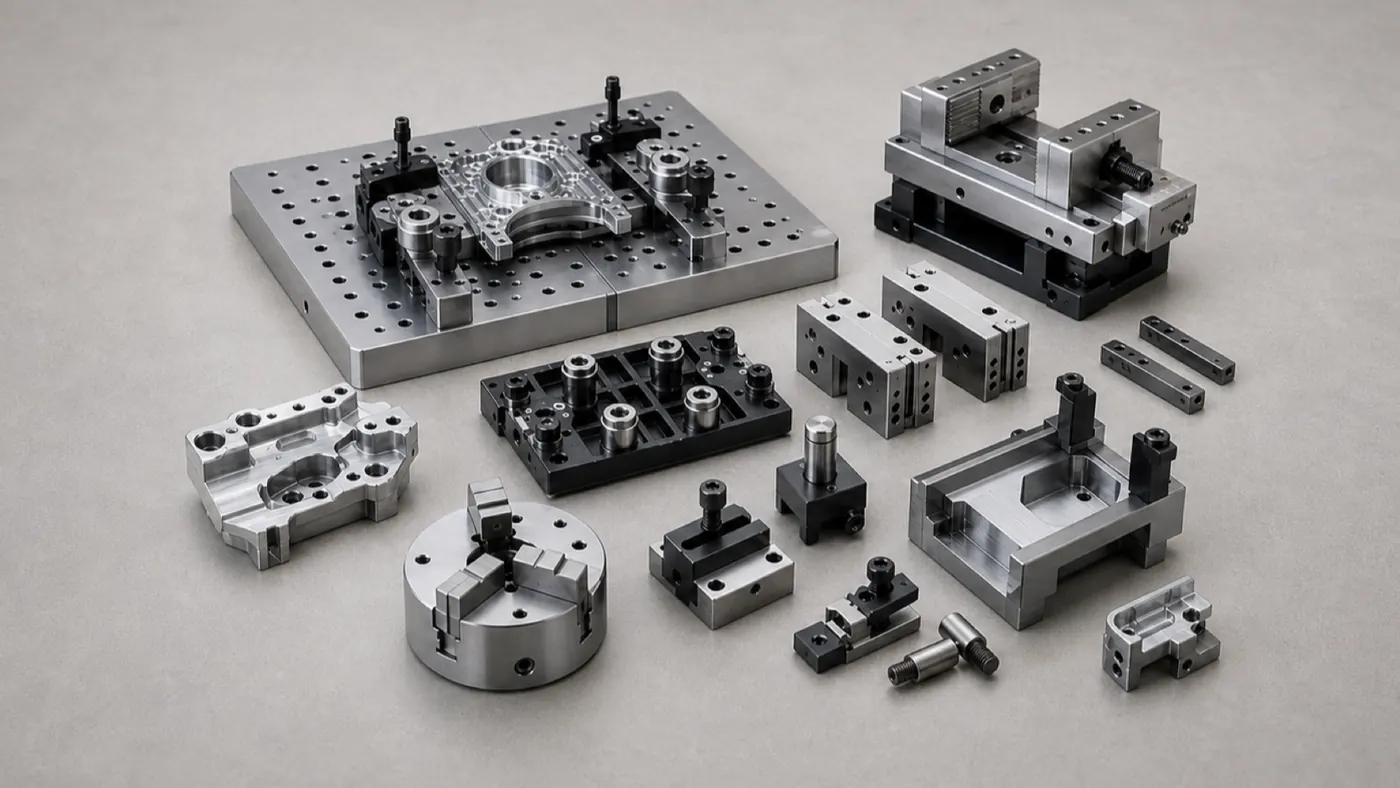
Station tooling and nests
Fixture plates, soft jaws, and nests machined with shared datum schemes.
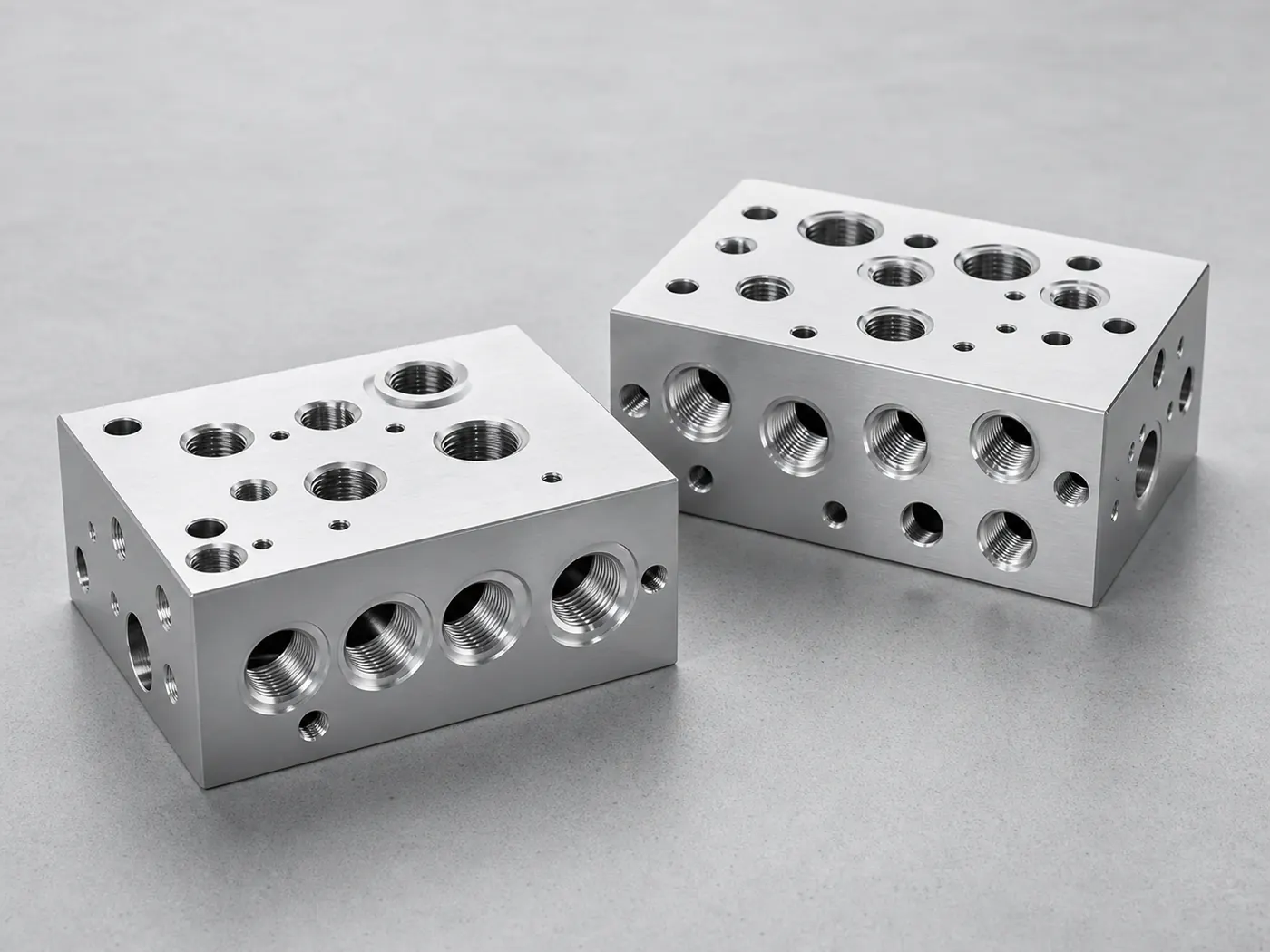
Pneumatic manifolds
Valve bases and distribution blocks with gauged ports and flat sealing lands.
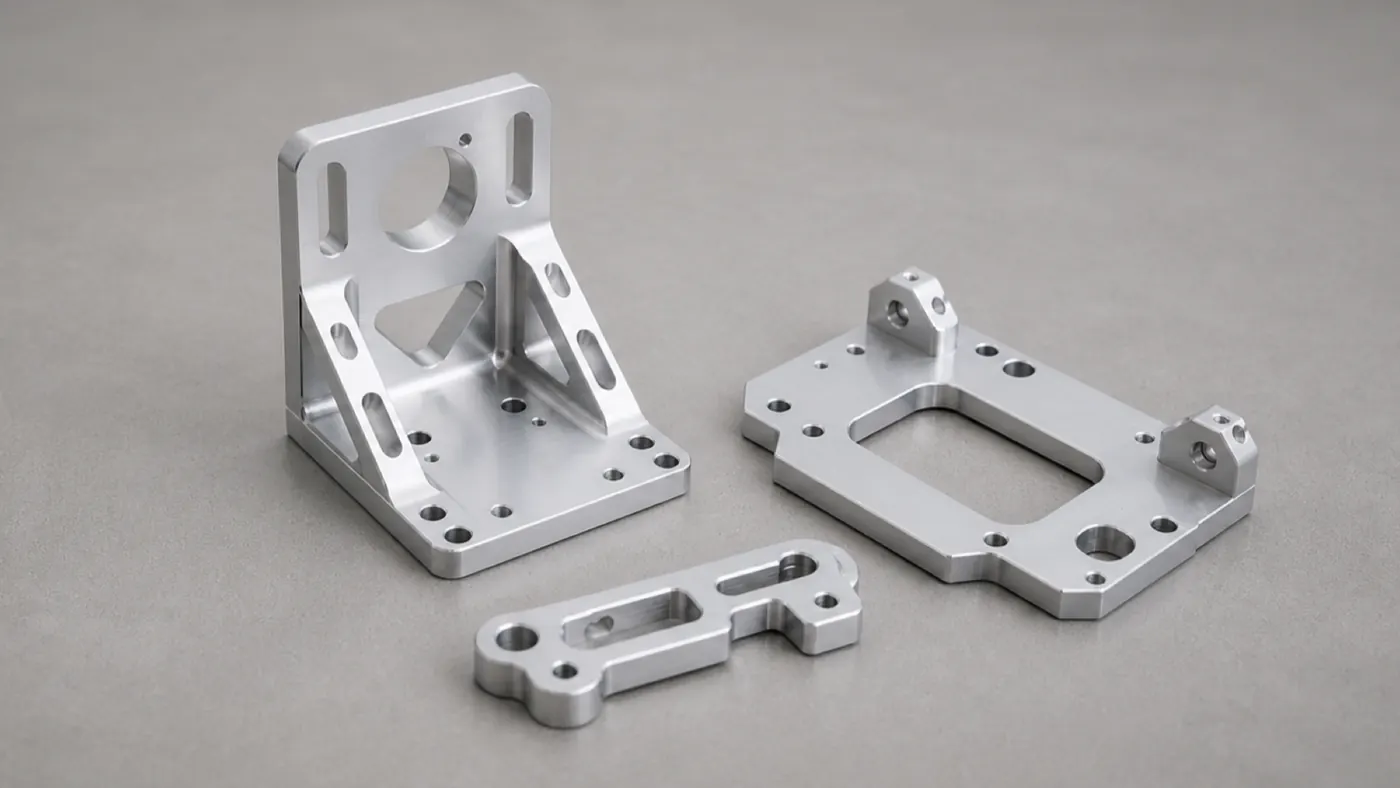
Cell brackets and mounts
Sensor stands and actuator brackets with dowel-located, repeatable mounting.
Related guides
Guides machine builders use next
The adjacent guides for automation programs — the robot inside the cell and the tooling underneath it.
Aluminum CNC machining for robotics
Arm links, EOAT, and servo housings — the robot hardware your cells are built around.
Aluminum CNC fixtures, soft jaws & tooling
The full tooling guide: locating schemes, MIC-6 selection, and rebuildable fixtures.
Aluminum CNC machining for industrial equipment
Machine frames, covers, and structural components beyond the automation cell.
Case studies
Case studies from this industry
Representative aluminum CNC projects for this sector — with specifications, engineering challenges, and inspection notes.
Manifold Blocks CNC Aluminum Manifold Block — Pneumatic Control Manifold
A 6061-T6 pneumatic manifold with cross-drilled internal passages, standard ports, and flat valve-mounting faces, leak-tested and chem-film finished for machine air control.
Fixtures & Tooling Precision Aluminum Fixture Plate — MIC-6 Inspection Base
A MIC-6 cast-plate fixture with an H7 dowel and tapped-hole grid on a flat datum face, machined to stay flat after pocketing for repeatable workholding and inspection.
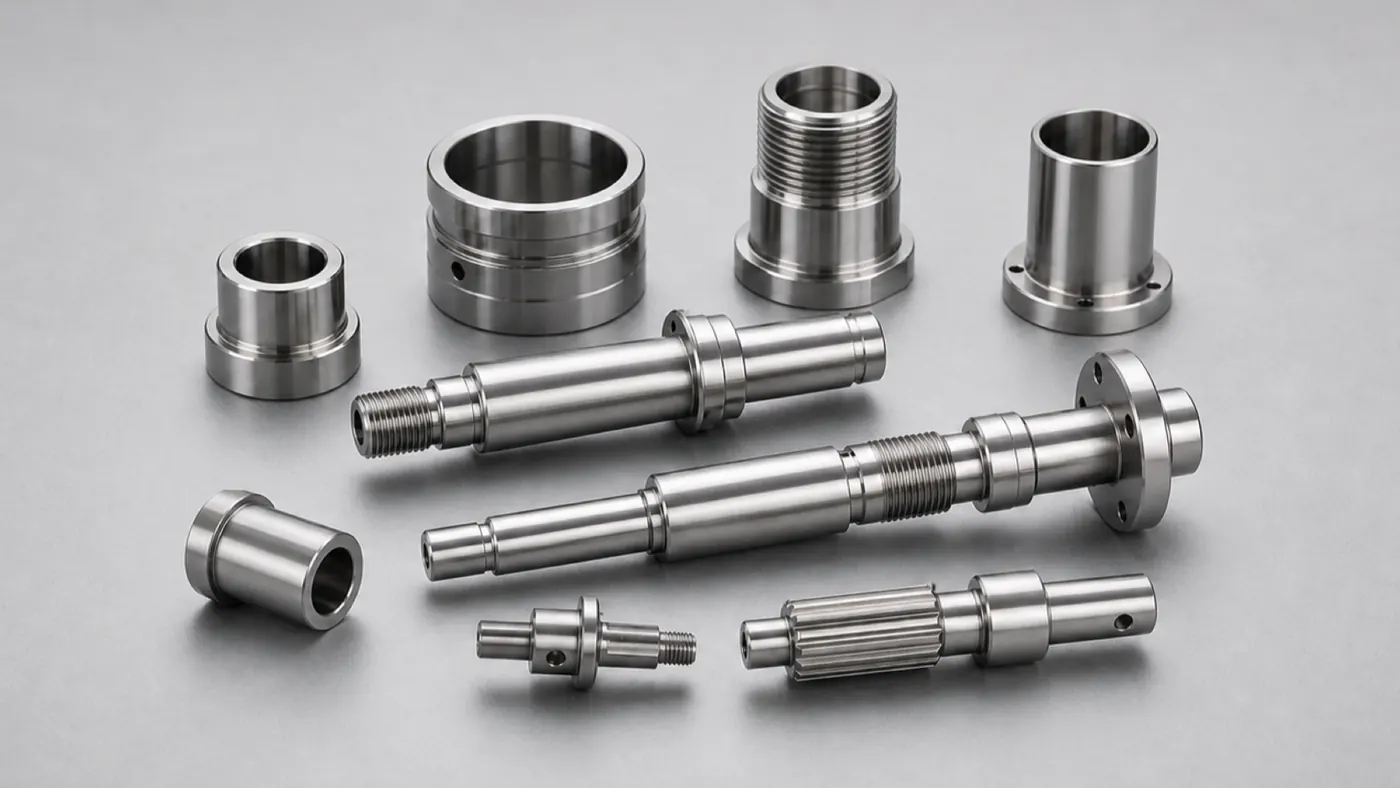
Precision Turned Parts Precision Turned Aluminum Shaft — 7075 Mill-Turn Component
A 7075-T6 turned shaft with bearing seats, gauged threads, and cross-drilled mill-turn features, held to tight concentricity for a rotating motion assembly.
Browse the full engineering portfolio in the aluminum CNC machining case studies hub.
Quote your automation cell parts
Send the plate drawings, bracket package, and manifold models together — alloy, finish, and flatness callouts included. An engineer reviews datums, interchangeability, and batching, then returns one coordinated quote within one business day.
- Prototype to production
- Engineering review within one business day
- Material certificates available
- ISO 9001 quality management