
Parts under vibration or repeated load reversals — 2024's fatigue strength and damage tolerance are why it persists in aircraft structure.
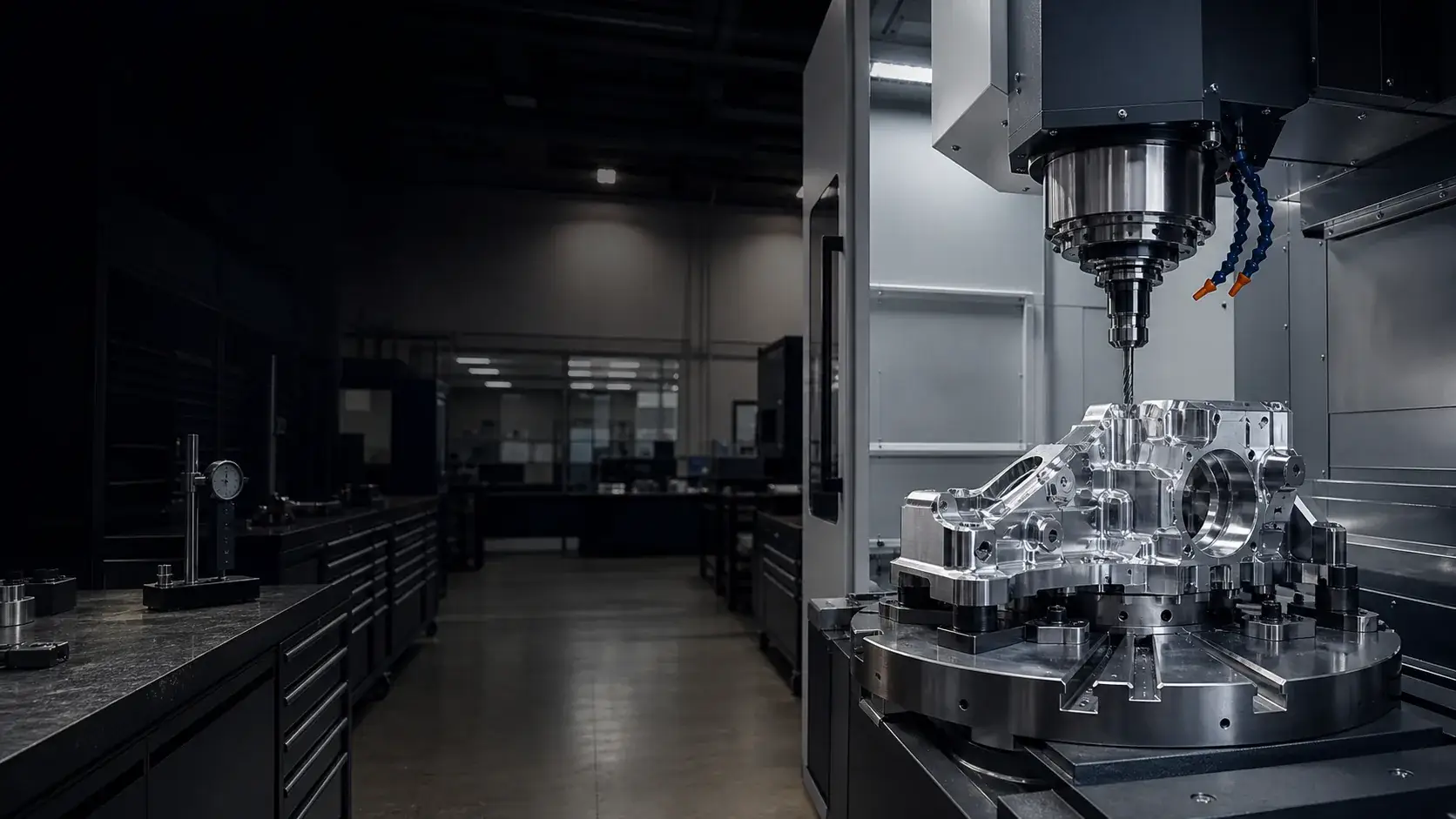
2024-T351 fatigue-grade machining
2024 Aluminum CNC Machining
2024 is the fatigue alloy: under cyclic load it outlasts 6061 and tolerates damage better than 7075, which is why airframes have used it for ninety years.
We machine 2024-T351 for parts that live under vibration and repeated stress — always with the corrosion protection this copper-rich alloy cannot function without.
- ISO 9001:2015
- Prototype to production
- FAI reports available
- Material certificates available
- Engineering review within one business day
What it's best for
When 2024 beats both 6061 and 7075
2024 sits between the generalist and the strength champion with one standout property: fatigue performance and slow crack growth. That's the reason to specify it — and mostly the only reason.
Legacy parts, repairs, and fixtures where the print already calls 2024-T351 and substitution would trigger requalification.
Loaded test fixtures and ground support equipment matching the alloy of the flight hardware they interface with.
Where 7075's higher strength comes with faster crack growth, 2024 trades a little strength for meaningfully better damage tolerance.
2024 machines exceptionally well — fine feature work and excellent surface finishes come naturally to it.
Wet, marine, or chemical service — even coated, 2024 is the wrong starting point when corrosion dominates. Consider 5052 aluminum machining instead.
Common CNC machined parts
Parts we machine from 2024
Our 2024 work skews toward aerospace and test-lab hardware, where its fatigue behavior and heritage matter.
Loaded fixtures and interface hardware in 2024-T351 plate with heat-lot traceability.
Mounts and brackets living on vibrating equipment, engines, and shaker tables.
Turned pins, clevises, and linkage parts under repeated load reversals.
Machined replacements for legacy 2024 components on aircraft and vintage equipment.
Load-cell adapters and force-path components where fatigue rating is part of the spec.
Vibration-rich environments where 2024's damage tolerance earns its corrosion overhead.
Buying for a specific industry? See how this material fits robotics, automation equipment, medical device hardware, aerospace tooling, electronics housings, and industrial equipment programs.
Machining considerations
Machining 2024: the machinist's favorite, the finisher's problem child
On the spindle, 2024 is arguably the best-behaved aluminum we cut. Its challenges are before machining (stock form) and after (protection).
Short chips, crisp corners, and fine finishes — 2024 cuts like it wants to be a part. Small features and tight cutter engagement that would smear in 5052 come out clean.
2024-T351 is stretch-stress-relieved; plain T4 plate moves during heavy machining. For anything pocketed from plate, the '51' matters as much as the alloy digits.
Bare 2024 corrodes fast enough that we plan chem-film or anodize into the production schedule by default — machined parts don't sit unprotected. Quote requests without a finish callout get one added at review.
Sheet 2024 often comes Alclad (pure-aluminum skin). Machining through the clad exposes bare core — if your part starts from clad sheet, edges and pockets need coating attention.
For fatigue-rated parts, surface finish is structural: we quote Ra 0.8 on load-path fillets when the application warrants it, and avoid stamped or vibro-etched marking in stressed zones.
Like 7075, 2024 is effectively unweldable and its T3 tempers don't like being bent. Design for machining and fastening.
Surface finishing
Finishing 2024: mandatory, and slightly different
Copper makes 2024 strong and makes it corrode — and it changes how anodize films form. Every 2024 part gets a deliberate finishing decision.
The aerospace default for 2024 — Class 1A for corrosion, Class 3 where conductivity matters. Usually followed by primer in real service.
Works, but films on 2024 come out thinner, greyer, and less uniform than on 6061. Treat it as protection, not decoration.
The better cosmetic option for 2024 when it must look finished — dark dye hides the alloy's uneven film tone.
Possible on 2024 but the copper content limits film quality; where deep hardcoat matters, we'll suggest reviewing whether 7075 fits the load case.
Chem-film plus epoxy primer is the classic 2024 protection stack for equipment in service environments; we coordinate to your paint spec.
Keep identification marks out of stressed zones on fatigue-rated parts — flange faces and low-stress bosses are the right home for part numbers.
Each finish has its own engineering guide: as-machined, bead blasted, clear anodized, black anodized, hardcoat anodized, chem film, and laser marking — or compare them all in the surface finishes hub.
Tolerance & inspection
Tolerance and inspection guidance for 2024
2024's machinability makes tight work straightforward; documentation is usually the demanding half of a 2024 order.
| Feature | Typical capability | Engineering notes |
|---|---|---|
| General machined dimensions | ±0.05 mm | Standard default; 2024 machines predictably to it |
| Critical dimensions | ±0.01 mm | Excellent chip behavior makes fine tolerances dependable |
| Bearing fits and bores | H7, Ra 0.8 µm | State whether dimensions apply before or after coating |
| Threaded holes | 6H, gauge-verified | Chem-film preserves thread fit; anodize on threads needs masking or spec |
| Flatness (T351 plate parts) | 0.05 mm per 100 mm | Achievable with balanced machining; specify if tighter |
| FAI / traceability | Heat-lot certs, AS9102-style FAI | Standard expectation on aerospace 2024 work — request it in the RFQ |
Before you upload CAD
2024 drawing checklist before you upload
2024 orders go smoothly when the drawing answers the fatigue and protection questions up front.
- Justify the alloy in one line
If the reason isn't fatigue, heritage, or a legacy print, ask us to check whether 6061 or 7075 quotes better for the same function. - Call out T351
For plate-machined parts, specify 2024-T351 — stress-relieved stock is the difference between stable and mobile geometry. - Specify the protection stack
Chem-film class, anodize type, or primer system — and which surfaces must remain conductive for bonding or grounding. - Mark fatigue-critical surfaces
Identify load-path fillets and faces needing fine finish so we plan finishing passes and keep marking operations away from them. - Define inspection expectations
FAI, CMM report, or certificate-only — stating it in the RFQ prices the order correctly the first time. - Send STEP plus PDF with datums
Geometry in STEP, intent in PDF: datums, critical dimensions, finish notes, quantity. Review lands within one business day.
Related product applications
Where 2024 appears in our product work
The part families where fatigue-grade aluminum most often makes sense.
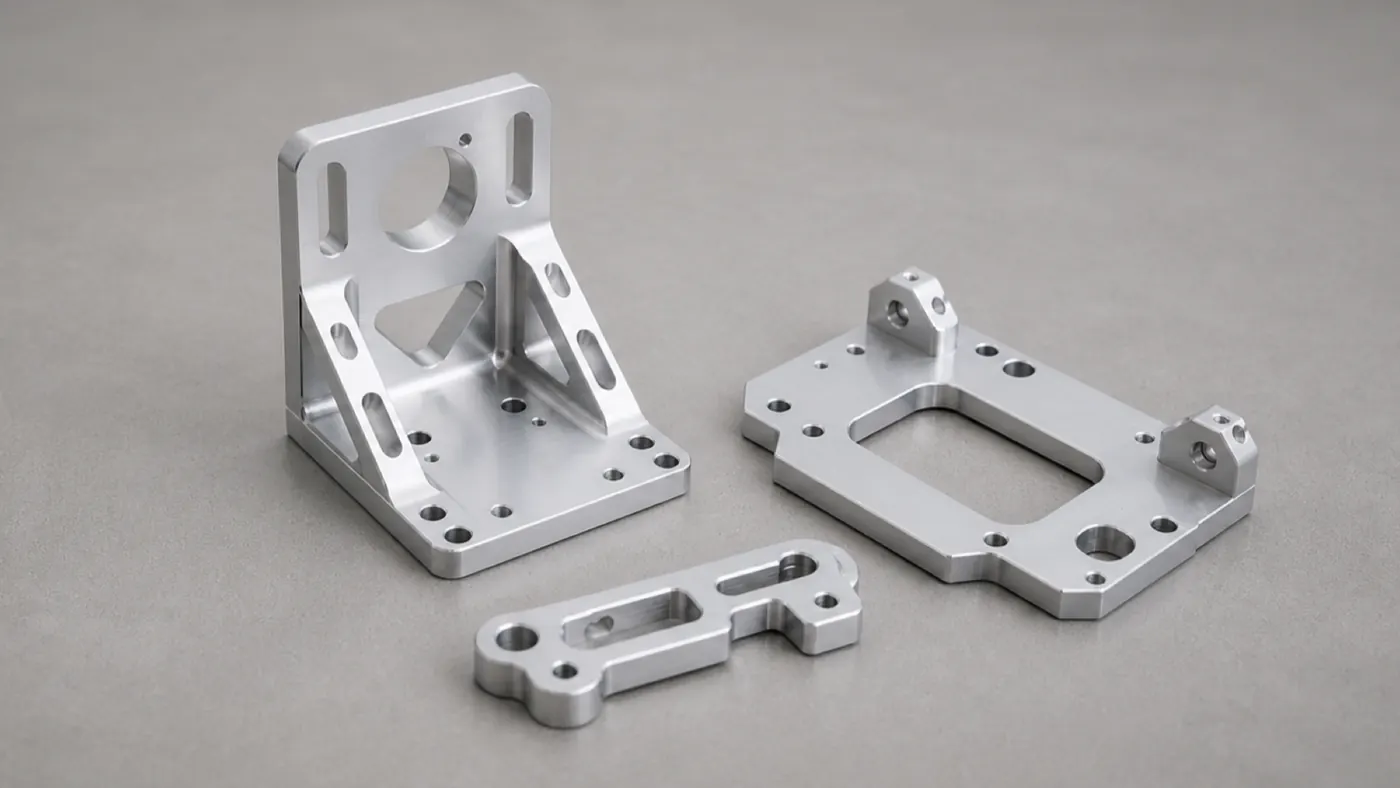
Custom aluminum CNC brackets & mounts
Vibration-loaded brackets and mounts where fatigue rating drives the alloy.
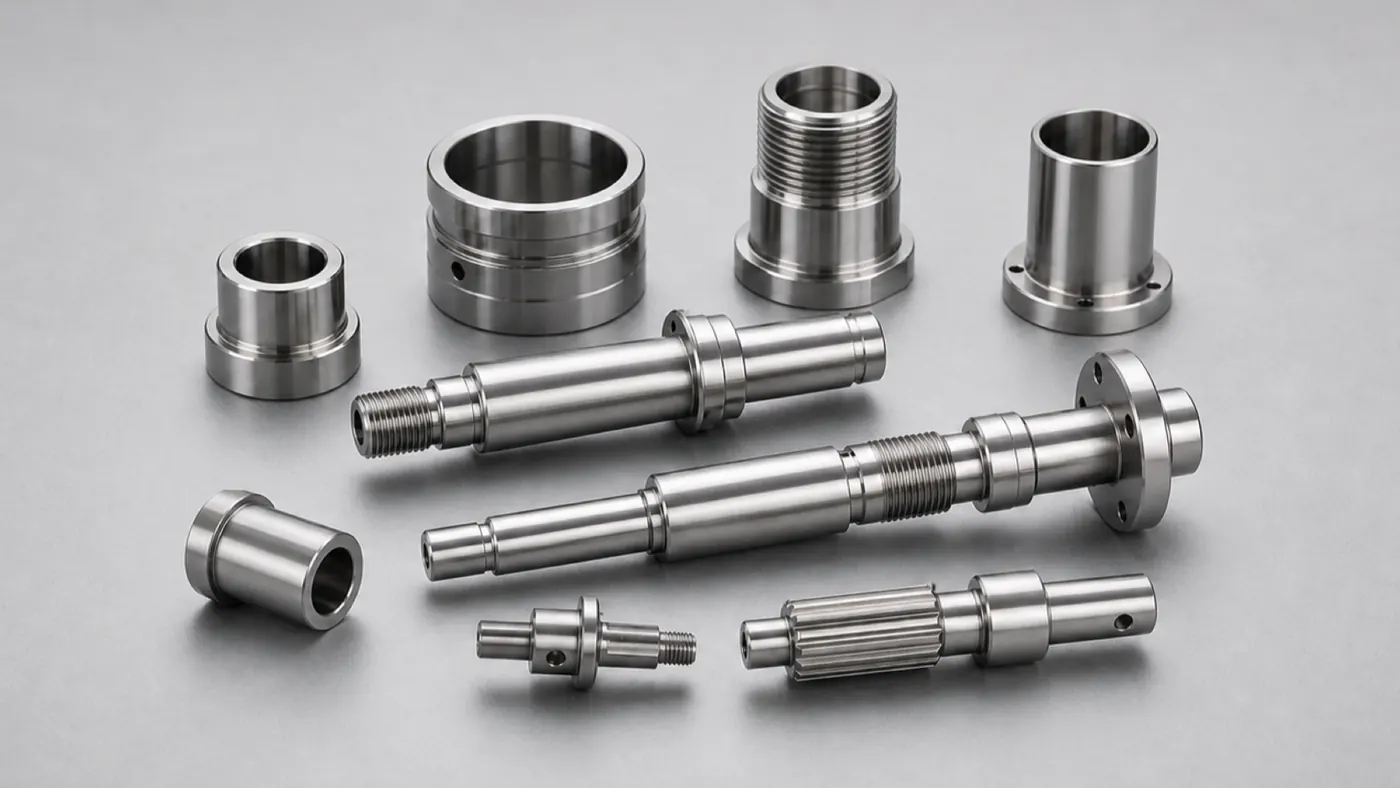
Aluminum CNC turned shafts & bushings
Cyclically loaded pins, links, and turned hardware in 2024-T351.
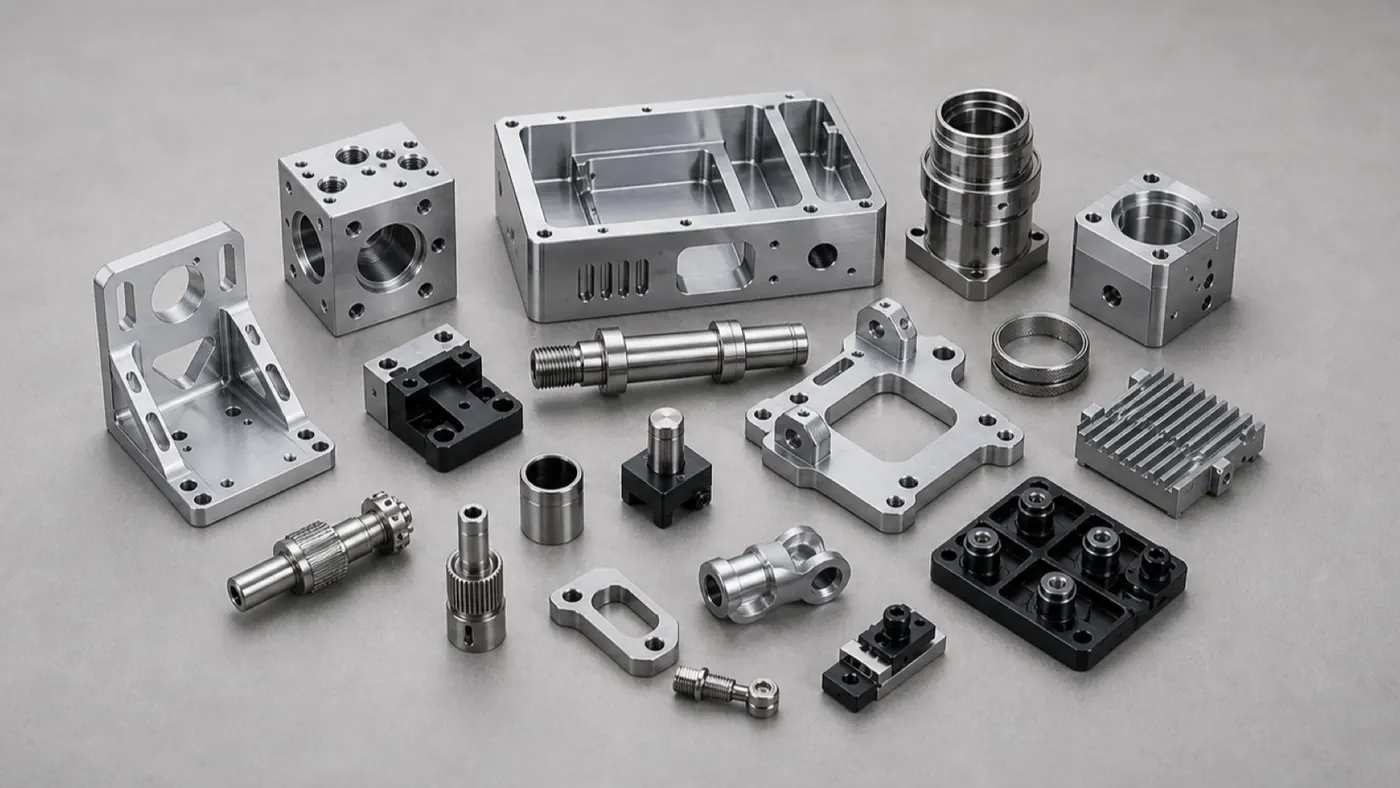
Custom aluminum CNC machined parts
Drawing-built 2024 components with heat-lot traceability and FAI documentation.
Case studies
Case studies machined in this alloy
Aluminum CNC projects that use this grade — with specifications, engineering challenges, and inspection notes.
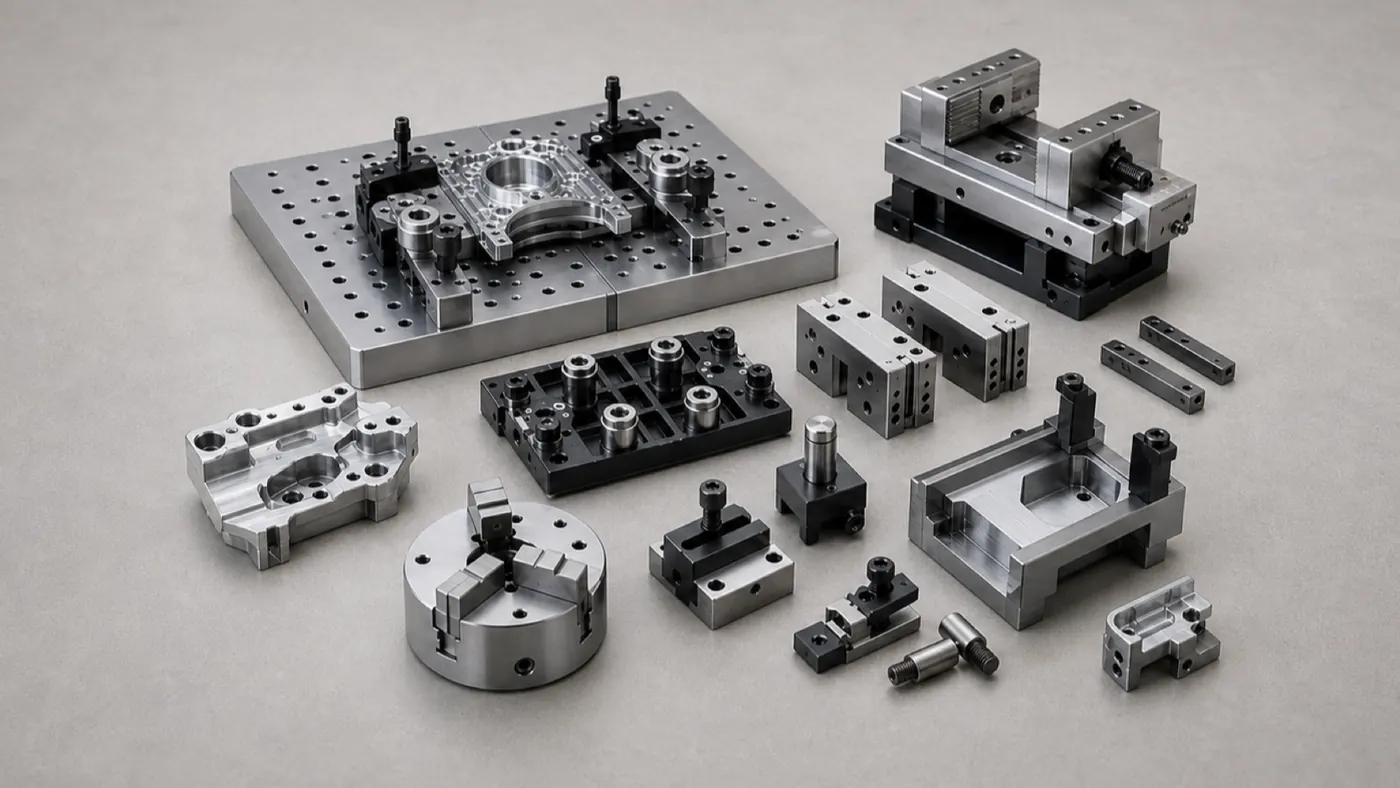
Browse the full engineering portfolio in the aluminum CNC machining case studies hub.
Quote your 2024 aluminum parts
Send STEP models, PDF drawings, temper and protection callouts, and target quantity. An engineer reviews stress-relief, coating, and fatigue-surface requirements, then returns a quote within one business day — certificates and FAI included when you need them.
- STEP or IGES models
- PDF drawings with critical dimensions
- Alloy, temper, and finish notes
- Target quantity and timeline