
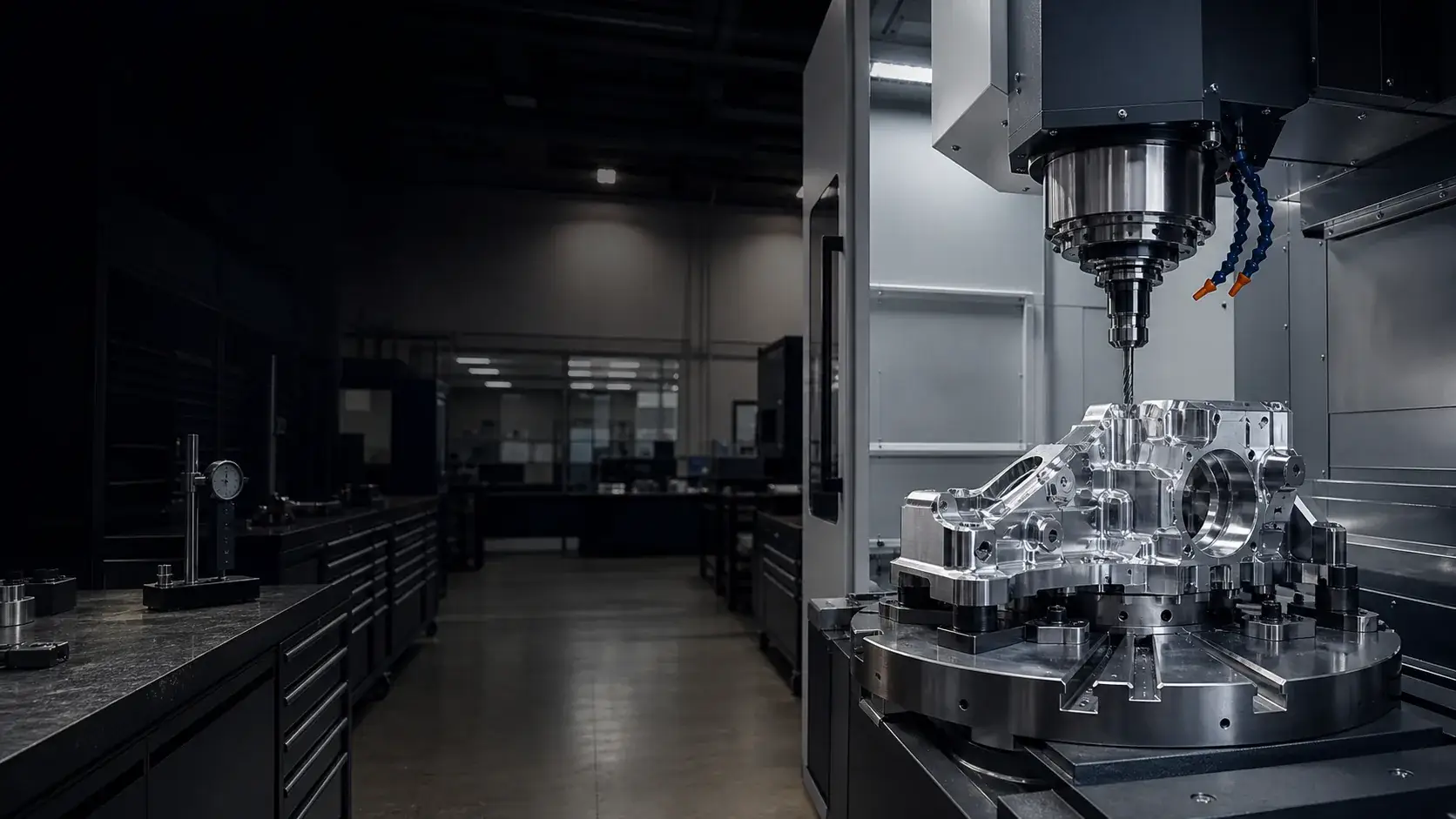
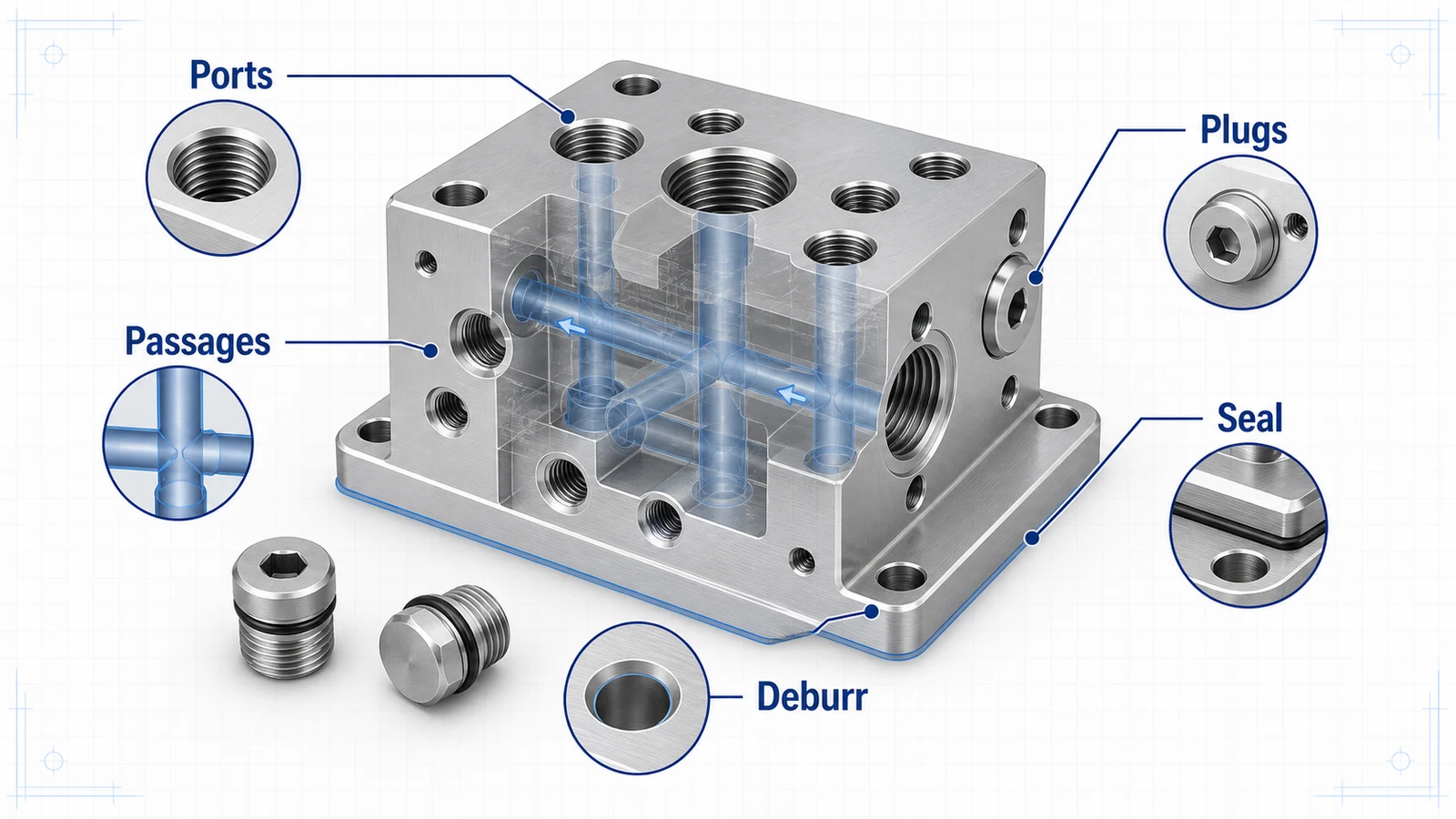
CNC machined aluminum manifold blocks combine machining, drilling, tapping, sealing, deburring, and inspection in a compact part. They are used for pneumatic circuits, low-to-medium pressure fluid systems, coolant distribution, instrumentation, and custom equipment. The geometry may look like a simple block, but the internal passage design drives manufacturability.
Good manifold drawings make the flow path, port standards, sealing surfaces, and inspection requirements clear. Poor drawings leave cross-drilled passages, thread depths, plugs, and burr control open to interpretation.
Start with the circuit and port layout
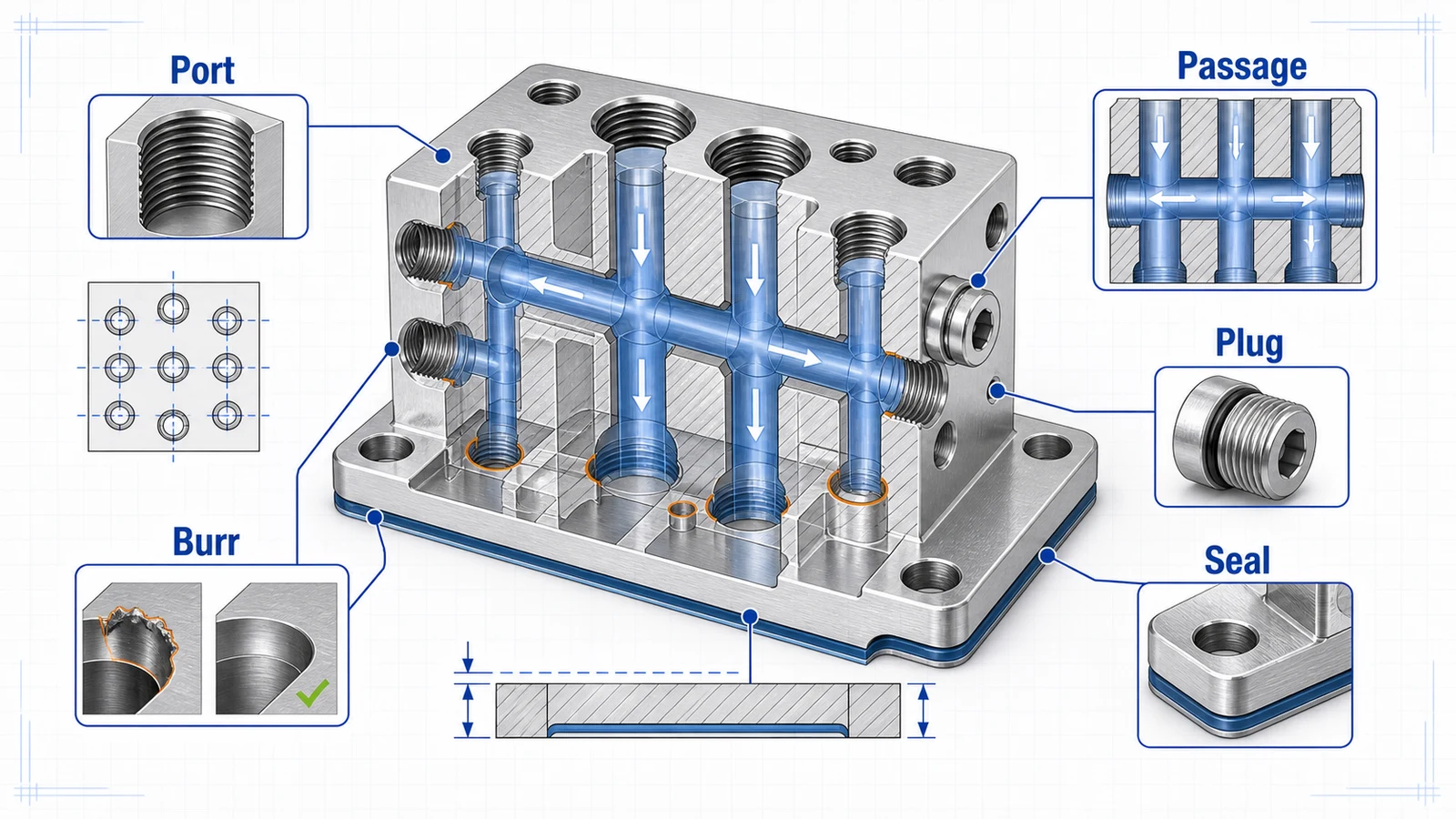
Before finalizing the block shape, map the fluid circuit. Identify inlet, outlet, cross holes, plugs, sensors, valves, mounting holes, and any blocked passages. Make sure every drilled passage has a manufacturing access path and a deburring plan.
Avoid placing ports so close together that thread forms, O-ring seats, or drill breakouts interfere. Leave enough material around pressure ports for strength and sealing. If the block includes valves or cartridge components, follow the supplier’s cavity standard closely.
Common design considerations
| Feature | Design consideration |
|---|---|
| Port threads | Specify thread standard, depth, and sealing method |
| Cross holes | Show plugs and identify permanent closures |
| Sealing faces | Define flatness and surface finish |
| Internal burrs | Provide access or process notes for deburring |
| Wall between passages | Leave enough material for pressure and machining tolerance |
| Finish | Choose anodize, chem-film, or as-machined based on fluid and environment |
| Testing | State pressure, leak test, or cleanliness requirements if needed |
These details affect both quote accuracy and field reliability.
Material selection
6061-T6 is common for aluminum manifold blocks because it machines well, taps cleanly, and has good corrosion resistance for many industrial environments. 7075 may be used when strength is needed, but corrosion protection becomes more important. MIC-6 is generally not the first choice for pressure manifolds because strength is lower, although it may be used for fixture-like vacuum plates.
If the manifold contacts aggressive fluids, verify compatibility before choosing aluminum or anodize. The machining supplier can make the part, but fluid compatibility should be confirmed by the design owner.
Threads and sealing
Thread callouts must be specific. NPT, BSPP, BSPT, metric straight threads, SAE O-ring boss, and custom ports are not interchangeable. Include thread standard, size, depth, counterbore, O-ring groove, spotface, and plug requirements.
For straight-thread O-ring ports, the sealing surface matters as much as the thread. Define the spotface diameter and surface finish. For tapered pipe threads, consider installation torque and the risk of cracking thin walls if ports are too close to edges.
Use the threads and tapped holes guide when preparing manifold drawings.
Burr control inside passages
Internal burrs are one of the biggest manifold risks. Cross-drilled holes create burrs where passages intersect. If burrs break loose later, they can damage valves, seals, pumps, or instruments.
Design with deburring access in mind. Larger access holes, removable plugs, and straight passages are easier to inspect and clean. If the application is sensitive, specify cleanliness requirements, flushing, borescope inspection, or pressure testing.
Flatness and mounting
Manifold blocks often seal against valves, gaskets, or mounting plates. The sealing face may need flatness and surface roughness callouts. If a valve stack mounts to the block, hole position and face flatness should be tied to datums.
Do not over-tolerance the entire block. Tighten the port relationships, sealing surfaces, and mounting features that affect function. General outside profiles usually do not need the same control.
Surface finish
As-machined aluminum may be enough for internal equipment. Clear or black anodize can improve corrosion resistance and appearance. Hardcoat may be used for wear or harsher service. Chem-film may be selected when conductivity or minimal dimensional change matters.
If ports, threads, or sealing faces should remain uncoated, specify masking. Anodize in sealing threads can affect fit. The surface finishes hub can help compare options.
RFQ package
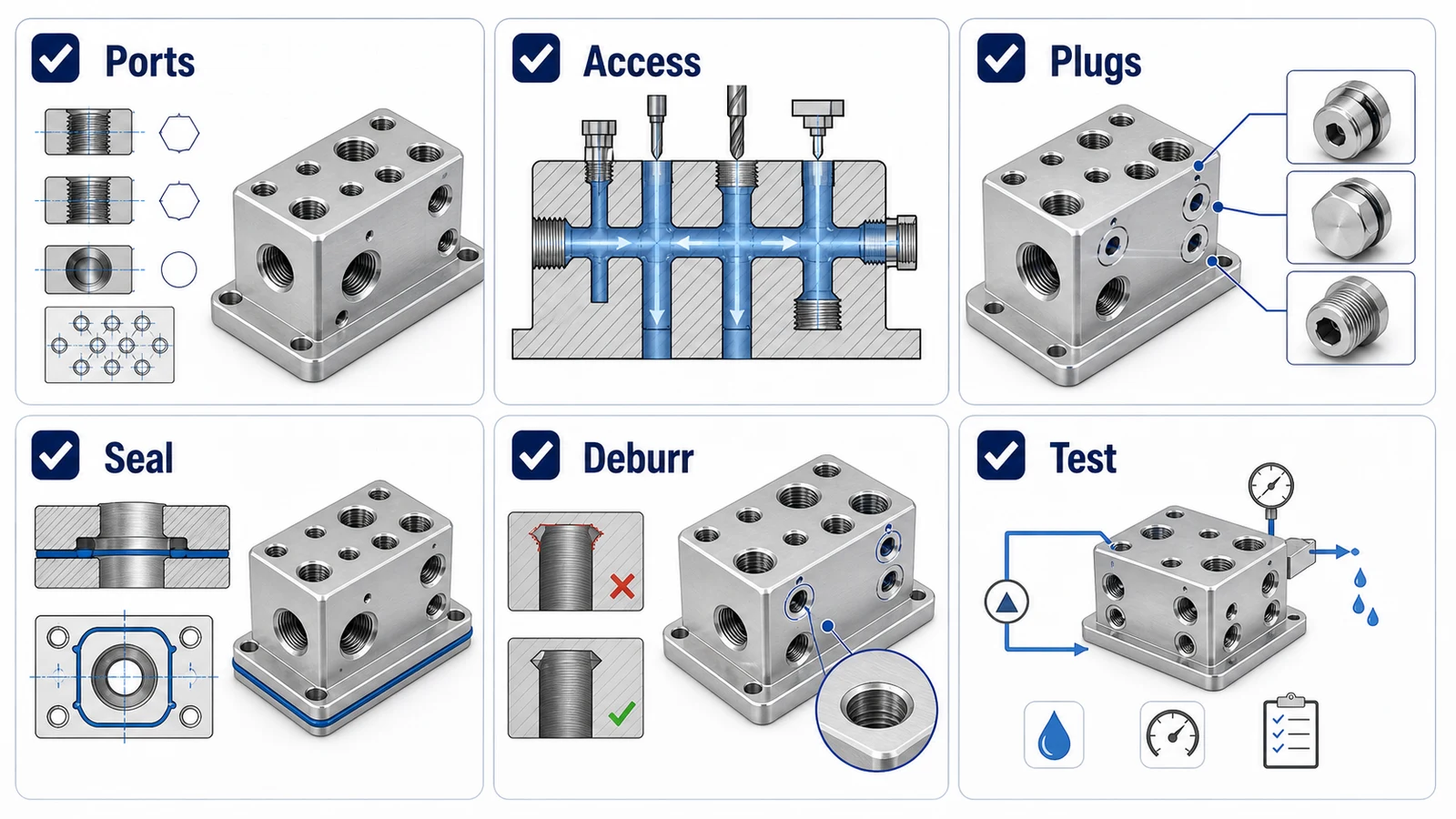
Send STEP, PDF drawing, port standard details, internal passage drawing, plug requirements, pressure or leak-test requirements, material, finish, quantity, and cleanliness expectations. If the block connects to catalog valves or fittings, include the part numbers or standards.
Aluminum manifold blocks quote best when the supplier can see both the outside geometry and the internal circuit intent.